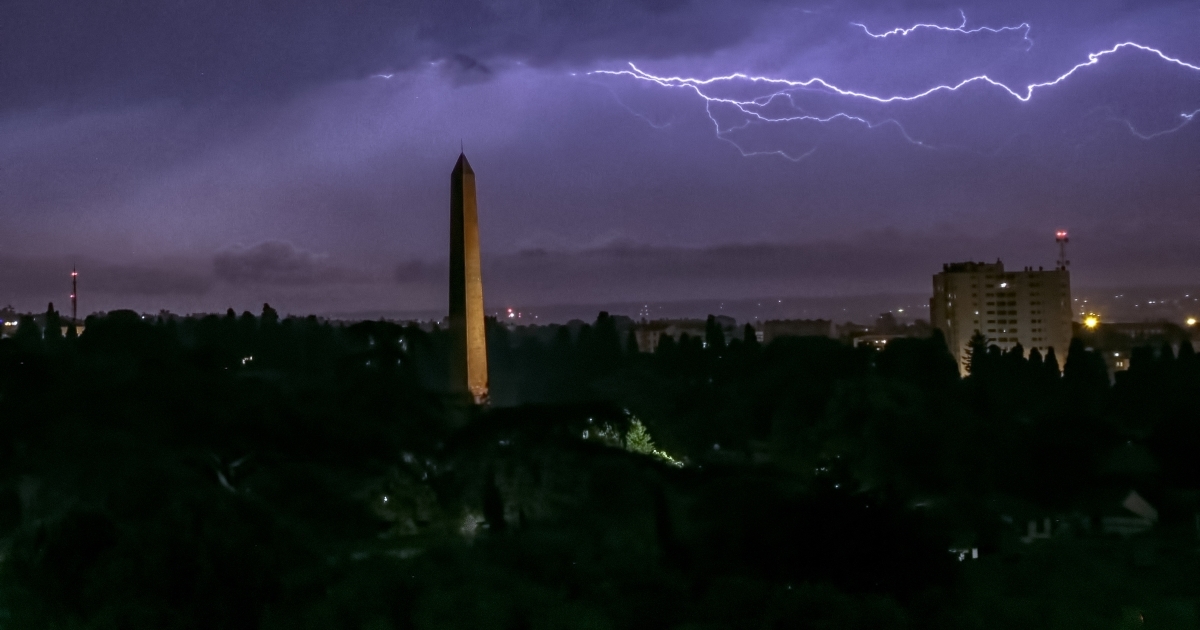
There is a special kind of electricity that arrives before the storm does. The sky turns bruised purple. The wind starts riffling through balcony plants like it has just discovered drama school. Somewhere beyond the buildings, a low rumble rolls in, and suddenly your quiet evening becomes a front-row seat to nature’s loudest light show.
That is the feeling behind “I’m Chasing Lighting From My Balcony”a title that sounds like a typo, a confession, and a hobby your neighbors may not fully understand. Maybe you are chasing golden-hour lighting as clouds fold over the city. Maybe you are chasing lightning with a camera, hoping to capture one clean electric vein across the sky. Either way, balcony storm watching has a strange magic to it: intimate, cinematic, and slightly ridiculous, especially when you are wearing slippers and pretending to be a National Geographic photographer.
But before we go any further, let’s make one thing brighter than a fresh bolt across the clouds: safety comes first. A balcony is still outside. If you hear thunder, the safest move is to go fully indoors, away from windows, plumbing, wired electronics, and anything that makes lightning say, “Interesting.” The goal is to enjoy dramatic storm light, not audition for a cautionary poster.
Why Balcony Storm Watching Feels So Addictive
Storms change ordinary places into movie sets. Your street stops looking like a street and starts looking like the opening scene of a mystery thriller. Apartment windows glow. Tree branches bend. Rain turns streetlights into watercolor. Then lightning arrives and briefly redraws the entire skyline in white.
Part of the appeal is contrast. You are inside your familiar home, but the sky outside is doing something ancient and enormous. Thunderstorms can tower high into the atmosphere, building from warm, moist, unstable air and releasing energy through wind, rain, hail, and lightning. That big meteorological machinery is happening above your coffee mug, your balcony chair, and that one plant you keep promising to repot.
The balcony gives you a frame
A balcony naturally turns the sky into a composition. Railings, rooftops, neighboring towers, power lines, and wet pavement all become visual anchors. Even if you never take a photograph, you start seeing the storm like a photographer: foreground, background, light source, movement, mood.
For many people, that is the true chase. It is not about racing toward danger. It is about waiting, watching, noticing, and learning how light behaves when the weather gets theatrical.
Lighting or Lightning? Actually, Both Matter
The title says lighting, and that works beautifully because storm photography is not only about lightning bolts. It is about lighting: the glow before rain, the silver edge around storm clouds, the neon reflection on wet roads, the eerie green-gray sky that makes everyone check the weather app with new respect.
Lightning is the headline act, of course. It is fast, unpredictable, and spectacular. But good storm images often succeed because of everything around the bolt: the shape of the clouds, the city lights below, the rain curtain in the distance, and the mood of the scene. A photo of lightning alone can be impressive. A photo of lightning over a sleeping neighborhood, framed from a safe indoor position, can feel like a tiny epic.
What lightning actually is, without the textbook nap
Lightning happens when electrical charges build within a storm and discharge between clouds, inside a cloud, or between cloud and ground. The science is complex, but the result is simple enough for the rest of us: the sky briefly becomes a giant camera flash with a thunder soundtrack. Some lightning can strike miles away from the storm’s center, which is why distant thunder still matters. If you can hear it, the storm is close enough to respect.
The Safe Way to “Chase” Storm Light From Home
Let’s be honest: “storm chasing from my balcony” sounds cooler than “standing six feet inside my apartment with a camera pointed through a window.” But the second version is the smarter one. During a thunderstorm, a balcony should not be treated like a weather observatory. It is an outdoor platform, often with metal railings, wet surfaces, and exposure to wind-driven rain. Not exactly the cozy fortress our overconfident brains imagine.
Use the balcony before the storm arrives, not during the danger
The best time to enjoy the balcony is before thunder is audible, when clouds are building and the light is changing. You can observe cloud movement, photograph the moody sky, move loose furniture inside, and secure plants or decorations that might become airborne little chaos gremlins.
Once thunder starts, move indoors. A fully enclosed building with wiring and plumbing is generally safer than being outside, but indoor safety still matters. Avoid touching wired electronics, plumbing, and metal window frames. Skip showers, dishwashing, and laundry until the storm passes. Yes, the dirty dishes can wait. For once, procrastination is practically a safety strategy.
Stay away from windows when lightning is close
Windows are tempting because they offer the view. But during a severe storm, especially one with strong winds or hail, glass can become a hazard. If lightning is frequent, rain is blowing sideways, or local alerts mention damaging winds, step back. The photo is not worth turning your living room into a low-budget disaster movie.
How to Photograph Storm Light Without Acting Like a Movie Hero
Lightning photography is part skill, part patience, and part cosmic lottery. Unlike sunsets, lightning does not politely hold still while you adjust settings. The trick is to prepare before the action happens and let the camera wait for the sky to perform.
For a camera: use stability and patience
If conditions are safe and you are shooting from indoors or from a protected, fully sheltered position before the storm gets close, a tripod helps keep the frame steady. Long exposures are commonly used at night because they leave the shutter open long enough to catch a strike if one happens in the frame. A remote shutter release or timer can reduce camera shake.
Many photographers start with a low ISO to reduce noise, a moderate aperture such as f/5.6 to f/11 depending on brightness, and shutter speeds ranging from a few seconds to longer exposures at night. The exact settings depend on distance, ambient light, and storm intensity. Lightning is not a lamp. It does not care about your exposure triangle. It will overexpose one shot, vanish during the next eight, then produce the perfect bolt while you are checking if your memory card is full.
For a phone: use video, night mode, or long exposure features
Phone cameras can capture storm scenes surprisingly well, especially when the city lights and clouds are doing half the work. For lightning, video is often the easiest approach: record the storm from a safe indoor position, then pull a still frame later. Some phones also have night mode or long exposure features, which can help with dramatic cloud movement and light trails.
Clean the lens before shooting. This sounds painfully obvious, but phone lenses live in pockets, backpacks, and the mysterious crumb ecosystem of daily life. A smudged lens turns lightning into a glowing blob that looks like a UFO sneezed.
Composition: Make the Storm Bigger Than the Bolt
A common beginner mistake is pointing the camera at empty sky and hoping lightning saves the image. Sometimes it does. More often, the result looks like a blank ceiling with attitude. A stronger approach is to build a complete scene.
Include a foreground
Use rooftops, trees, balcony plants, distant buildings, or streetlights to create scale. A lightning bolt over a skyline feels powerful because the viewer understands its size. A storm cloud above a single glowing apartment window can tell a story. A rain-slick street reflecting traffic lights can make the whole scene feel alive.
Watch reflections
Wet surfaces are your secret weapon. Pavement, car roofs, windows, and puddles can double the drama by reflecting lightning, clouds, and city glow. Even if the lightning itself stays shy, the storm lighting can produce beautiful images through reflection alone.
Leave room for the sky to move
Storms are not tidy. Lightning may appear in the corner of the frame instead of where you predicted. A wider composition gives you more chances. Later, you can crop the image if needed. Think of it as giving the storm a little creative freedom, because it was not going to follow instructions anyway.
What to Keep Near You During a Storm
If storms are common where you live, a little preparation makes balcony storm watching calmer and safer. Keep a charged phone, a flashlight, backup power bank, and weather alerts enabled. If power outages happen often, know where your essentials are before the lights go out. Searching for batteries in the dark is a classic human comedy, but it loses charm after minute three.
Bring balcony furniture, lightweight pots, and loose decorations inside before strong winds arrive. Secure anything that could fall or blow away. A tiny decorative lantern may look harmless until the wind gives it a career as a projectile.
The Emotional Side of Watching Storms
There is something deeply satisfying about watching weather from a safe place. A storm reminds us that the world is bigger than our inbox, our errands, and that one notification we keep ignoring. It slows time down. You listen. You notice. You wait.
Balcony storm watching can feel meditative because it turns attention outward. The sky becomes the main event. Every flash is unrepeatable. Every rumble arrives with a delay, like the atmosphere is sending voice notes. Even the smell before rainearthy, metallic, cleanmakes the evening feel newly invented.
That is why people keep chasing storm light. Not because they need another photo on their camera roll, but because the experience makes ordinary life feel cinematic for a few minutes.
Common Mistakes When Chasing Lightning From Home
Mistake 1: Leaning over the balcony for a better angle
No photograph needs that much commitment. Wet balcony floors, gusty wind, and sudden thunder are not a great mix. Stay stable, stay back, and keep your center of gravity where it belongs: not flirting with gravity.
Mistake 2: Using plugged-in devices near windows
During lightning, avoid using devices connected to outlets, especially near windows or metal frames. A battery-powered phone or camera is safer than a plugged-in setup. Charge your gear before the storm arrives, then unplug and step back.
Mistake 3: Forgetting that thunder means danger
People often think lightning has to be directly overhead to be risky. It does not. Lightning can strike away from the visible rain shaft, and thunder means electrical activity is close enough to matter. The practical rule is simple: when thunder roars, go indoors.
Mistake 4: Making the photo more important than the moment
Sometimes the best storm experience happens after you put the camera down. Watch the clouds. Listen to the rain. Let the sky do its weird, wonderful thing without turning every second into content. Your memory does not need autofocus.
My Balcony Storm Routine
When clouds begin stacking up in the distance, I start by checking the weather radar and local alerts. Then I look outside, not like a brave explorer, but like a person who respects electricity and also enjoys dramatic lighting. If the storm is still far away and there is no thunder, I may step onto the balcony briefly to bring in loose items and take a few wide shots of the sky.
Once thunder starts, the balcony show moves indoors. I close the door, step away from the window, and keep the camera or phone on battery power. If the view is safe enough from inside, I frame the scene through glass. The photos may have reflections, but sometimes those reflections add character. A faint lamp glow on the window can look moody, as if the apartment itself is watching the storm with me.
I do not chase every flash. I let the camera record short clips or take repeated frames while I stay comfortable and safe. If I miss the big bolt, I miss it. Lightning has excellent timing and a cruel sense of humor. It loves appearing the second you look away.
of Experience: What I Learned Chasing Lighting From My Balcony
The first thing I learned is that storms make terrible appointments. They arrive early, late, sideways, or not at all. I have stood by my balcony door with a camera ready, watching a perfect wall of clouds drift toward me like the trailer for a blockbuster, only for the whole storm to split around my building as if my neighborhood had politely declined participation.
The second thing I learned is that the best storm images are rarely the ones I planned. I once aimed at the darkest part of the sky, convinced lightning would strike there. Instead, the most beautiful moment happened behind a row of apartment windows across the street. The clouds flashed from within, the glass glowed blue-white for half a second, and the wet road below reflected everything. No visible bolt. No dramatic fork. Just light moving through rain like the city had blinked. That photo became one of my favorites because it felt honest. It captured the mood, not just the event.
Another lesson: sound changes the experience. Thunder from a balcony is not just noise; it has texture. Distant thunder rolls like a delivery truck over a wooden bridge. Close thunder cracks the air and makes you suddenly remember all the safety advice you previously treated as “probably for other people.” That is usually my cue to move farther inside. There is confidence, and then there is arguing with the sky. I try not to do the second one.
I have also learned to appreciate the quiet parts. Before a storm, birds disappear, traffic sounds softer, and the air feels heavy. Afterward, the city looks rinsed. Leaves shine. Railings drip. The pavement reflects brake lights in long red ribbons. Sometimes that post-storm lighting is better than the lightning itself. It is softer, safer, and far more cooperative.
The funniest part is how quickly balcony storm watching turns you into a tiny weather commentator. “That cloud has structure,” I say, to absolutely no one. “Nice shelf formation,” I mutter, holding a mug of tea like I have a degree in atmospheric drama. Then a gust knocks over a plastic planter and I am immediately demoted back to regular apartment resident.
Chasing lighting from my balcony has taught me patience, attention, and humility. Patience, because the sky does not perform on command. Attention, because the best light may happen at the edge of the frame. Humility, because lightning is beautiful precisely because it is bigger, faster, and wilder than anything I control. The safest and best role is not hero, explorer, or daredevil. It is witness. A well-prepared, fully indoors, slightly overexcited witness.
Conclusion: Let the Sky Be Wild, But Keep Yourself Wise
Chasing lighting from a balcony is really about learning how to see. It is about noticing how clouds build, how rain changes a street, how lightning can turn a familiar skyline into a one-second masterpiece. It is also about knowing when to step back, close the door, and let common sense sit in the front row.
The storm does not need you to prove anything. You can admire it, photograph it, write about it, and remember it without taking unnecessary risks. The best storm chasers from home are not reckless. They are prepared, patient, and smart enough to know that the most beautiful view is the one you can enjoy safely tomorrow, too.