
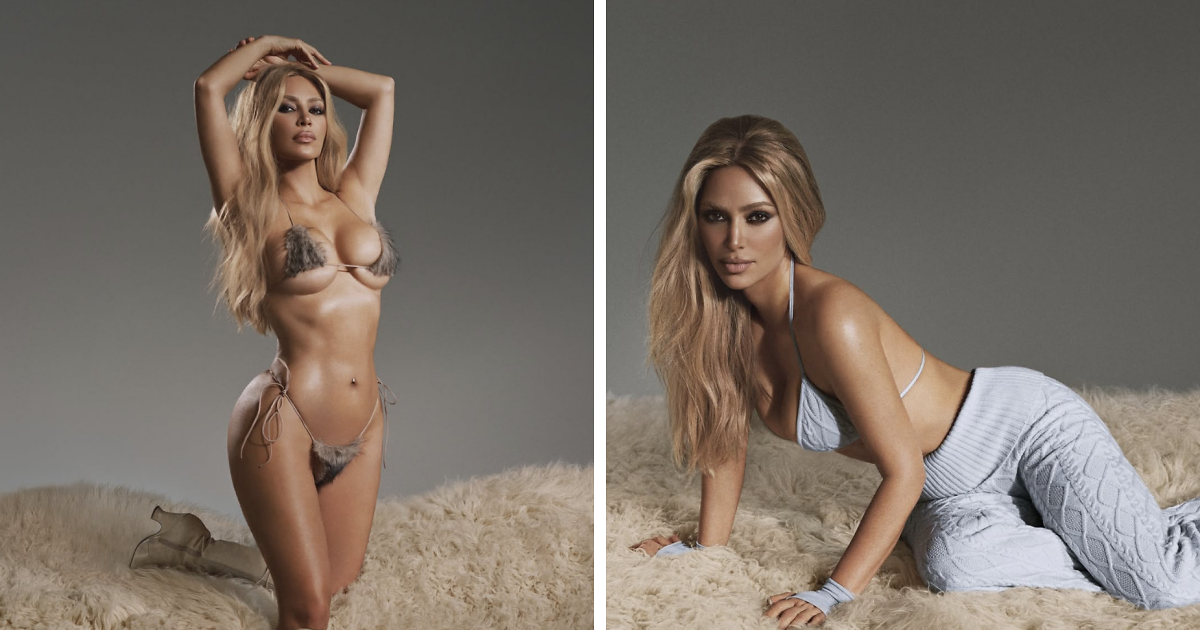
Kim Kardashian has never been shy about turning a product launch into a full-blown internet event, and her SKIMS “Winter Heat” campaign proved it again. The concept sounded simple enough: a faux fur bikini set designed to bring cozy drama to cold-weather fashion. The internet, however, saw the words “winter,” “heat,” and “tiny bikini” standing together in the same room and immediately began asking questions.
The campaign featured Kardashian modeling a faux fur triangle bralette and matching string-style bottom as part of SKIMS’ seasonal drop. The set was reportedly priced at $82 and released around the same time SKIMS was making several major brand moves, including winter-focused collaborations and the opening of its New York flagship store. In other words, this was not just a random fuzzy bikini. It was a highly calculated piece of fashion theater, wrapped in faux fur and delivered directly to the comment section.
And the comment section did what it does best: it brought jokes, confusion, fashion analysis, and a few raised eyebrows. Some fans admired the boldness. Others wondered how much warmth a tiny faux fur bikini could realistically provide. A few focused on the styling, including the wig and the overall winter fantasy. The result was exactly what a modern celebrity fashion campaign often wants: attention, debate, memes, and enough curiosity to make people search for the collection.
What Is SKIMS’ “Winter Heat” Collection?
SKIMS has built its identity around bodywear, shapewear, loungewear, swim, and viral basics. The brand has also become especially good at seasonal storytelling. Instead of simply releasing a bra, a dress, or a lounge set, SKIMS often sells a mood. “Winter Heat” followed that strategy by mixing cold-weather textures with minimal silhouettes.
The faux fur bikini was the centerpiece that grabbed headlines, but the collection also played into a broader winter aesthetic. Think cozy knits, neutral tones, après-ski energy, and the kind of styling that makes sense in a photo shoot long before it makes sense in a snowstorm. This is important because the product was not necessarily being presented as practical outerwear. It was being presented as a fantasy item: playful, dramatic, and engineered for instant online conversation.
Why the Faux Fur Bikini Went Viral
The viral formula was almost too perfect. First, you have Kim Kardashian, one of the most recognizable celebrities in the world. Second, you have SKIMS, a brand with a proven record of turning basics into buzz. Third, you have a product that sounds contradictory: faux fur, but tiny; winter-themed, but barely warm; cozy in texture, but not exactly something one would wear to shovel the driveway.
That contrast made the campaign irresistible. People did not need to be fashion insiders to understand the joke. A faux fur bikini in a winter collection invites the kind of reaction usually reserved for luxury runway looks: “Is this genius, ridiculous, or both?” With Kardashian, the answer is often “yes.”
The Internet’s Reaction: Fashion, Comedy, and Confusion
Online reactions ranged from impressed to deeply amused. Some users praised the styling as bold and very on-brand for Kardashian. Others joked that the bikini looked like it was designed for a winter vacation where the thermostat is set to “celebrity mansion.” The recurring punchline was simple: if this is winter clothing, winter has clearly hired a new publicist.
One of the funniest parts of the reaction was how many people treated the set as a practical object. They asked, essentially, “Where exactly is the warmth happening?” That question misses the fashion-marketing point, but it also explains why the post became so shareable. People love a product that looks serious but begs to be roasted.
Another stream of comments focused on the styling choices. The campaign’s hair, makeup, and overall visual mood sparked comparisons, jokes, and debates. Some viewers thought the look had vintage bombshell energy. Others thought the wig stole the show for the wrong reasons. Whether people loved it or laughed at it, they were still talking about it, which is the oxygen of celebrity commerce.
Kim Kardashian and the Art of Being Trolled Profitably
Kim Kardashian understands something many brands still struggle with: online mockery is not always a marketing failure. Sometimes it is the campaign. If a look is confusing enough to spark jokes but polished enough to feel intentional, it can travel farther than a safer, prettier, quieter product.
The faux fur bikini sits in that perfect viral zone. It is not random. It references Kardashian’s long history of dramatic winter imagery, including earlier “furkini” moments that fans still remember. It also fits into the SKIMS strategy of making pieces that are simple in construction but loud in cultural impact. The product does not need everyone to wear it. It needs everyone to notice it.
That is Kardashian’s marketing superpower. She can release an item that half the internet questions, and the questioning itself becomes visibility. A traditional brand might fear comments mocking practicality. SKIMS can turn those comments into unpaid distribution.
Why the “Winter Heat” Name Works So Well
From an SEO and branding perspective, “Winter Heat” is a clever name. It is short, searchable, seasonal, and slightly contradictory. The phrase creates instant curiosity: how does a winter collection bring heat? In the case of SKIMS, the answer is through texture, celebrity styling, and a product that looks made for Instagram before it looks made for weather.
The name also gives media outlets an easy headline. “Kim Kardashian gives winter heat” practically writes itself. That matters because fashion coverage often depends on punchy phrasing. A product called “Faux Fur Triangle Bralette Set” is descriptive. A campaign called “Winter Heat” is clickable.
The Faux Fur Detail
Faux fur is doing a lot of work here. It makes the bikini feel winter-adjacent even though the silhouette is minimal. It also softens the visual language, making the piece feel more like a costume-party fantasy than a straightforward swimwear item. In fashion, texture can completely change the way a garment is read. Cotton says casual. Satin says evening. Faux fur says “someone is about to be photographed near a fireplace.”
That is why the set generated so much humor. The material says cold-weather glamour, while the cut says vacation photo. The joke exists in the gap between the two.
SKIMS’ Bigger Brand Moment
The “Winter Heat” buzz did not happen in isolation. SKIMS has been expanding beyond shapewear into a much larger fashion and lifestyle empire. The brand has collaborated with major names, launched limited drops, explored winterwear, and opened a flagship store in New York City. Kardashian is no longer simply promoting a celebrity clothing line; she is helping steer a company that has become a serious player in modern retail.
That context matters because a faux fur bikini may look silly at first glance, but it functions as part of a larger attention economy. Not every product needs to be a daily essential. Some products are conversation engines. They bring people to the brand, remind shoppers of its personality, and create a cultural moment around a seasonal drop.
SKIMS has repeatedly shown that it understands how to combine utility and spectacle. The shapewear and lounge basics build customer loyalty. The headline-grabbing pieces build visibility. Together, they create a brand that can sell both everyday comfort and “wait, what is Kim wearing now?” curiosity.
Is the Faux Fur Bikini Fashion or Just a Meme?
The honest answer is that it is both. Fashion and memes are no longer separate worlds. A look can be intentionally stylish and still become joke material. In fact, the most viral fashion moments often have a little absurdity baked in. They are polished enough to admire, strange enough to discuss, and specific enough to remember.
The faux fur bikini checks all three boxes. It is visually recognizable. It fits Kardashian’s personal brand. It is easy to describe in a headline. And most importantly, it gives people permission to react. You do not need a degree in fashion history to have an opinion on a winter bikini made of faux fur.
Why Impractical Fashion Gets Attention
Practical fashion sells quietly. Impractical fashion starts arguments. A black T-shirt may be useful, but nobody gathers in the comments to debate its relationship with weather. A faux fur bikini, on the other hand, creates instant participation. People can joke about where to wear it, who it is for, how warm it is, and whether it belongs on a ski trip, a beach trip, or a very confident living room rug.
This is why celebrity fashion often leans into the theatrical. It is not only about dressing the body. It is about dressing the moment. Kardashian’s “Winter Heat” look gave the internet a moment with just enough absurdity to become memorable.
The Kardashian Effect: Turning Reactions Into Reach
Few celebrity families understand public reaction better than the Kardashians. For years, their brand has operated on a cycle of reveal, reaction, debate, and monetization. A look drops. People discuss it. Media outlets cover the discussion. Social platforms amplify the funniest takes. The brand remains at the center.
With the faux fur bikini, that cycle worked almost instantly. The item was not merely shown; it was interpreted. Fans debated whether it was stylish, strange, nostalgic, or hilarious. Critics questioned the practicality. Fashion watchers connected it to Kardashian’s earlier fur bikini imagery. Casual observers simply enjoyed the jokes.
All of those responses helped the campaign travel. In the digital fashion world, indifference is the real enemy. Mockery can be managed. Confusion can be useful. Silence is fatal.
What This Says About Modern Celebrity Fashion
Kim Kardashian’s tiny faux fur bikini says a lot about where celebrity fashion stands today. The clothing itself is only one layer. The launch strategy, photo styling, comments, memes, media coverage, and search interest all become part of the product’s life cycle.
In the past, a campaign might have lived in magazines or billboards. Today, it lives in screenshots, reaction posts, shopping links, TikTok commentary, Reddit threads, and headlines. A successful fashion campaign does not simply ask, “Would you wear this?” It asks, “Will you talk about this?”
By that measure, “Winter Heat” did exactly what it was supposed to do. It made people pause. It made them laugh. It made them click. It made them compare. It made them remember SKIMS during a crowded holiday shopping season.
Experience Section: What We Can Learn From the “Winter Heat” Moment
From a content and branding perspective, the “Winter Heat” faux fur bikini is a masterclass in controlled chaos. Anyone who has ever worked around social media, fashion content, or product launches knows that the safest idea is not always the strongest one. Safe ideas are easy to approve, easy to photograph, and easy to forget. The faux fur bikini was not built for quiet approval. It was built for a reaction.
One experience that stands out when analyzing this kind of viral fashion moment is how quickly the audience becomes part of the campaign. The brand posts the image, but the public writes the second act. One person makes a joke about the weather. Another comments on the styling. Someone else compares it to an older Kardashian look. Suddenly, the product has a story that is bigger than the product page.
That is a useful lesson for bloggers, marketers, and fashion writers. Viral style coverage works best when it explains both the item and the reaction. Readers want to know what happened, but they also want to understand why everyone is laughing. In this case, the humor came from contrast: winter branding plus barely-there design, cozy texture plus impractical silhouette, luxury presentation plus meme-ready confusion.
Another lesson is that celebrity brands often use tension on purpose. If the faux fur bikini had been a normal winter sweater, it might have sold, but it probably would not have become a headline. The tension made it memorable. It gave fashion editors, fans, and critics something to chew on. In a crowded digital feed, a little confusion can be more powerful than perfect clarity.
There is also a practical takeaway for readers: not every fashion campaign is meant to be copied literally. Some looks are mood boards. Some are performance. Some are designed for fantasy, not errands. The “Winter Heat” bikini is best understood as a visual statement rather than a cold-weather recommendation. Nobody needs to test it during a snowstorm to understand the concept.
Finally, the whole episode shows why Kardashian remains such a strong force in celebrity retail. She knows how to invite attention without needing universal approval. The jokes did not erase the campaign; they extended it. The trolling did not bury the bikini; it made it more searchable. That is the strange magic of modern celebrity marketing: sometimes the internet laughing is still the internet looking.
Conclusion
Kim Kardashian’s tiny faux fur bikini from SKIMS’ “Winter Heat” collection was funny, dramatic, impractical, memorable, and completely on-brand. The internet trolled it because the concept practically arrived with a punchline attached. But the laughter also proved the campaign’s effectiveness. People noticed. People shared. People debated. And SKIMS stayed exactly where it likes to be: in the center of the conversation.
Whether you see the faux fur bikini as a clever seasonal stunt, a bold fashion fantasy, or a cozy-looking meme with excellent timing, one thing is clear: Kardashian knows how to transform a small piece of fabric into a very large conversation. Winter may be cold, but the marketing was definitely heated.












