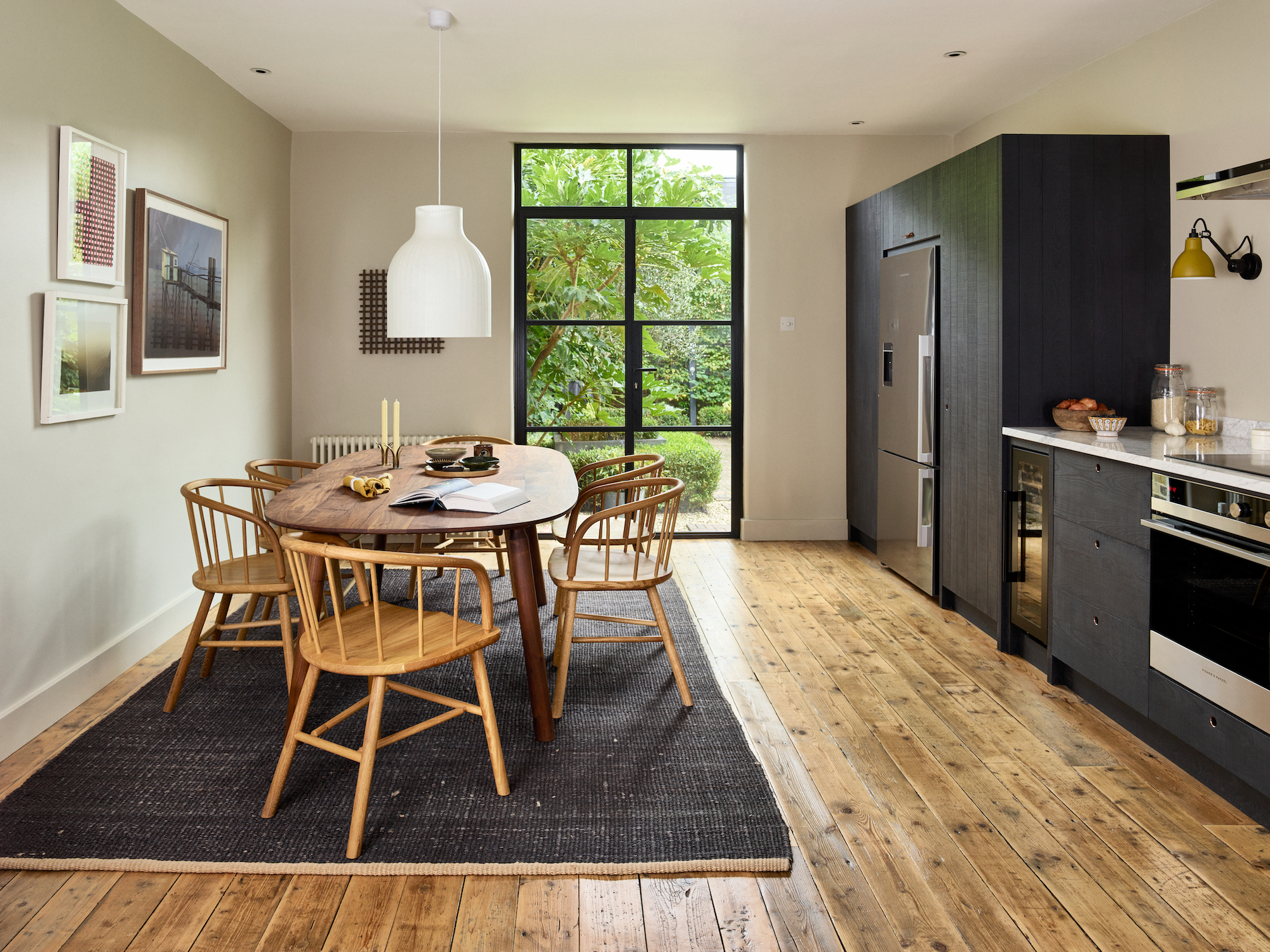
Some kitchens shout. Others whisper in a beautifully textured, walnut-scented voice and somehow make you want to reorganize your mugs by emotional significance. The London kitchen of Paul de Zwart, founder of the contemporary furniture brand Another Country, belongs firmly in the second category. It is calm without being cold, crafted without being precious, and stylish without looking as if it needs a small museum label beside the toaster.
Located in a Victorian terrace house in Northwest London, this project is a thoughtful example of how an old home can evolve without losing its soul. The renovation joined two rooms into one dine-in kitchen, creating a space that works for cooking, gathering, lingering, and probably having one more espresso than strictly recommended. Instead of forcing a glossy showroom kitchen into a historic shell, the design respects the home’s original proportions, external openings, and architectural character.
The result is a kitchen that feels deeply current while avoiding the short shelf life of trend-chasing design. It brings together reclaimed flooring, natural materials, streamlined appliances, craft furniture, tactile cabinetry, and a dining zone that turns everyday meals into something more generous. In other words, it is not just a kitchen. It is a persuasive argument for slowing down.
Who Is Paul de Zwart?
Paul de Zwart is best known as the founder of Another Country, a London-based furniture and homeware brand built around natural materials, responsible production, and long-lasting design. Before establishing the brand in 2010, de Zwart was associated with the world of publishing and design culture, including Wallpaper magazine. That background matters because his kitchen does not feel like a random collection of expensive objects. It feels edited.
Another Country’s design language is rooted in solid wood, simple forms, honest construction, and a belief that furniture should age gracefully. The brand’s pieces often reinterpret traditional British furniture shapes for modern homes. This philosophy is visible in de Zwart’s own kitchen: nothing screams for attention, yet everything has weight, purpose, and texture.
A Victorian Terrace Reimagined for Modern Living
The bones of the project are classic London: a Victorian terrace house with layered history and proportions that deserve respect. Many homeowners face the same design puzzle in older houses. How do you create a modern kitchen without flattening the quirks that made the home charming in the first place?
Here, the answer was not to erase the old but to negotiate with it. The renovation combined two rooms into one larger dine-in kitchen, allowing the space to become more sociable and practical. This is a particularly smart move in a city home, where square footage has to behave like a multitasking intern: cook, host, store, relax, and look good doing it.
Why the Two-Room Layout Works
Opening two rooms into one created a natural place for both cooking and dining. Instead of isolating the cook in a narrow back room, the kitchen becomes the central gathering space. The dining table is not an afterthought pushed into a corner; it is part of the room’s logic. That matters because the best kitchens are not only about preparing food. They are about keeping people in conversation while onions soften, coffee brews, and someone explains why they absolutely needed another chair.
The deVOL Sebastian Cox Kitchen: Urban Rustic Done Right
One of the defining elements of Paul de Zwart’s London kitchen is the Sebastian Cox-designed kitchen by deVOL. This collection is known for its tactile wood surfaces, modern craft sensibility, and “urban rustic” character. It avoids the sterile perfection of many contemporary kitchens and instead celebrates visible grain, texture, and atmosphere.
The Sebastian Cox kitchen range is a natural fit for this home because it bridges old and new. It has enough restraint to sit comfortably in a Victorian terrace, but enough edge to feel fresh. The cabinetry looks crafted rather than manufactured, which pairs beautifully with de Zwart’s broader design philosophy. It is not nostalgia in costume. It is modern living with memory built in.
Texture as the Secret Ingredient
Texture is the difference between a kitchen that looks good in a photo and one that feels good at 7:30 on a rainy Tuesday morning. The wood cabinetry, reclaimed flooring, woven details, jute rug, and warm furniture all create a layered sensory experience. This kitchen understands that the hand matters as much as the eye.
That tactile quality also keeps the space from becoming too polished. Smooth modern appliances sit against rougher natural finishes. Dark cabinetry is balanced by wood tones. The room has contrast, but not conflict. It is the design equivalent of a well-made cup of coffee: strong, balanced, and not trying to be a milkshake.
Reclaimed Floors and the Beauty of Imperfection
The salvaged wood flooring is one of the most important choices in the kitchen. Reclaimed floors instantly bring depth to a room because they arrive with a past. New materials can be beautiful, but reclaimed timber has a lived-in quality that cannot be faked convincingly. It softens the renovation and helps the kitchen feel as if it belongs to the house rather than being installed on top of it.
In historic homes, this kind of material choice is especially powerful. Original buildings often carry subtle irregularities: uneven walls, changing light, old openings, and proportions that do not always follow modern templates. Reclaimed wood understands those imperfections. It does not demand a flawless environment. It makes room for character.
Another Country Furniture in Its Natural Habitat
It is no surprise that Another Country furniture appears in de Zwart’s kitchen. The Hardy Dining Table in solid walnut and Hardy Chairs in oak, designed by David Irwin for Another Country, bring the brand’s values into the heart of the home. These are not “display-only” pieces that make guests nervous about sitting down. They look sturdy, generous, and ready for actual life.
The dining area is essential to the success of the room. A kitchen can have beautiful cabinetry and clever appliances, but if there is nowhere comfortable to sit, it becomes a workplace rather than a living space. The table and chairs add warmth, rhythm, and hospitality. They also reinforce the idea that good furniture does not need to perform acrobatics. Sometimes a table simply needs to be proportioned well, made honestly, and strong enough to survive dinner, homework, laptops, and the occasional dramatic bowl of pasta.
Appliances That Support the Design Instead of Stealing the Show
The kitchen uses streamlined Fisher & Paykel appliances, a choice that fits the room’s quiet confidence. Modern appliances are essential, but in a character-rich kitchen, they work best when they support the design rather than dominate it. Integrated and refined appliances allow the eye to focus on materials, furniture, light, and proportion.
This is also where the kitchen becomes practical, not just photogenic. A dine-in kitchen must handle daily traffic. It needs refrigeration, dishwashing, storage, prep space, lighting, and circulation that make sense. A beautiful kitchen that does not function is just a very expensive backdrop for takeout containers. De Zwart’s kitchen avoids that trap by balancing atmosphere with usability.
Lighting, Contrast, and the Art of Not Overdoing It
Lighting plays a quiet but crucial role. The Lampe Gras 304 wall light adds a functional, industrial note, while the Strand Pendant by Benjamin Hubert for Muuto brings softness over the dining area. These choices reflect a broader design principle: one strong light fixture can do more than five nervous decorative gestures.
The kitchen also includes a lacquered red Joyce Cabinet from Pinch Design, which acts as a confident accent. This is a smart lesson for anyone designing a neutral or natural kitchen. Calm does not mean color is banned from the premises. A single rich piece can energize the room and keep it from becoming too polite. Think of it as the design equivalent of a red lipstick or a very good hot sauce.
Why This London Kitchen Still Feels Relevant
Although the project was first featured several years ago, it feels remarkably aligned with what homeowners and designers continue to value today: natural materials, warm wood, integrated appliances, flexible eat-in spaces, and timeless design. Current kitchen trend reporting continues to point toward organic finishes, wood grain, neutral palettes, layered lighting, and kitchens that function as social hubs.
That relevance is not accidental. The kitchen avoids gimmicks. It does not lean on one loud trend that will age badly by next Tuesday. Instead, it builds its identity from enduring elements: proportion, craft, honest materials, and everyday comfort. Those are the design choices that tend to last because they are connected to how people actually live.
Design Lessons from Paul de Zwart’s Kitchen
1. Preserve Character Before Adding New Features
The strongest part of this renovation is its respect for the Victorian terrace. Before choosing finishes, the project considered the house’s proportions, openings, and atmosphere. This is a valuable lesson: do not start a renovation by asking, “What trend do I like?” Start by asking, “What does this home already do well?”
2. Use Natural Materials to Create Warmth
Wood, jute, woven textures, and reclaimed flooring give the room warmth and depth. Natural materials are not just decorative; they change how a space feels. They absorb light differently, age visibly, and create a sense of calm that glossy synthetic surfaces often struggle to match.
3. Let the Dining Area Matter
The dining table is central to the room’s success. It makes the kitchen feel like a place to gather, not just a place to complete chores. If your kitchen has room for a table, even a small one, it can transform how the space is used.
4. Mix Rustic and Refined Elements
The kitchen works because it is not all one note. Rustic wood meets sleek appliances. Dark cabinetry meets warm flooring. Industrial lighting meets handcrafted furniture. This mix creates visual tension, and visual tension is what keeps a room interesting after the first glance.
5. Choose Longevity Over Novelty
Perhaps the biggest lesson is that timeless design is not boring. In fact, it often requires more discipline than trend-driven design. Paul de Zwart’s kitchen is memorable because it knows what to leave out. No gimmicks, no visual shouting, no “look at me” backsplash doing jazz hands behind the sink.
How to Bring This Look Into Your Own Kitchen
You do not need a Victorian terrace in London or a founder-level furniture collection to borrow ideas from this space. Start with materials. If a full renovation is not possible, introduce wood through a dining table, open shelving, stools, cutting boards, or a vintage cabinet. Add texture with a natural fiber rug, linen curtains, ceramic bowls, or woven baskets.
Next, simplify the color palette. De Zwart’s kitchen shows that a room can feel rich without using many colors. Work with warm neutrals, dark accents, natural wood, and one confident color moment. The goal is not to copy the kitchen exactly but to understand its rhythm: calm foundation, tactile materials, useful furniture, and a few objects with personality.
Finally, think about how the room supports daily rituals. Where does coffee happen? Where do people sit while someone cooks? Is there a place for a lamp, a chair, a cabinet, or a piece of art that makes the kitchen feel less like a utility zone? The best kitchens make ordinary habits feel slightly more intentional.
Experience-Based Reflections: Living With a Kitchen Like This
A kitchen inspired by Paul de Zwart’s London home changes how you behave in small but noticeable ways. The first thing you experience is pace. Natural materials have a way of slowing the room down. You do not rush through a space with reclaimed floors, solid wood furniture, and soft lighting in quite the same way you rush through a shiny white kitchen with the emotional temperature of a dental clinic.
In a kitchen like this, the table becomes the anchor. People naturally gather there before the meal is ready and remain long after the plates are cleared. Someone brings a laptop. Someone else peels an orange. A guest runs a hand over the wood grain and says, “This is a nice table,” which is furniture’s version of receiving a standing ovation.
The second experience is forgiveness. Textured wood and reclaimed surfaces do not panic at the first scratch. They absorb life. A tiny dent on a table becomes part of the record rather than a domestic emergency. This is especially useful in a busy household where kitchens are asked to host everything from breakfast to school projects to late-night toast negotiations.
Another practical joy is visual calm. When appliances are streamlined and storage is considered, the kitchen feels less cluttered even when it is actively being used. That does not mean it must be minimalist in a strict sense. It can still have coffee gear, cookbooks, fruit bowls, ceramics, and a cabinet with color. The difference is that the objects feel chosen, not dumped there after losing a battle with a junk drawer.
There is also a social benefit to the dine-in layout. Cooking becomes less isolated. The person at the stove can talk to the person at the table. Guests can pour wine without hovering in the prep zone like friendly but confused traffic cones. Children, friends, and family can occupy the same room without everyone colliding with the refrigerator door. That is not just good design; it is household diplomacy.
Finally, this style of kitchen teaches patience. It encourages buying fewer things but choosing better ones. A solid table, a useful chair, a hardworking pendant light, a well-made cabinet, and a durable floor can outlast several waves of trend fatigue. The room does not need constant reinvention because it was never built around novelty in the first place.
The lasting experience of a kitchen like this is comfort with intelligence. It is beautiful, but not vain. Practical, but not dull. Designed, but not overdesigned. It reminds us that the best kitchens are not the ones that look untouched. They are the ones that make daily life feel richer, warmer, and easier to inhabit.
Conclusion: A Kitchen Built for Time, Texture, and Real Life
Paul de Zwart’s London kitchen is a master class in thoughtful restraint. By joining two rooms into one dine-in space, preserving the Victorian terrace’s character, and layering reclaimed floors, deVOL cabinetry, Another Country furniture, refined lighting, and streamlined appliances, the project achieves something many kitchens chase but few capture: timeless livability.
It is stylish, yes, but its real strength lies in how grounded it feels. Every element has a reason to be there. The kitchen respects the past without becoming trapped by it, embraces modern function without becoming cold, and proves that natural materials can make a room feel both sophisticated and deeply human.
For homeowners, designers, and anyone currently wondering whether a kitchen can be both practical and poetic, this space offers a clear answer. Yes, it can. Just start with good bones, honest materials, comfortable furniture, and enough restraint to let the room breathe.
Note: This article is an original, plagiarism-free editorial synthesis based on real project details and broader kitchen design context. It is written for web publication in standard American English.