
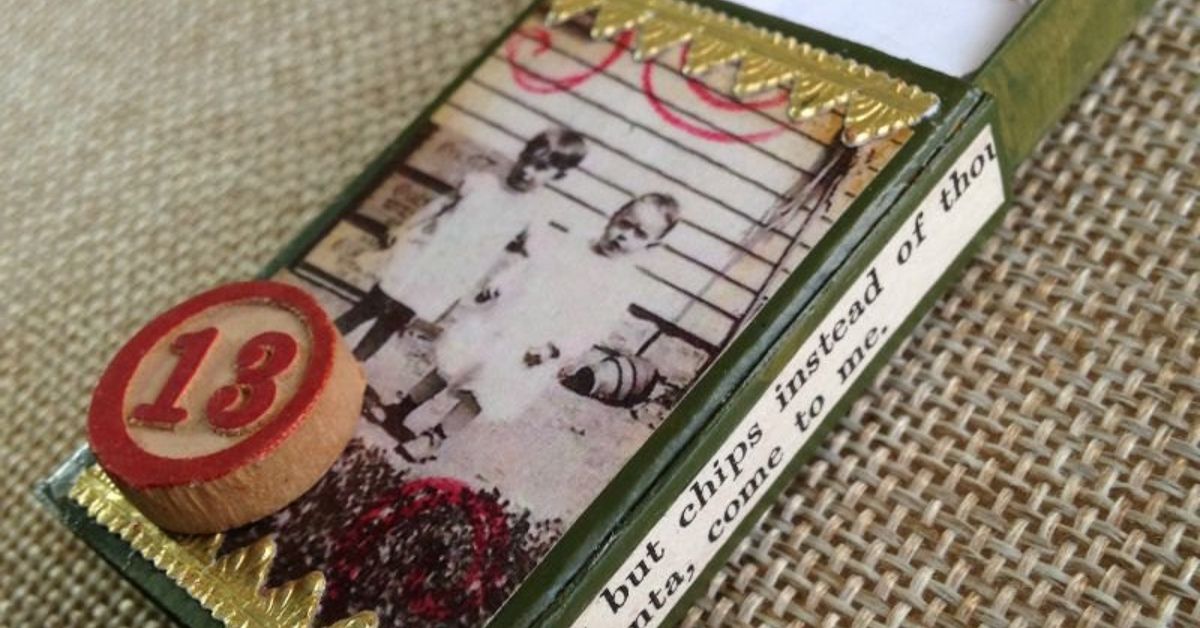
A Matchbox Advent Calendar is proof that holiday magic does not need to arrive in a giant glitter-covered crate with a price tag that makes your wallet call customer service. Sometimes, Christmas countdown joy fits inside 24 tiny drawers, each one small enough to hold a chocolate, a note, a sticker, a joke, a bead, a charm, or a promise to bake cookies without “accidentally” eating half the dough.
This charming DIY Advent calendar turns ordinary matchboxes into a miniature countdown cabinet for December. It is part craft project, part holiday decoration, part family ritual, and part tiny-storage engineering challenge. Whether you want a handmade Christmas countdown calendar for kids, a reusable Advent calendar for your mantel, or a thoughtful gift for someone who loves small surprises, a matchbox design gives you maximum personality in minimum square footage.
The best part? It is wonderfully customizable. You can make it rustic with kraft paper and twine, glamorous with metallic numbers and velvet ribbon, kid-friendly with bright stickers, or minimalist with white boxes and tiny black numerals. Think of it as a dollhouse for December treats, except nobody has to assemble a 400-piece plastic staircase at midnight.
What Is a Matchbox Advent Calendar?
A matchbox Advent calendar is a handmade holiday countdown made from 24 or 25 small matchboxes. Each box is decorated, numbered, and filled with a tiny surprise. The boxes may be stacked into a square, arranged like a Christmas tree, attached to a magnetic board, glued onto a tray, tied with ribbon, or built into a miniature chest of drawers.
Traditionally, Advent calendars help mark the days leading up to Christmas. Many modern versions begin on December 1 and end on December 24 or December 25. The matchbox version takes that familiar idea and makes it personal. Instead of buying a prefilled calendar, you decide what each drawer holds. That means no mystery lip balm in a shade called “Holiday Raisin Regret” unless you truly want that in your life.
Because matchboxes are small, they naturally encourage simple, meaningful treats. A folded message, a joke, a tiny ornament, a piece of candy, or a clue for a family activity can feel surprisingly special when it appears behind a numbered drawer. The small scale is not a limitation; it is the charm.
Why Matchbox Advent Calendars Are So Popular
Advent calendars have grown far beyond the classic chocolate countdown. Today, shoppers can find calendars filled with toys, beauty products, jams, tea, coffee, stationery, collectibles, and other daily surprises. But the handmade matchbox Advent calendar remains popular because it offers something mass-produced calendars cannot: total control.
You choose the colors. You choose the message. You choose whether Day 7 contains a peppermint, a tiny handwritten compliment, or a coupon that says, “You may control the Christmas playlist for one hour.” That last one is powerful. Use carefully.
A DIY matchbox calendar is also reusable. Once December ends, the drawers can be emptied, packed away, and refilled next year. Compared with many single-use holiday items, a sturdy handmade calendar can become part of the family decoration box, right beside the tangled lights and that one ornament nobody remembers buying but everyone is emotionally attached to.
A Brief History of Advent Calendars
The Advent calendar tradition is commonly traced to 19th-century Germany, where families created simple ways to count down the days before Christmas. Early versions used chalk marks, candles, small images, or other visual markers to help children understand the wait. Eventually, printed calendars with little doors became popular, and over time, the idea expanded into the treat-filled calendars many people know today.
The matchbox Advent calendar fits beautifully into that history because it brings the countdown back to something handmade and intimate. Instead of focusing only on the treat, it highlights anticipation. The drawer is small, the surprise is tiny, but the daily ritual feels big. There is a lovely pause in opening one box at a time. No rushing. No ripping through everything like a raccoon in a gift bag.
Supplies You Need
You do not need a professional craft studio to make a matchbox Advent calendar. You need a table, patience, and the emotional strength to keep tiny paper scraps from taking over your entire home.
Basic Materials
- 24 or 25 empty matchboxes
- Scrapbook paper, wrapping paper, kraft paper, or cardstock
- Glue stick, craft glue, or double-sided tape
- Number stickers, stamps, paint pens, or printable numbers
- Ribbon, twine, buttons, beads, or mini drawer pulls
- Scissors or a craft knife
- Ruler and pencil
- A backing board, cookie sheet, tray, wooden frame, or sturdy cardboard
Optional Extras
- Magnets for a magnetic Advent calendar
- Acrylic paint for the outer sleeves
- Washi tape for quick decorating
- Mini ornaments or charms
- Hot glue for stronger structural support
- Clear sealant if you want a longer-lasting finish
For a polished look, choose three to five coordinating papers rather than 24 completely unrelated designs. Of course, if your style is “Christmas craft tornado,” 24 patterns can work too. The calendar should look joyful, not like it had an argument with a scrapbook aisle.
How to Make a Matchbox Advent Calendar
Step 1: Decide on the Layout
Before decorating, choose the shape of your calendar. A simple 4-by-6 rectangle is easiest. A Christmas tree shape feels festive. A stacked cube looks like a tiny drawer cabinet. A magnetic layout lets you move the boxes around on a metal tray or cookie sheet.
If this is your first matchbox Advent calendar, start with a rectangle. It is sturdy, simple to store, and less likely to collapse dramatically while you whisper, “But it looked so easy online.”
Step 2: Empty and Prepare the Matchboxes
Use empty matchboxes only. Remove all matches and keep anything flammable away from the craft area. Slide out each inner drawer and check that it moves smoothly. If a drawer sticks, gently reshape the sleeve or trim rough edges.
You can paint the outer sleeves first or cover them directly with paper. Painting helps hide printed labels, while paper adds pattern and texture. Let paint dry completely before gluing anything else. Wet paint and tiny drawers are not a festive combination.
Step 3: Cover the Boxes
Measure the outside sleeve of one matchbox and cut paper strips to wrap around it. Use the first strip as a template for the rest. Apply glue evenly, wrap the paper around the sleeve, and smooth the edges. Repeat for each box.
For a neat finish, avoid bulky overlaps near the drawer opening. Too much paper at the edge can make the drawer difficult to open. Nobody wants Day 14 to require pliers.
Step 4: Add Numbers
Number each drawer from 1 to 24 or 1 to 25. You can place numbers in order or scatter them randomly for a mini treasure hunt. Random numbering makes each morning more interactive, especially for kids who enjoy searching. Ordered numbering creates a clean, classic look.
Use sticker numbers for speed, stamps for a handmade feel, or handwritten numerals for a personal touch. If your handwriting is unpredictable, call it “whimsical.” That word saves many crafts.
Step 5: Create Drawer Pulls
Tiny drawer pulls make the calendar easier to use and much cuter. Glue on small beads, buttons, folded ribbon tabs, mini brads, or loops of twine. Keep pulls lightweight so they do not tear the drawer front.
If the calendar is for young children, avoid small detachable decorations. Tiny parts can be unsafe for toddlers and should be kept away from children under 3. For little ones, use paper tabs, larger ribbon loops, or adult-supervised opening.
Step 6: Assemble the Calendar
Once all boxes are decorated, arrange them in your chosen layout. Glue them together side by side, or attach them to a backing surface. A metal cookie sheet works well for magnetic matchboxes. A wooden plaque gives a farmhouse look. A shadow box frame turns the calendar into display-worthy wall décor.
Let the structure dry fully before filling the drawers. This is not the moment to test gravity. Gravity has been training for years.
Step 7: Fill the Drawers
Fill each matchbox with a small surprise. Keep items lightweight and appropriately sized. If something does not fit, do not force it. The matchbox has spoken.
Best Matchbox Advent Calendar Filler Ideas
The tiny size of matchboxes encourages creativity. Instead of large gifts, think small, sweet, funny, useful, or experience-based.
For Kids
- Holiday stickers
- Mini erasers
- Small wrapped candies
- Temporary tattoos
- LEGO-style mini pieces, if age-appropriate
- Folded jokes
- Clues for a hidden ornament or book
- Paper snowflake prompts
For Teens
- Positive notes
- Mini stationery items
- Hair ties or clips
- Phone wallpaper QR codes
- Tea bags or cocoa packets nearby with a note inside the drawer
- Playlist prompts
- Small craft charms
For Adults
- Tea sachets
- Mini chocolates
- Gratitude prompts
- Date-night ideas
- Mini candles placed outside the drawer with a clue inside
- Self-care reminders
- Handwritten memories
Experience-Based Fillers
- Watch a Christmas movie tonight
- Make paper snowflakes
- Drive around to see lights
- Bake cookies
- Call a relative
- Donate a canned good
- Write a thank-you note
- Have breakfast for dinner
Experience-based fillers are perfect when the drawers are too small for actual gifts. Write the activity on a folded slip of paper. The drawer becomes the announcement, not the storage unit. This is a smart trick when Day 18 is “make gingerbread houses” and you cannot fit graham crackers, frosting, and structural disappointment into a matchbox.
Design Styles to Try
Vintage Christmas
Use red, cream, forest green, and gold papers. Add distressed edges with brown ink and use old-fashioned number labels. Finish with twine and tiny bells for a nostalgic look.
Scandinavian Minimalist
Choose white, kraft, black, and natural wood tones. Keep the numbers clean and simple. Add small greenery sprigs or paper stars. This style looks calm, elegant, and suspiciously organized.
Kids’ Color Explosion
Use bright paper, stickers, pom-poms, and cheerful numbers. Let children decorate some of the drawers themselves. The result may not be symmetrical, but it will have personality. Possibly googly eyes. Definitely personality.
Magnetic Cookie Sheet Calendar
Attach magnets to the backs of matchboxes and place them on a decorated metal tray or cookie sheet. This version is easy to rearrange and store. It is also satisfying for anyone who enjoys moving tiny objects into perfect rows.
Mini Village Calendar
Turn each matchbox into a tiny house with a paper roof, windows, and doors. Arrange the boxes like a Christmas village. Add bottle-brush trees or cotton snow around the display. It takes more time, but the result can become a holiday centerpiece.
Budget Tips for a Beautiful Calendar
A matchbox Advent calendar can be very affordable if you use materials you already have. Save wrapping paper scraps, reuse ribbon from gifts, cut numbers from old cards, or decorate with brown paper bags. Leftover scrapbook paper is perfect because matchboxes need only small pieces.
Instead of buying 24 gifts, mix treats with notes and activities. A calendar filled entirely with purchased items can become expensive quickly. A balanced mix feels more thoughtful and keeps the project realistic.
Here is a simple formula: eight edible treats, eight activity prompts, four tiny gifts, and four handwritten notes. That gives variety without turning your craft table into a miniature shopping mall.
Safety and Practical Considerations
Because matchbox Advent calendars often contain small objects, choose fillers based on the age of the person opening them. Avoid tiny detachable parts for toddlers and keep candy choices age-appropriate. If you include edible treats, consider allergies and label anything homemade if giving the calendar as a gift.
Also, use clean, empty matchboxes or craft matchbox blanks. Do not leave matches inside. Keep glue, craft knives, paint, and hot glue tools away from young children unless supervised. Holiday crafting should produce memories, not emergency room paperwork.
How to Store and Reuse It
After Christmas, empty the drawers and check for crumbs. Candy crumbs are tiny invitations to ants, and ants are not known for respecting holiday décor. Store the calendar in a shallow box with tissue paper around it. If the drawers are delicate, place the calendar flat rather than upright.
Before storing, make a quick note of what fillers worked best. Next year, you will thank yourself when December arrives and your brain is already busy remembering school events, work deadlines, holiday menus, and where you hid the good tape.
Common Mistakes to Avoid
Using Too Much Glue
Too much glue can warp paper and make drawers stick. Use a thin, even layer or double-sided tape for cleaner results.
Making the Drawers Too Heavy
Matchboxes are lightweight. Heavy items can bend the drawers or pull them loose. If the gift is larger, place a clue inside the drawer and hide the real item nearby.
Skipping the Test Fit
Always test each drawer after decorating. A beautiful drawer that does not open is just a tiny sealed mystery box. Festive, yes. Functional, no.
Waiting Until November 30
You can make a matchbox Advent calendar quickly, but it is more fun when you are not racing the clock with glue on your fingers and holiday music judging you in the background.
Experience Notes: Living With a Matchbox Advent Calendar
The real magic of a matchbox Advent calendar is not only in making it; it is in living with it for 24 small moments. The first morning feels ceremonial. Someone finds box number one, slides it open, and suddenly the room gets quiet in that rare holiday way, as if even the coffee maker knows something sweet is happening. Inside might be a chocolate, a riddle, or a folded note that says, “Tonight: cocoa and a Christmas movie.” It is simple, but it changes the mood of the day.
By the first week of December, the calendar becomes part of the household rhythm. Kids check it before breakfast. Adults pretend they are not also curious. Guests notice it on the mantel and immediately lean closer, because tiny drawers have a strange magnetic power. People want to open them. People want to ask what is inside. People want to know whether Day 12 is candy or an activity, because apparently suspense is stronger when it is packaged in a box the size of a thumb.
One of the best experiences is watching different personalities interact with the calendar. The planner wants every drawer opened in perfect order. The chaotic family member wants to hunt for numbers at random. The snack-focused person gently shakes drawers to detect chocolate, which is technically not a crime but should be monitored. The sentimental one saves every note. The crafty one starts saying, “Next year, we could add lights,” which is how many innocent projects become engineering assignments.
A matchbox Advent calendar also teaches the beauty of small traditions. Not every holiday memory needs to be dramatic. Sometimes the thing people remember is the joke tucked into Day 9, the paper star hidden in Day 15, or the clue that led everyone to matching socks on Day 22. The calendar creates daily anticipation without requiring a huge event. It says, “Pause here. Enjoy this little thing.” During a season that can become crowded with errands, purchases, and schedules, that pause matters.
It is also forgiving. If you forget to fill a drawer, you can slip something in before anyone notices. If a number falls off, glue it back. If one drawer looks crooked, call it handmade character. The calendar does not need to be perfect to become beloved. In fact, the slightly uneven corners and mismatched papers often make it better. They prove someone sat down, cut the pieces, wrapped the boxes, chose the surprises, and built a countdown by hand. That effort is the real gift.
By Christmas Eve, the calendar looks different. Most drawers have been opened, some more gently than others. A few may hold candy wrappers, because humans are mysterious. But the little structure has done its job. It has carried everyone through December one tiny surprise at a time. And when it is packed away for next year, it does not feel like ordinary décor. It feels like a tradition waiting patiently in a box, ready to make the next December a little sweeter.
Conclusion
A Matchbox Advent Calendar is one of the most charming DIY holiday crafts because it blends creativity, tradition, affordability, and daily delight. It can be rustic, modern, colorful, elegant, kid-friendly, romantic, or completely silly. It can hold candy, notes, clues, jokes, activities, or miniature keepsakes. Most importantly, it turns the countdown to Christmas into a personal ritual instead of just another seasonal purchase.
Whether you build a magnetic matchbox calendar, a tiny drawer cabinet, a Christmas tree arrangement, or a miniature village, the goal is the same: create 24 little reasons to smile. And honestly, December can use all the tiny reasons it can get.












