
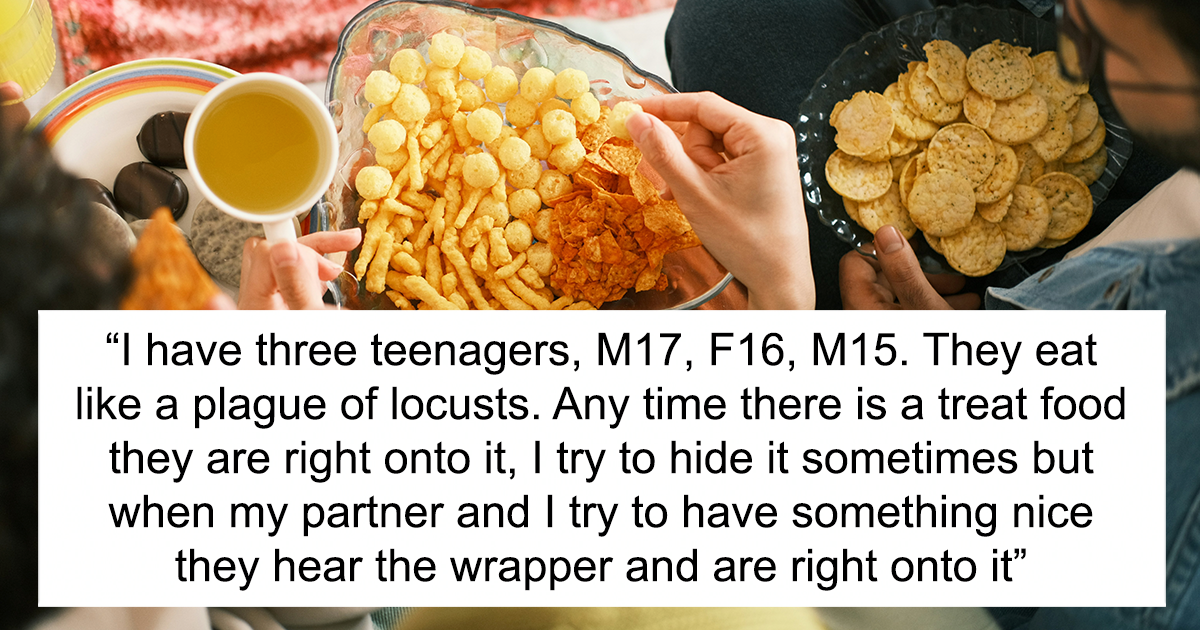
Every family has a snack economy. Some homes run on a quiet barter system of granola bars, cheese sticks, and “Who ate the last cookie?” Others operate like a miniature convenience store where chips vanish with the speed of a magician’s rabbit. In this story, one mom decided it was time to change the rules: regular groceries were still covered, but if her teens wanted extra junk food, they had to buy it themselves.
That sounds simple enough. Reasonable, even. A parenting policy with the calm dignity of a spreadsheet. But then came the daughter’s dramatic reaction, the kind of household performance that makes everyone wonder whether the issue is really about snacksor something much bigger hiding inside a bag of sour gummies.
At first glance, the conflict seems small. A mother tells her teenagers that chips, candy, soda, energy drinks, and other treats are no longer unlimited family-funded luxuries. The daughter reacts as if dessert itself has been banned from civilization. But underneath the kitchen-counter chaos is a surprisingly relatable parenting dilemma: How do parents teach teens responsibility without making them feel punished? How do families set food boundaries without creating shame? And how do you explain that “I bought apples” is not the same as “I ruined your life”?
Why the Junk Food Rule Hit a Nerve
Teenagers are in an awkward developmental neighborhood: too old to be managed like little kids, too young to be financially independent, and somehow always hungry. They want autonomy, but they also want the pantry to magically refill itself. When a parent changes a household rule, especially one tied to comfort, routine, and choice, the reaction can be bigger than the rule itself.
Food is not just food in a family. It can mean freedom, fairness, status, comfort, and control. For teens, snacks may feel like one of the few daily choices they fully own. So when a parent says, “You can still have treats, but you need to pay for extras,” a teen may hear, “Your fun is being taxed.” And no teenager has ever reacted calmly to a new tax code.
From the mom’s point of view, the rule makes practical sense. Junk food can be expensive, especially when multiple teenagers treat the pantry like a public vending machine with no closing hours. With grocery prices rising over the years and teens consuming more packaged snacks than parents can track, many families are rethinking what counts as a household necessity and what counts as a personal extra.
Research and public health guidance generally support limiting foods high in added sugar, sodium, and saturated fat while keeping healthier options available at home. The CDC notes that foods high in added sugar, salt, and saturated fat should be limited so they remain occasional treats rather than everyday defaults. HealthyChildren from the American Academy of Pediatrics has also emphasized that ultra-processed foods make up a large share of many U.S. children’s diets, which gives parents a real reason to set thoughtful snack boundaries.
The Mom Wasn’t Banning SnacksShe Was Drawing a Line
One important distinction often gets lost in family arguments: a boundary is not the same as a ban. This mom was not saying, “No joy shall enter this house unless it is steamed broccoli.” She was saying that the family would provide meals and basic snacks, but specialty treats and extra junk food were now the teens’ responsibility.
That difference matters. A parent who refuses to provide any food is neglectful. A parent who says, “I will buy dinner ingredients, fruit, yogurt, peanut butter, popcorn, and sandwich supplies, but not a private mountain of candy for each child,” is setting a budget boundary. It is the difference between feeding children and funding a snack-based lifestyle brand.
Healthy boundaries can actually help teenagers. When parents set clear expectations and follow through consistently, teens learn that choices have trade-offs. If they want the fancy chips, the oversized soda, or the seasonal cookie flavor that sounds like it was invented during a sugar hallucination, they can spend their own money. If they would rather save their cash, the household food is still there.
That lesson is not cruelty. It is preparation. Adulthood is full of small financial decisions that feel boring until rent, gas, groceries, phone bills, and “just one little treat” all show up at the same time like uninvited dinner guests.
Why the Daughter’s Reaction May Have Been So Dramatic
The daughter’s reaction may look excessive from the outside, but teen emotions are often louder than the actual issue. A junk food rule can trigger feelings about fairness, independence, attention, or being misunderstood. She may have felt singled out, even if the rule applied to everyone. She may have interpreted the decision as judgment about her eating habits. Or she may simply have been angry that a familiar comfort was no longer effortless.
There is also a social piece. Teens often compare what their friends are allowed to buy, eat, wear, and do. If one friend’s parents keep the house stocked with soda, candy, and frozen pizza rolls, a teen may view a more limited pantry as a personal injustice worthy of courtroom-level speeches. Never underestimate a teenager’s ability to turn “We have food at home” into a constitutional crisis.
Still, a dramatic reaction does not automatically mean the parent is wrong. It may mean the teen is adjusting to a new limit. The goal is not to avoid every emotional response. The goal is to respond calmly, explain the rule, and avoid turning a snack disagreement into a family feud with popcorn on the floor and everyone saying things they will regret by breakfast.
The Nutrition Side: Treats Are Fine, Unlimited Treats Are Tricky
No one needs to demonize junk food. A cookie is not a moral failure. A bag of chips does not need a villain origin story. Treats can fit into a normal, happy life. The problem is when ultra-processed snacks, sugary drinks, and high-sodium convenience foods become the automatic answer to every hunger cue.
Teenagers need enough calories and nutrients to support growth, school, sports, sleep, mood, and general survival through algebra. Mayo Clinic recommends fruits, vegetables, lean proteins, whole grains, and low-fat dairy as part of a healthy diet for children and teens, while Johns Hopkins Medicine encourages adolescents to drink water and limit sugary drinks. Nemours KidsHealth also supports balanced meals built around fruits, vegetables, grains, proteins, and dairy, with occasional treats kept in perspective.
That does not mean parents must transform the pantry into a museum of raw almonds. It means the default options should help teens feel full, energized, and steady. Cleveland Clinic suggests snack ideas that include protein, fiber, and lower added sugar options, while the American Heart Association recommends healthier snack choices for kids and teens such as fruit, low-fat dairy, whole grains, and water.
Parents can make this easier by stocking realistic alternatives: popcorn, trail mix with no added candy, hummus and pita, apples with peanut butter, yogurt, string cheese, whole-grain crackers, hard-boiled eggs, smoothies, or leftovers that can be reheated by a teen who claims to be “starving” while standing two feet from a refrigerator.
The Money Lesson Hidden in the Snack Aisle
The rule also teaches financial literacy. Snacks are a low-stakes way for teens to learn budgeting. If a teenager spends all their money on candy on Monday, they discover that Friday does not care about Monday’s poor decisions. This is a far cheaper lesson than learning the same thing with a credit card at age twenty-two.
The Consumer Financial Protection Bureau’s “Money as You Grow” program encourages parents and caregivers to help children build age-appropriate money skills through everyday activities and conversations. A snack budget fits that model perfectly because it is concrete, immediate, and emotionally memorable. Teens understand the pain of choosing between saving for something bigger and buying a deluxe gas-station beverage with a label that looks like a fireworks display.
If parents want the rule to work, clarity is essential. They should define what they will provide and what teens must buy themselves. For example: family groceries include meals, basic snacks, and school lunch supplies. Personal extras include candy, soda, fast food runs, energy drinks, specialty desserts, and expensive snack items requested by one person only.
That kind of distinction reduces arguments because the rule becomes predictable. Teens may still complaincomplaining is sometimes their chosen cardiobut they cannot claim the policy changes every five minutes.
How Parents Can Set the Rule Without Starting World War Snack
A strong family rule is usually calm, specific, and boring. Boring is good. Boring means nobody is yelling next to the cereal boxes. Instead of announcing the decision during an argument, parents can hold a short family meeting and say something like:
“We will always provide meals and regular snacks. Starting next week, extra junk food is something you can buy with your own money. You can choose what matters most to you, and we can help you plan your budget.”
This phrasing does several things at once. It reassures the teens that food is still available. It frames junk food as an extra, not a forbidden treasure. It gives advance notice. And it connects the rule to budgeting rather than punishment.
Parents should also avoid making the conversation about weight, appearance, or shame. The message should not be, “You eat too much junk.” That can backfire and make food emotionally loaded. A healthier message is, “We are balancing our grocery budget and keeping everyday food choices reasonable.”
It also helps to involve teens in grocery planning. Ask what regular snacks they want within a set budget. If they choose pretzels, yogurt, fruit, and popcorn, great. If they spend the whole snack budget on one tiny imported chocolate bar, congratulations: they have just enrolled in Practical Economics 101.
What the Mom Could Do After the Dramatic Reaction
After the daughter’s meltdown, the mom’s best move is not to reverse the rule out of guilt. If a teen learns that a big reaction cancels a boundary, the household may accidentally create a customer service desk where screaming earns coupons.
Instead, the mom can validate the feeling without changing the limit. For example: “I understand you’re upset. It is frustrating when rules change. The rule still stands, and I’m happy to help you figure out how to budget for the snacks you want.”
This approach is firm but not cold. It says the daughter’s feelings matter, but the family budget matters too. It also shifts the focus from outrage to problem-solving. That is an important life skill. Many adult problems do not disappear because we sigh dramatically near a pantry door.
Fairness Matters: The Rule Must Apply to Everyone
If the mom applies the rule to one teen but not another, drama will multiply. Fairness is oxygen in a house with teenagers. If one child has a job, one has allowance, and one has no income, the parent may need to adjust the system so each teen has some reasonable way to earn spending money.
That does not mean every child gets identical treatment. It means the logic should be transparent. Younger teens may get a small allowance. Older teens may be expected to use part-time job money. Extra chores could provide optional earning opportunities. The key is that everyone understands the path to getting the extras they want.
Parents can also create a “family treat night” so the rule does not feel joyless. Maybe once a week the family buys ice cream, popcorn, or a dessert everyone shares. Beyond that, personal snack cravings come from personal funds. This keeps treats in the family culture without turning the grocery bill into a snack subscription service.
The Bigger Lesson: Responsibility Without Resentment
The best version of this rule teaches responsibility without making teens feel abandoned. Parents should still provide nutritious food, listen to concerns, and avoid using money as a weapon. Teens should learn that wants and needs are different, that budgets are real, and that a craving is not an emergency.
That is the sweet spot. Not strict control. Not unlimited access. Not a pantry dictatorship. Just a reasonable structure where teens can make choices and experience small consequences.
In fact, this kind of rule can be empowering. A teen who buys her own snacks may start comparing prices, waiting for sales, choosing what she truly likes, and realizing that money disappears faster when it is converted into chips. She may also gain appreciation for what parents provide every week without applause, parade, or commemorative plaque.
Experience-Based Reflections: What Families Learn From Snack Boundaries
In many families, the first week of a new snack rule is the hardest. Teens test the edges. Someone announces there is “nothing to eat” while standing in front of bread, eggs, bananas, leftovers, soup, cheese, and enough oatmeal to survive a mild apocalypse. Another teen may suddenly develop a deep emotional need for a very specific brand of cookies that was apparently essential to their identity all along.
Parents often learn that the real challenge is consistency. It is tempting to give in just to stop the arguing. After a long day, nobody wants to debate the legal definition of “junk food” with a teenager in pajama pants. But if the rule is reasonable, giving in too quickly can make the next boundary harder. A calm repeat of the policy usually works better than a long lecture.
One useful family experience is the “snack shelf” method. Parents create one area for family-approved snacks and explain that those are available to everyone. Then each teen can have a small personal bin for snacks they buy themselves. This reduces sibling fights because the rules are visible. If the chips are in Maya’s bin, they belong to Maya. If the popcorn is on the family shelf, it is shared. Labeling may feel overly official, but in a house with teenagers, a sticky note can be the difference between peace and a courtroom drama starring a missing brownie.
Another lesson is that teens often calm down once they experience control. The daughter who reacts dramatically at first may later enjoy choosing her own treats. She may discover that she would rather buy one snack she loves than complain about five snacks she only sort of likes. She may even learn to wait for sales or split a bulk purchase with a sibling. These are small decisions, but they build practical confidence.
Families also learn that food rules work better when they are not isolated from the rest of family life. If parents want teens to buy their own junk food, they should also teach them how to plan spending, compare unit prices, read labels, and understand the difference between hunger and boredom. A teen who is truly hungry needs food. A teen who is bored may need something to do besides opening the refrigerator every twelve minutes like it contains breaking news.
Some parents find that the rule opens a useful conversation about emotional eating. If a teen always wants sweets after a stressful school day, the answer is not shame. It might be support, rest, a better after-school snack, or a chance to talk. Junk food boundaries should not become emotional policing. They should create space for healthier habits and better self-awareness.
The most successful families keep humor in the process. A parent can be firm and still playful: “I love you deeply, but I am not personally financing your nacho empire.” Humor lowers defensiveness and reminds everyone that the relationship matters more than the rule. The goal is not to win against the teen. The goal is to help the teen grow into someone who can walk through a grocery store, make choices, and not spend an entire paycheck on flaming-hot snacks and regret.
Over time, the daughter’s dramatic reaction may become one of those family stories people laugh about later. “Remember when you thought buying your own candy was oppression?” But in the moment, it is also a real parenting crossroads. The mom has the chance to teach boundaries, budgeting, nutrition, and emotional regulation in one surprisingly crunchy lesson.
Conclusion
The story of a mom telling her teens to buy their own junk food is not really about chips, candy, or soda. It is about growing up. It is about learning that treats are enjoyable but not unlimited, that family budgets have limits, and that independence comes with choices. The daughter’s dramatic reaction may have been loud, but it also revealed how emotional small household changes can feel to teenagers.
A fair rule, explained calmly and applied consistently, can help teens develop healthier habits and better money skills. Parents do not need to remove every treat from the house or turn snack time into a nutrition seminar. They simply need to provide the essentials, set clear expectations, and let teens practice making low-stakes decisions. After all, today it is candy money. Tomorrow it is rent, groceries, car insurance, and the shocking discovery that cheese is expensive.
Note: This article synthesizes current guidance and research from U.S.-relevant public health, pediatric, nutrition, and financial education sources, including CDC, HealthyChildren/AAP, USDA/MyPlate, CFPB Money as You Grow, Mayo Clinic, Cleveland Clinic, Harvard Nutrition Source, Johns Hopkins Medicine, Nemours KidsHealth, American Heart Association, and Tufts University nutrition research.












