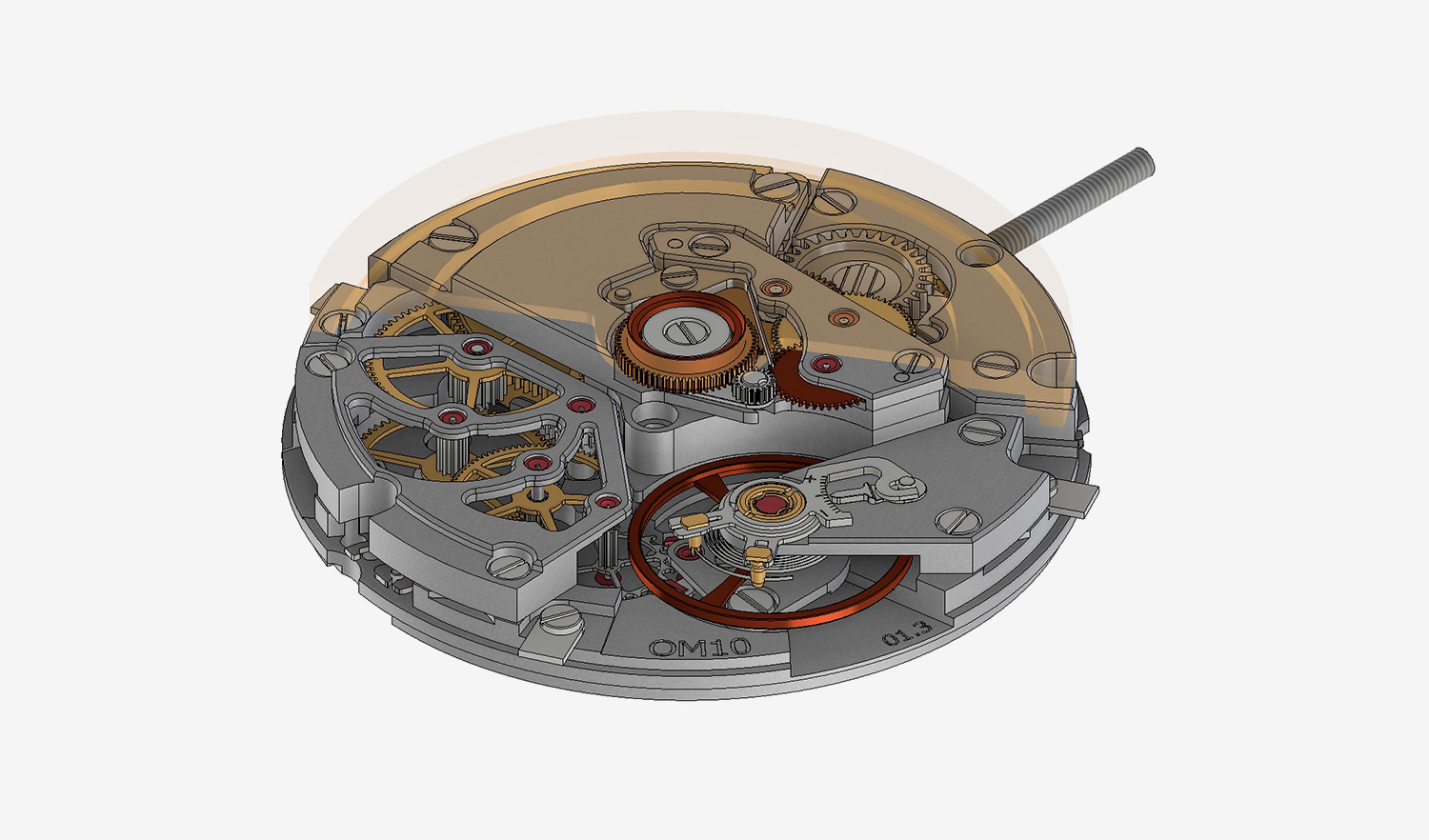
In a world where your phone can count your steps, remind you to drink water, and quietly judge your sleep schedule, the mechanical watch remains gloriously stubborn. It does one thing: it tells time. It does that one thing with springs, wheels, jewels, levers, screws, patience, and a tiny amount of wizardry. Now, thanks to Openmovement and its OM10 project, that wizardry is becoming more open, more collaborative, and far less hidden behind the velvet curtain of traditional Swiss watchmaking.
The phrase open source watch movement sounds like something a Linux enthusiast would invent after spending too much time on watch forums. Yet it is real. Openmovement is a Swiss association working to develop mechanical watch movements using open-source principles. Its flagship project, the OM10, is designed as a practical, serviceable, modular mechanical movement with downloadable 3D data. In other words, it is not just a pretty idea with a balance wheel. It is a serious attempt to bring “Watchmaking 2.0” into a craft that has historically treated technical drawings like family secrets.
What Is an Open Source Watch Movement?
An open source watch movement is a mechanical watch engine whose design files, construction data, and technical principles are made accessible so others can study, build, improve, modify, and learn from them. In software, open source gave us Linux, Firefox, WordPress, and a thousand other tools that quietly run the modern internet. In hardware, the idea applies to physical objects: machines, electronics, tools, and now, yes, watch movements small enough to disappear under a shirt cuff.
That matters because a mechanical movement is normally one of the most protected parts of the watch business. Brands may discuss finishing, power reserve, jewels, and romantic phrases like “manufacture caliber,” but the deeper construction details are often locked away. The OM10 flips that script. Instead of saying, “Admire the mystery,” Openmovement says, “Here are the bones. Learn from them. Improve them. Try not to sneeze while assembling the escapement.”
The OM10: A Small Machine With a Big Philosophy
The OM10 is the first major movement from Openmovement. It is intended to be a robust basic watch movement that can serve as a simple three-hand caliber or as the foundation for additional modules. Its specifications are refreshingly practical: a 30 mm round movement, hand winding with the possibility of adding an automatic winding module, hours, minutes, and seconds, a minimum 50-hour power reserve, a small seconds display at 9 o’clock, and a frequency of 3.5 Hz, or 25,200 vibrations per hour.
Those details may not sound flashy in the age of ultra-thin tourbillons and meteorite dials, but that is exactly the point. The OM10 is not trying to be the horological equivalent of a peacock wearing diamonds. It wants to be a workhorse. It is designed for reliability, serviceability, education, and modular experimentation. That makes it especially interesting for watchmaking schools, students, independent makers, small brands, engineers, and enthusiasts who want to understand how a mechanical movement actually works rather than simply admire it through a display caseback.
Why Open Source Matters in Watchmaking
Traditional watchmaking has always depended on shared knowledge, even when brands pretend every screw was blessed by a lone genius in a mountain cabin. Historically, suppliers, ébauche makers, schools, component specialists, and repairers all contributed to the ecosystem. But modern marketing often pushes the idea that secrecy equals prestige. “In-house” has become a magic phrase, sometimes meaningful, sometimes more like a tuxedo placed over a perfectly ordinary movement.
An open source mechanical watch movement challenges that culture. It says prestige can also come from transparency. A movement can be impressive because people can inspect it, understand it, and build on it. That is a very different kind of luxury: less “do not touch the glass” and more “wash your hands, grab the loupe, and let’s learn.”
For small watchmakers and microbrands, open design can also reduce barriers. Developing a movement from scratch is extremely expensive. Even modifying existing calibers requires knowledge, tooling, suppliers, and testing. An open-source base movement does not magically make watchmaking easy, but it can provide a common platform. Think of it as a shared mechanical language. Once enough people speak it, new ideas can travel faster.
A Watch Movement Built for Students and Makers
One of the strongest parts of the Openmovement concept is its educational value. The OM10 is described as student-friendly and suitable for watchmaking schools. That is a big deal. Watchmaking education depends on practice, and practice requires parts, drawings, tools, and mistakes. Many mistakes. Tiny, expensive, very educational mistakes.
With accessible construction data, students can examine how plates, bridges, wheel trains, keyless works, winding systems, and escapements relate to one another. They can see why a movement is arranged the way it is. They can compare theory with real mechanical constraints. They can learn not only how to assemble a movement, but why the movement was designed that way in the first place.
For makers, the OM10 also offers a rare bridge between digital design and traditional mechanics. STEP files are not romantic in the way polished anglage is romantic, but they are powerful. They allow engineers and machinists to inspect geometry, test ideas, design modules, build holders, and imagine variations. The open-source watch movement becomes a playground for serious people with tweezers.
The Beauty of Modularity
Modularity is one of the most important ideas behind the OM10. A modular movement can support extensions without forcing every maker to reinvent the entire base caliber. Openmovement’s concept includes strong attachment points for modules and a structure that can support different levels of decoration or additional functions.
This opens the door to practical creativity. One maker might build a clean hand-wound field watch. Another might experiment with an automatic module. A school might use the base movement for training exercises. A small brand might create a distinctive dial-side complication. Someone else might make a transparent educational clock-like display just because the gears look too good to hide. Not every experiment will become a commercial product, but that is part of the fun. Open design encourages exploration, and exploration occasionally leads to something brilliant.
Serviceability: The Quiet Superpower
In the watch world, serviceability is not as glamorous as a flying tourbillon, but it is far more useful. A movement that can be understood, repaired, and maintained is a movement with a future. Many owners discover this the hard way when a beautiful watch becomes difficult or expensive to service because parts are restricted, documentation is unavailable, or the original manufacturer has changed direction.
The OM10’s emphasis on serviceability is therefore more than a technical preference. It is a long-term philosophy. If drawings and construction details remain available, future watchmakers have a better chance of keeping the movement alive. That helps collectors, schools, independent repairers, and brands. It also supports sustainability. A watch that can be maintained for decades is much less wasteful than a sealed object that becomes decorative junk after one bad drop or one unavailable component.
Can Open Source Really Work for Mechanical Watches?
The honest answer is yes, but with caveats. Open source software spreads quickly because copying code costs almost nothing. Mechanical watchmaking is different. You can download a 3D file, but you cannot download a perfectly cut gear, a polished pivot, a hairspring, or a trained hand. Physical production requires machines, materials, tolerances, suppliers, and quality control. The pixels are free; the precision is not.
That is why the OM10 project is so interesting. It does not pretend that a downloadable movement turns every laptop owner into a Swiss manufacture by Thursday. Instead, it points toward a practical ecosystem: open plans, community improvement, possible parts kits, educational use, and collaboration among people who already have or are developing the necessary skills.
There is also the question of quality. A mechanical movement must be stable, accurate, durable, and serviceable. It must survive winding, shocks, temperature changes, lubrication aging, and the mysterious force by which watch owners always manage to bump a doorframe. Open-source collaboration can help improve design over time, but serious testing and manufacturing discipline remain essential.
Why Collectors Should Pay Attention
Collectors often talk about originality, provenance, finishing, and brand heritage. Those things matter. But an open-source mechanical watch movement introduces another kind of value: transparency. Imagine owning a watch whose movement is not a sealed secret but part of a living technical community. Imagine knowing that students, makers, and watchmakers can study the same architecture, propose improvements, and keep the platform alive.
That does not replace traditional collecting. Nobody is suggesting that a community movement will make vintage chronographs or high-end independents irrelevant. Calm down, auction catalogs. But it does add a new category of enthusiasm. The OM10 is compelling because it turns the movement from a hidden product into a shared project. For a certain type of collector, that is irresistible.
The Industry Context: Why This Feels Timely
The Swiss watch industry has long relied on major movement suppliers, specialized component makers, and tightly controlled supply chains. Over the past two decades, conversations around movement access, in-house production, and supplier independence have become increasingly important. Small brands want reliable calibers. Independent watchmakers want freedom. Collectors want authenticity. Students want training. Repairers want documentation. Everyone wants parts, preferably before retirement age.
Openmovement arrives in that context with a refreshing proposition. It does not try to replace every major supplier. It does not claim that tradition is obsolete. Instead, it suggests that shared technical foundations can strengthen the broader ecosystem. That is a subtle but powerful idea. The future of watchmaking may not be purely secretive or purely open. It may be a hybrid: proprietary artistry on top of more transparent, collaborative foundations.
Challenges Ahead for Openmovement
No serious open-source hardware project escapes reality. The OM10 faces several challenges. Manufacturing precision is difficult. Funding is difficult. Producing parts kits at a realistic cost is difficult. Coordinating contributors is difficult. Convincing a tradition-heavy industry to embrace openness is extremely difficult. Watchmaking is full of people who can hear a dry jewel from across the room but may still look suspiciously at the word “community.”
Still, the difficulty is part of what makes the project meaningful. If open-source watchmaking were easy, someone would have flooded the market with community-built calibers years ago. The OM10 is important because it tackles the hard part: not just sharing enthusiasm, but creating a real mechanical platform with technical data, prototypes, educational goals, and a plan for broader participation.
What the OM10 Gets Right
The OM10 ticks many boxes because it is not merely a novelty. It has a clear purpose. It is designed as a practical base movement rather than a fantasy complication. It prioritizes serviceability. It supports modular development. It makes room for schools and students. It publishes digital construction data. It invites collaboration. It understands that open source is not only about free access; it is about shared improvement.
It also has charm. Mechanical watches are emotional objects. They survive because people like tiny machines that feel alive. An open-source mechanical movement adds another emotional layer: participation. Instead of simply buying the final object, enthusiasts can follow the project, study the files, support the community, and understand the movement’s evolution. That makes the watch feel less like a product and more like a conversation.
Experiences and Reflections: Living With the Idea of an Open Source Watch Movement
The most exciting thing about the Openmovement OM10 is not only what it is, but what it feels like it could become. Anyone who has spent time around watches knows the strange combination of romance and intimidation that surrounds mechanical movements. A watch looks friendly from the outside. It has a dial, hands, maybe a date window, and if it is feeling fancy, a seconds hand sweeping around like it knows something you do not. Open the caseback, however, and suddenly you are staring at a miniature city of gears, springs, jewels, bridges, screws, and tolerances measured in “please do not breathe too hard.”
That is why an open-source watch movement feels so refreshing. It lowers the psychological wall. It tells enthusiasts that watchmaking is not only for famous houses, locked workshops, or marketing departments with dramatic lighting. It is a craft that can be studied. A movement can be diagrammed, shared, criticized, improved, assembled, and repaired. For a curious beginner, that shift is huge. The OM10 does not say, “This is easy.” It says, “This is understandable if you are willing to learn.” That is a much better promise.
Imagine a watchmaking student sitting at a bench with an OM10 parts kit. The first experience would probably include awe, nervousness, and at least one moment of wondering whether a screw has escaped into another dimension. But the educational value would be enormous. Instead of working only from closed commercial designs, the student could study the movement’s construction data and understand the intention behind the layout. Why is the small seconds positioned at 9 o’clock? Why does the gear train take this path? How does the keyless work interact with winding and setting? These are not abstract questions when the parts are in front of you.
For independent makers, the experience is different but equally powerful. A shared base movement gives creative people something to build on. One maker may care about decoration, another about module design, another about case integration, and another about improving manufacturing efficiency. Open-source projects thrive when different people bring different obsessions to the table. In watchmaking, obsession is not exactly in short supply. The community already contains engineers, machinists, collectors, repairers, designers, historians, and people who can argue for an hour about lug width. Give that crowd an open mechanical platform, and interesting things can happen.
There is also a collector’s experience to consider. Wearing a watch with an open-source movement would feel different from wearing a standard commercial caliber. The emotional value would come not only from brand prestige but from transparency and participation. You could know that the movement’s architecture is not hidden away. You could know that future watchmakers may have access to the plans. You could know that the object on your wrist belongs to a broader effort to make mechanical knowledge more durable. That is a surprisingly modern feeling for such an old technology.
Of course, reality keeps the romance honest. Open-source hardware is still hardware. A watch movement is unforgiving. A slightly wrong dimension is not a charming quirk; it is a non-working watch. Parts need precision. Assembly requires training. Lubrication matters. Regulation matters. Testing matters. The OM10 will not turn casual hobbyists into master watchmakers overnight. But that limitation does not weaken the project. It strengthens the argument for why open documentation and community learning are valuable. The more difficult the craft, the more important it becomes to share knowledge responsibly.
In the end, the experience of the OM10 is really the experience of seeing watchmaking become a little more approachable without becoming less serious. It is a reminder that tradition and openness do not have to be enemies. A movement can respect centuries of mechanical craft while still using modern collaboration. It can be Swiss and open. It can be precise and playful. It can be educational and commercially useful. Most importantly, it can invite more people into the ticking heart of horology. That is why this open source watch movement really does tick all the boxes.
Conclusion
Openmovement’s OM10 is more than a clever headline for watch nerds and open-source fans. It represents a thoughtful attempt to bring collaboration, transparency, and education into mechanical watchmaking. By making design data accessible, emphasizing serviceability, and building around a modular workhorse architecture, the project offers a new way to think about movements. It is not anti-tradition. It is tradition with the windows open.
The OM10 may not replace established calibers, and it does not remove the very real challenges of precision manufacturing. But it offers something the watch industry needs: a shared foundation for learning, experimentation, and long-term repairability. For students, makers, small brands, and curious collectors, that is a big deal. For the industry, it is a gentle reminder that secrecy is not the only path to excellence. Sometimes the most exciting sound in watchmaking is not just tick-tock. It is the sound of knowledge being shared.
Note: This article is written as a fully original, publication-ready synthesis based on real public information about Openmovement, the OM10 mechanical movement, open-source hardware principles, and the modern watchmaking industry. Source links are intentionally not inserted in the body to keep the HTML clean for web publishing.