Storage baskets are the quiet overachievers of the home. They hide charging cables, corral dog toys, rescue linen closets, and make miscellaneous objectscolors best described as “warehouse beige” or “plastic oatmeal.” Painted storage baskets solve that problem with a little preparation, a compatible coating, and far less money than replacing every container in the house.
This DIY makeover works on wicker, rattan, wood splint, plastic, metal wire, and some fabric bins. The trick is to respect the material. A successful finish should preserve the weave, resist ordinary handling, coordinate with the room, and remain useful after the paint cures.
Why Paint Storage Baskets?
Painting is an easy way to upcycle containers you already own, unify mismatched thrift-store finds, and make open storage feel planned. Coordinated baskets can calm a bookcase, pantry, mudroom, bathroom vanity, or playroom shelf. They also group similar items and stop loose household objects from spreading across every flat surface like they pay rent.
Paint gives you more control than shopping for a perfect ready-made set. You can repeat an accent color, match cabinetry, add labels, assign colors to family members, or use leftover sample paint. A few unrelated baskets can suddenly look custom when they share one palette.
Choose a Paintable Basket
Wicker, Rattan, Reed, and Wood
Natural woven fibers generally accept paint well because they are porous. Spray paint reaches the narrow spaces efficiently, while acrylic or chalk-style paint works for stripes, dipped sections, and hand-painted details. Check first for loose reeds, mildew, severe warping, or a crumbling finish. Common modern baskets are good makeover candidates; valuable antiques are usually better preserved rather than painted. /h3>
Plastic can look dramatically better after painting, but ordinary wall paint may scratch or peel from its smooth surface. Choose paint labeled for plastic or apply a compatible bonding primer. Test the bottom first. Very flexible baskets may bend enough to crack a rigid finish, so sturdy plastic is the safer choice. re
Wire baskets are ideal for spray paint. Remove rust, clean away grease, and use a metal primer when required. For bathrooms, laundry rooms, or covered outdoor spaces, select a durable coating designed to resist moisture and corrosion.
Fabric Bins
Fabric paint can add stencils or small motifs to canvas bins. Coating an entire collapsible basket with standard paint may make it stiff and prone to cracking, so limited decorative areas are usually more successful.
Best Paint Options
Spray paint is the fastest choice for woven surfaces because the mist reaches multiple angles. Use a product compatible with wicker, plastic, or metal. Matte and satin finishes disguise imperfections; gloss emphasizes every ridge and drip.
Acrylic craft paint is useful for dots, scallops, monograms, labels, and geometric designs. Apply it sparingly with a small brush or stencil brush so thick paint does not bridge the openings in the weave.
Chalk-style or mineral paint creates a soft, matte finish suited to farmhouse, cottage, and vintage interiors. A compatible wax or clear topcoat can improve scuff resistance, although it may deepen the color.
Leftover latex paint can work on decorative sections of a natural basket. It is economical and makes color matching easy, but heavy brushed coats can hide texture and create hardened drips.
What You Will Need
- A clean, sturdy basket
- Soft brush, vacuum attachment, and lint-free cloth
- Mild dish soap and water
- Fine-grit sandpaper or sanding sponge
- Painter’s tape and a drop cloth
- Material-compatible primer, paint, and optional sealer
- Gloves, eye protection, and label-recommended respiratory protection
How to Paint Storage Baskets
1. Clean the Weave
Dust is the natural predator of paint adhesion. Vacuum the basket with a brush attachment or loosen debris with a soft dry brush. Wipe washable materials with mild soap and a lightly damp cloth. Do not soak natural wicker; excess moisture can swell fibers, loosen glue, or distort the shape.
2. Dry, Repair, and Scuff
Let the basket dry completely, including the base, corners, handle, and inner weave. Secure minor separations with a suitable adhesive and gently sand glossy or rough spots. The purpose is to improve adhesion, not flatten the texture. Remove all sanding dust afterward.
3. Mask the Design
Use painter’s tape for a dipped bottom, center stripe, or natural handle. Press it against the raised strands. Wicker is uneven, so a perfectly mechanical line is unlikely; small variations usually look charming rather than careless.
4. Prime When Necessary
Primer is especially helpful on slick plastic, bare metal, glossy finishes, stained fibers, and major color changes. Follow the product label and its recoat window. A paint-and-primer product may eliminate a separate step when it is approved for the basket material.
5. Paint the Inside First
Starting inside lets you tilt and rotate the basket without leaning over a freshly finished exterior. With spray paint, use smooth passes from the recommended distance. With a brush, remove excess paint before touching the weave.
6. Build Coverage With Light Coats
Treat the first coat as a foundation, not a demand for instant opacity. Let it dry as directed, rotate the basket, and apply another coat from a different angle. Alternating vertical, horizontal, and diagonal passes helps reach the complex weave without flooding gaps or causing runs. Multiple light coats consistently produce a cleaner finish than one enthusiastic paint avalanche. etails and Let It Cure
Remove the tape according to the coating instructions, then add numbers, names, or stenciled labels after the base is dry enough. Seal only when extra scuff or moisture resistance is needed, and confirm that the sealer is compatible. Finally, respect the full cure time before stacking baskets or filling them with textiles. Dry to the touch does not necessarily mean ready for duty.
Painted Storage Basket Ideas
Color-Dipped Neutrals
Paint the lower third of a natural basket in white, black, navy, terracotta, or muted green. The exposed weave keeps the piece warm, while the colored base helps several mismatched baskets appear related.
Two-Tone Shelf Sets
Use one color on the body and another on the rim or handles. Repeating the palette across different shapes creates unity without requiring identical containers.
Labels, Numbers, and Patterns
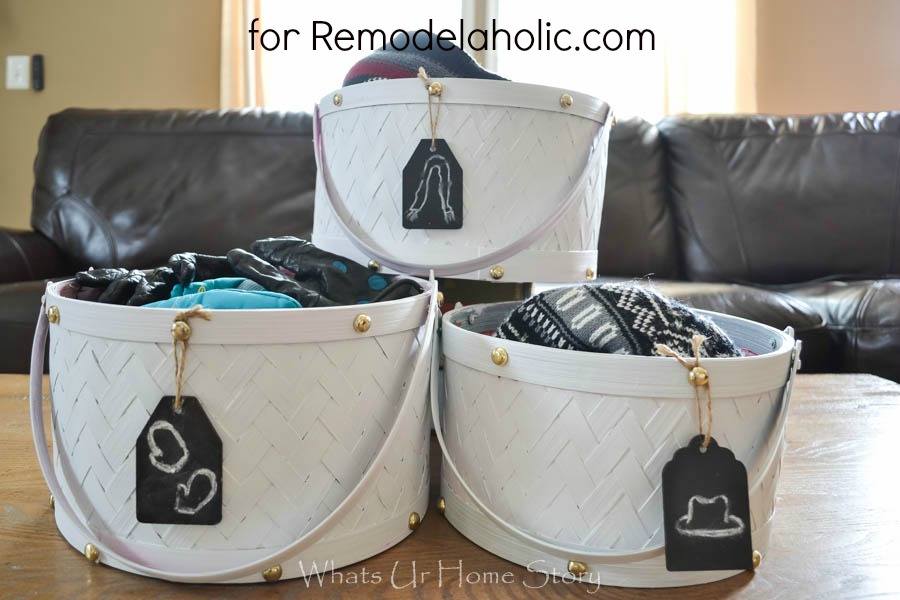
Paint a small solid panel, then stencil a word or number over it. Simple labels work well in mudrooms, pantries, classrooms, and playrooms. Dots, broad stripes, checkerboard accents, and loose floral marks also show up better on a weave than tiny intricate patterns. “Cables,” “Snacks,” and “Things Nobody Claims but Nobody Lets Me Throw Away” are all valid categories.
Ombre Groups
Paint several baskets in graduated shades from pale to deep. The tonal arrangement doubles as shelf decor and can organize items by person, category, size, or frequency of use.
Where to Use Painted Baskets
Large baskets can hold blankets, games, magazines, shoes, or pet supplies. Entryway baskets can be assigned to household members, while bathrooms benefit from moisture-resistant containers for towels and toiletries. In pantries, color-coded plastic baskets can separate snacks, baking ingredients, and lunch supplies.
Use liners for delicate clothing so rough wicker does not snag fabric. Add felt pads beneath baskets that might scratch wood shelves or floors. For food storage, keep packaged goods inside and avoid painting surfaces that will directly contact food unless the complete coating system is specifically approved for that purpose.
Common Mistakes
- Painting over dust: The finish can peel or develop gritty bumps.
- Using the wrong paint on plastic: Poor adhesion leads to scratches and flakes.
- Applying a heavy coat: Thick paint causes runs, clogged weave, and slow curing.
- Ignoring hidden surfaces: An unpainted interior makes the project look unfinished.
- Handling the basket too soon: Soft paint can dent, stick, or transfer to fabric.
- Painting an antique without research: A new finish can reduce historical and resale value.
Safety and Cleanup
Use aerosol and solvent-containing products according to their labels in an appropriately ventilated area, away from flames, pilot lights, children, pets, and unprotected property. Shield nearby surfaces from overspray and avoid windy conditions. Wear the protective equipment specified by the manufacturer. age basket already has paint of unknown age, avoid aggressive sanding until you have considered possible lead-containing coatings. Store and dispose of leftover paint, solvents, and aerosol cans according to local requirements; recycling or household hazardous-waste programs can provide material-specific instructions. l Experience: What Usually Happens During a Painted Basket Makeover
The most useful lesson from painting storage baskets is that the project is easy, but it rewards patience in strangely specific places. The first temptation is to start spraying the moment the basket reaches the drop cloth. It has waited years for a personality, and suddenly every minute feels critical. In practice, cleaning and drying determine whether the finish looks polished or like paint applied over breakfast crumbs.
A natural wicker basket often looks clean until it is turned upside down. Then a tiny ecosystem appears: lint, dust, dried plant material, and at least one thread that seems to have survived three previous households. A soft brush and vacuum remove most of it. The basket may look only slightly different afterward, but paint behaves much better on the cleaned fibers.
The second lesson is that the first coat can be emotionally disappointing. Woven surfaces create shadows, gaps, and dozens of miniature angles, so a light first pass rarely looks finished. It may appear patchy enough to inspire regret. The correct response is not to attack it with a heavy coat. Rotating the basket and adding another thin pass from a different direction produces better coverage with fewer drips. By the third light coat, the color usually becomes even while the woven texture remains visible.
Painting the inside first is another small decision with a large payoff. When the exterior is painted first, reaching into the basket can leave fingerprints or transfer color to gloves. Starting with the interior allows the basket to be turned and tilted freely. Afterward, the outside can be finished with fewer awkward movements and less accidental contact.
Color also behaves differently on a basket than on a flat sample card. Dark shades emphasize the silhouette and can make inexpensive plastic or wicker look more substantial. Pale shades feel airy but may need extra coverage over reddish or honey-toned fibers. Satin is forgiving for everyday storage, while high gloss can look dramatic on metal but announces every drip like a town crier.
Masking woven material teaches humility. Tape follows raised strands rather than forming a perfectly flat barrier, so a dipped line may have tiny irregularities. A quick touch-up with an artist’s brush helps, but chasing mathematical perfection can take longer than painting the basket. Handmade variation is usually part of the charm.
Overspray is another practical surprise. A basket contains so many openings that paint passes through it and lands behind it. A generous cardboard backdrop and drop cloth are not decorative accessories; they are what keep a nearby patio chair from joining the color scheme without permission.
The final lesson is to wait before loading it. A finish that feels dry may remain soft enough to stick to a shelf or mark a blanket. Giving it the full recommended cure time is less exciting than immediately organizing the closet, but it prevents rework. Once cured, two or three different baskets in the same color can look surprisingly intentional. What began as mismatched clutter control becomes a coordinated storage system without purchasing a single new container.
Conclusion
Painted storage baskets combine organization, decorating, and practical reuse in one approachable project. Match the coating to the material, prepare the surface carefully, apply light coats from several angles, and allow enough curing time. Whether you choose a solid color, dipped neutral, playful stencil, or ombre set, paint can turn an ordinary basket into storage that deserves to stay visible.