
There are animals you can casually scoop up with one hand. A snapping turtle is not one of them. If you meet one in the road, yard, driveway, pond edge, or the mysterious “why is there a dinosaur by my mailbox?” zone, your first job is not to become a wildlife hero. Your first job is to stay safe, keep the turtle safe, and avoid turning a simple rescue into a bite story your friends will never let you forget.
Snapping turtles are powerful, heavy, defensive reptiles with long necks, strong claws, and impressive jaws. They are not “mean,” and they are not chasing humans for sport. They usually snap because they feel exposed, cornered, or lifted away from the ground. In water, they generally prefer to escape. On land, especially during nesting season or road crossings, they may stand their ground because they have fewer easy exits.
This guide explains the safest way to handle snapping turtles, when not to touch them, how to help one cross a road, what mistakes to avoid, and what to do if the turtle is injured. The golden rule is simple: if you do not need to pick up a snapping turtle, do not pick it up. Sometimes the safest “handling technique” is a respectful distance and a calm wave goodbye.
Why Snapping Turtles Need Special Care
The common snapping turtle is one of North America’s most recognizable freshwater turtles. It has a rugged shell, a long tail, strong legs, and a head that can move faster than most people expect. The alligator snapping turtle, found mainly in the southeastern United States, is even larger and has a more prehistoric look, with a massive head and ridged shell. Both deserve plenty of space.
Unlike box turtles or painted turtles, snapping turtles cannot fully retreat into their shells for protection. Their plastron, the lower shell, is relatively small, leaving more of the body exposed. Because they cannot simply close the door and pretend the world does not exist, they rely on bluffing, lunging, snapping, hissing, clawing, and making you reconsider your life choices.
That defensive behavior is not a personality flaw. It is survival. A snapping turtle on land may be crossing to nest, moving between wetlands, escaping a drying pond, or returning to water. Your goal is not to relocate it to a prettier place, take it home, pose for a photo, or “teach it where the pond is.” Your goal is to let it continue its journey with minimal stress.
First Rule: Do Not Pick Up a Snapping Turtle Unless It Is Necessary
The safest way to handle snapping turtles is to avoid direct handling whenever possible. If the turtle is beside a pond, in your yard, crossing a quiet path, or simply looking dramatic near the driveway, give it space. Most snapping turtles know exactly where they are going, even if their route looks like it was planned by a GPS with emotional issues.
Handling becomes worth considering only when the turtle is in immediate danger, such as sitting in an active road, trapped in a window well, stuck in a fenced area, or at risk from pets, lawn equipment, or heavy machinery. Even then, check your surroundings before you think about the turtle. Do not run into traffic. Do not stop suddenly in a dangerous place. Do not place yourself where drivers cannot see you.
If you cannot help safely, call a local wildlife rehabilitator, animal control agency, park ranger, or state wildlife office. A living human who did not get hurt is far more useful than a dramatic roadside rescue attempt gone wrong.
How to Help a Snapping Turtle Cross the Road
Move It in the Direction It Was Already Going
When helping a snapping turtle cross a road, always move it in the direction it was already traveling. This may feel strange if the turtle appears to be heading away from water, but turtles often have strong seasonal instincts and local routes. Turning it around usually means it will try to cross the road again, which puts both the turtle and drivers at risk.
Think of it like helping a stubborn neighbor carry groceries: you do not get to decide where they live. You just help them finish the trip without disaster.
Use a Barrier or Sliding Method When Possible
For large snapping turtles, indirect movement is often safer than picking them up. A car floor mat, sturdy piece of cardboard, snow shovel, plastic bin lid, or similar flat object can create space between your hands and the turtle. The idea is to gently encourage, slide, or guide the turtle across the road without placing your fingers near the head, sides, or front half of the shell.
Move slowly and calmly. Do not shove, flip, kick, drag roughly, or toss the turtle. A snapping turtle may be tough, but it is still a living animal with soft tissue, joints, internal organs, and a spine connected to its shell. Treat it like wildlife, not luggage.
Keep Your Hands Away From the Front Half
A snapping turtle’s neck is surprisingly flexible. Many people underestimate how far the head can reach. The danger zone includes the head, the sides near the front legs, and much of the shell’s side edge. If you place your fingers where the turtle can reach them, the turtle may deliver an educational moment at high speed.
Gloves can help protect against scratches and mud, but they do not make your hand bite-proof. Thick gloves are not a license to become reckless. They are backup protection, not superhero armor.
If You Must Pick Up a Snapping Turtle
Direct lifting should be a last resort, used only when indirect methods are not practical and the turtle must be moved a very short distance for safety. Smaller snapping turtles may be manageable for some adults, but large individuals can be heavy, slippery, and powerful. If you are unsure, do not lift. Use a mat, board, shovel, container, or call someone trained to help.
Never Lift a Snapping Turtle by the Tail
This is one of the most important rules in turtle safety: never pick up a snapping turtle by the tail. The tail is connected to the spine, and lifting a heavy turtle this way can injure the animal. It may also cause the turtle to twist, scratch, or snap unpredictably. Tail-lifting is outdated, unsafe, and unfair to the turtle.
Imagine someone carrying you by one ankle while you are wearing a backpack full of bricks. That is not a rescue. That is a lawsuit waiting for legs.
Support the Rear of the Shell, Not the Tail
If direct handling is unavoidable, the safest general approach is to control the turtle from behind, keeping hands near the rear portion of the shell and away from the head. The lift should be low, brief, and steady. Do not raise the turtle high into the air. Do not hold it out for photos. Do not pass it around. Move it only the short distance needed to get it out of danger.
Because snapping turtles can scratch strongly with their rear claws, expect movement. Keep the turtle low enough that it will not be seriously hurt if you lose your grip. If the turtle is too large to control calmly, put it down and switch to a non-lifting method.
Do Not Hold It by the Sides Like a Dinner Plate
Many harmless-looking turtles can be carried by the sides of the shell. Snapping turtles are different. Their necks can reach around farther than expected, and the sides may put your fingers too close to the bite zone. Holding a large snapper like a tray of cookies is a fine way to lose both the cookies and your confidence.
What to Do If the Snapping Turtle Is Injured
If the turtle has been hit by a car, cracked its shell, is bleeding, has exposed tissue, or cannot move normally, contact a licensed wildlife rehabilitator or local wildlife authority. Do not try home repairs. Do not glue the shell. Do not tape it together. Do not put ointments, alcohol, peroxide, or random kitchen remedies on the wound. A cracked shell is a serious injury, but turtles can sometimes survive with proper professional care.
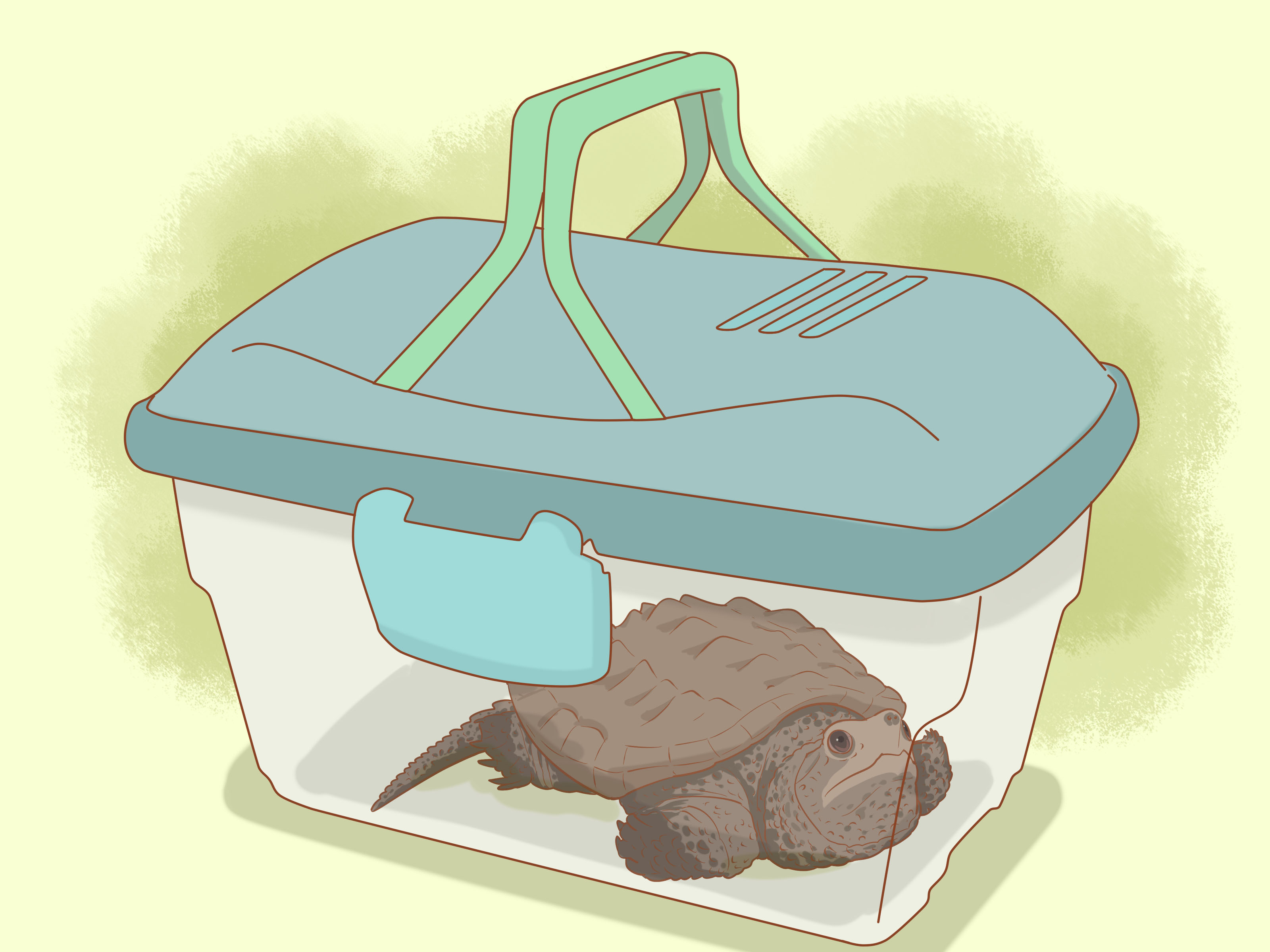
If you must contain an injured turtle while waiting for advice, place it in a well-ventilated box or tub that prevents escape, keep it quiet, and avoid unnecessary handling. Do not place it in deep water. Injured turtles can drown if they are weak, shocked, or unable to surface properly. Keep pets and children away.
Health Safety After Handling Any Turtle
Snapping turtles, like other reptiles, can carry Salmonella bacteria even when they look healthy and clean. That does not mean turtles are dirty villains. It means good hygiene matters. After touching a turtle, a turtle’s water, a container, a car mat used for moving it, or anything contaminated with mud and turtle waste, wash your hands thoroughly with soap and water.
Do not eat, drink, smoke, or touch your face during the rescue. Do not let children kiss turtles, cuddle them, or treat them like portable pond puppies. If soap and water are not available immediately, use hand sanitizer as a temporary step, then wash properly as soon as you can.
Clean any tools or mats outdoors if possible, not in a kitchen sink. A floor mat that helped a snapper cross the road deserves a rinse before returning to its glamorous career of catching spilled fries.
Common Mistakes People Make With Snapping Turtles
Mistake 1: Relocating the Turtle Far Away
Moving a snapping turtle to a new pond, park, or “better habitat” can do more harm than good. Turtles are tied to local home ranges and seasonal routes. Relocation can expose them to unfamiliar hazards, disease risks, territorial conflicts, or the exhausting urge to travel back. If you help a turtle cross a road, move it only to the safe side in the direction it was already headed.
Mistake 2: Taking It Home as a Pet
A wild snapping turtle is not a starter pet, a classroom mascot, or a backyard conversation piece. It can grow large, live a long time, require specialized care, and become dangerous to handle. In many places, collecting wildlife is regulated or illegal without permits. Admire wild turtles where they belong: in the wild, looking ancient and mildly judgmental.
Mistake 3: Assuming the Turtle Is Aggressive
A snapping turtle on land may hiss, lunge, or snap, but that does not mean it is hunting you. It is scared. From the turtle’s point of view, a giant mammal just appeared and started making management decisions. Give it space, work slowly, and reduce stress whenever possible.
Mistake 4: Taking Selfies
Wildlife rescue is not a photo shoot. The longer you hold or surround the turtle, the more stressful the encounter becomes. If you want a memory, take a quick photo from a safe distance after the turtle is out of immediate danger. Your fingers will appreciate the minimalist approach.
Snapping Turtle Safety for Homeowners
If a snapping turtle appears in your yard, it may be a female searching for a nesting site. She may dig in loose soil, mulch, gravel, sandy areas, or open patches of lawn. If she is not in danger, leave her alone. Once nesting is finished, she will usually move on.
Keep dogs away. Curious pets can harass turtles and get bitten. Children should observe from a distance with adult supervision. If the turtle is trapped in a fenced yard, use a wide gate opening, visual barrier, or professional help to guide it out safely.
Window wells, uncovered drains, and steep landscape features can trap turtles. If wildlife frequently passes through your property, consider covers, ramps, or barriers that reduce accidental entrapment. Prevention is easier than trying to negotiate with a thirty-pound reptile in a basement window well.
When to Call a Professional
Call a wildlife rehabilitator, animal control officer, park authority, or state wildlife agency if the turtle is injured, trapped, extremely large, located in a dangerous traffic area, stuck in construction equipment, entangled in fishing line, or in a place where you cannot safely help. Professionals have equipment, training, and local legal knowledge.
You should also call for advice if the turtle is an alligator snapping turtle, which may be protected in some states and can be much larger than common snapping turtles. When in doubt, take photos from a safe distance and ask an expert before touching.
Quick Safety Checklist
- Do not handle a snapping turtle unless it is truly necessary.
- Put your own safety first, especially near roads.
- Move the turtle only in the direction it was already going.
- Never pick up a snapping turtle by the tail.
- Use a car mat, shovel, board, or container when possible.
- Keep hands away from the head, front legs, and front half of the shell.
- Do not relocate the turtle to a distant pond or park.
- Wash hands and clean tools after contact.
- Contact a wildlife professional for injured, trapped, or very large turtles.
Experience Notes: Real-World Lessons From Snapping Turtle Encounters
Most snapping turtle encounters happen when nobody is dressed for the occasion. You are driving to work, carrying groceries, walking the dog, mowing the lawn, or trying to enjoy a quiet Saturday when suddenly there is a shell-covered roadblock with claws. The first lesson is to slow down mentally before you move physically. People get into trouble when they rush. A snapping turtle is not a dropped phone. You do not need to grab it instantly.
One of the most useful habits is to read the situation before acting. Is the turtle actually in danger, or is it simply crossing at turtle speed, which is to say “eventually”? Is traffic light enough that you can wait? Is there room to pull over safely? Are there children, dogs, or other people nearby who may complicate things? A calm assessment often reveals that the best move is to stand back, alert drivers if it is safe, and let the turtle finish crossing on its own.
Another practical lesson is that tools beat bravery. A car mat may not look heroic, but it can be surprisingly helpful. So can a snow shovel, plastic bin lid, sturdy board, or wide piece of cardboard. The point is not to dominate the turtle. The point is to create space and guide movement without putting hands near the bite zone. In real life, the smoothest rescues are boring. The turtle moves, the person stays unbitten, traffic clears, and everyone continues their day with a better story than injury.
Expect the turtle to object. Hissing, lunging, snapping, clawing, and musky smells are all possible. None of that means the rescue is failing. It means the turtle has not read your good intentions and would like to file a complaint. Keep your movements steady. Do not shout, poke, laugh too close, or invite a crowd. A stressed turtle surrounded by excited humans is more likely to panic or freeze.
For homeowners, the biggest experience-based tip is to manage pets first. Dogs are often more enthusiastic than wise. A barking dog can push a turtle into defensive mode quickly, and a snapping turtle bite can injure a pet’s nose, paw, or lip. Before thinking about moving the turtle, secure pets indoors or behind a fence. The same goes for children. Observation is great; hands-on curiosity is not.
After the turtle is safe, the job is not quite finished. Wash your hands, rinse tools, and check shoes or mats for mud. If the turtle was injured, write down the exact location before calling a rehabilitator, because location matters for possible release. If the turtle was healthy and simply crossing, resist the urge to “improve” its destination. A turtle that chose the swampy ditch across the road may know something you do not. Possibly several things. It has been doing turtle business longer than most of us have been paying bills.
The best snapping turtle rescue is respectful, brief, and uneventful. No drama, no tail-lifting, no selfies, no surprise relocation. Just a little patience, a safe crossing, clean hands, and a renewed appreciation for the fact that some animals are best admired with all fingers outside the danger zone.
Conclusion
Picking up snapping turtles safely starts with one honest question: do you really need to pick it up? In many cases, the answer is no. Give the turtle room, let it continue moving, and protect it from traffic only when you can do so without risking yourself. If intervention is needed, move the turtle in the direction it was already heading, avoid direct handling when possible, never lift it by the tail, and use tools that keep your hands away from the head and front shell area.
Snapping turtles are not monsters. They are ancient, important freshwater animals that deserve cautious respect. Treat them like wild neighbors with strong boundaries, and your encounter can end safely for both of you.
Note: This article is for general wildlife safety education. Local laws, protected-species rules, and rehabilitation requirements vary by state. For injured, trapped, unusually large, or unidentified turtles, contact a licensed wildlife rehabilitator or local wildlife agency.












