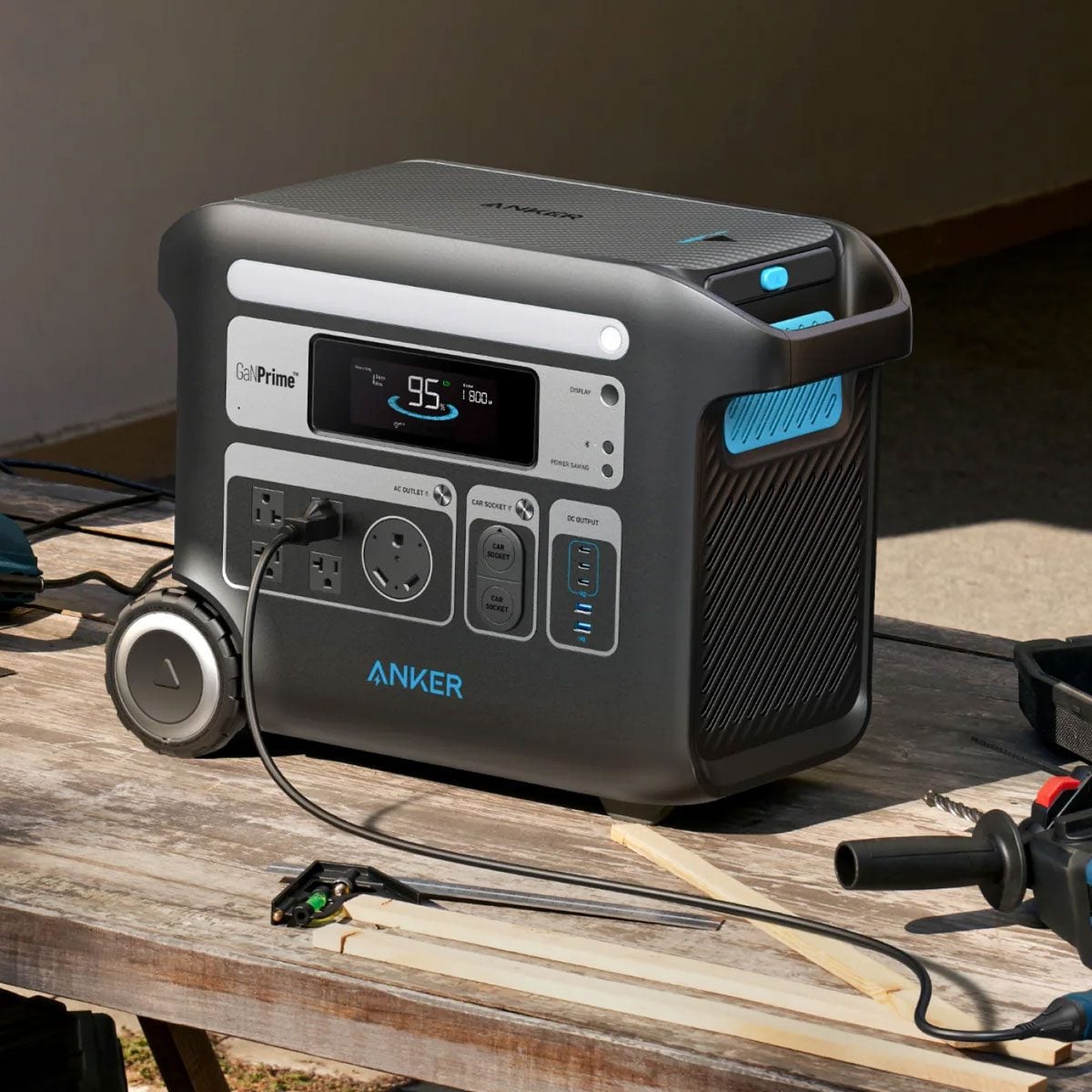
There was a time when “job-site power” meant one thing: a gas generator growling in the corner like an angry lawnmower with trust issues. It worked, sure. But it also brought fumes, fuel cans, pull cords, noise complaints, and the occasional dramatic pause when someone forgot to check the oil. Today, portable power stations are changing that picture for contractors, mobile mechanics, carpenters, remodelers, installers, photographers, makers, and anyone who has ever tried to run a circular saw where the nearest wall outlet is a rumor.
A portable power station is basically a rechargeable battery system with built-in AC outlets, USB ports, DC outputs, an inverter, and safety electronics. For mobile workshops and job sites, that means clean power without gasoline, quieter operation, quick setup, and flexible charging from the wall, a vehicle, solar panels, or sometimes even another generator. The best portable power stations for job sites are no longer oversized camping gadgets. Many now offer lithium iron phosphate batteries, pure sine wave output, 2,000W to 6,000W inverters, expandable battery packs, 120V and 240V capability, app monitoring, and enough muscle to keep real work moving.
But here is the catch: buying the wrong unit is expensive comedy. Too small, and your miter saw trips it before the first cut. Too heavy, and “portable” becomes a team-lift event. Too few outlets, and everyone starts unplugging everyone else’s charger like a tiny electrical soap opera. This guide breaks down how portable power stations work, how to size one for tools, what features matter most, and how to use them safely in mobile workshops and job sites.
Why Portable Power Stations Are Showing Up on Job Sites
The job site has changed. More crews work in finished homes, high-rise interiors, remote lots, vans, trailers, garages, sheds, pop-up service stations, and temporary outdoor setups. In these places, gas generators are not always welcome. They are noisy, they need fuel, and they produce carbon monoxide, which is why U.S. safety agencies repeatedly warn that engine-driven generators must be used outdoors and away from enclosed spaces.
Battery-powered stations solve several everyday problems. They can run quietly during punch-list work in occupied homes. They can sit in a van workshop powering chargers, lighting, laptops, diagnostic equipment, and small tools. They can support a remote fence repair, a driveway cabinet install, a film production cart, or a mobile detailing setup without making the entire neighborhood sound like it is hosting a tractor convention.
The other big advantage is instant power. No warm-up. No fuel stabilizer. No “who left the choke on?” discussion. You press a button, plug in, and get to work. For trades where setup time matters, that simplicity is worth real money.
What a Portable Power Station Actually Does
A portable power station stores energy in a battery and converts it into usable power through an inverter. Most job-site units include AC outlets for corded tools, USB-C ports for laptops and phones, 12V DC outputs for vehicle-style accessories, and charging inputs for wall power, solar panels, or vehicle charging.
Watt-hours tell you how much energy it stores
Capacity is measured in watt-hours, written as Wh. A 1,000Wh power station can theoretically deliver 1,000 watts for one hour or 100 watts for 10 hours. In the real world, inverter losses and operating conditions reduce that number. A practical estimate is to multiply the rated capacity by about 0.85. For example, a 2,000Wh unit running a 600W load may provide roughly 2.8 hours of runtime: 2,000 x 0.85 / 600.
Watts tell you what it can run
Output is measured in watts. This is where many buyers get ambushed. A station with 2,000Wh of storage but only 1,000W of AC output may have plenty of battery, yet still fail to run a 15-amp table saw. For job sites, continuous output matters as much as capacity. Surge output also matters because motors often need a burst of power at startup. Compressors, saws, shop vacs, grinders, pumps, and refrigerators can all spike above their running wattage.
Pure sine wave output protects sensitive equipment
Modern portable power stations usually use pure sine wave inverters. That matters for battery chargers, laptops, diagnostic tools, laser levels, routers, camera gear, and other electronics that dislike rough power. If your mobile workshop includes both sawdust and software, pure sine wave output should be considered mandatory.
How to Size a Portable Power Station for Tools
Start with a tool list, not a wish list. Write down what you actually need to run at the same time. A cordless battery charger, LED work light, phone, and laptop are easy. A miter saw plus dust extractor plus air compressor is a different animal. That animal has teeth.
Light-duty mobile work: 500Wh to 1,000Wh
This range is useful for charging tool batteries, powering LED lights, running a laptop, keeping a router online, or supporting small electronics during inspections and service calls. It is great for installers, low-voltage technicians, photographers, field engineers, and punch-list work. A compact unit is easier to carry, but it will not enjoy being asked to run a heavy saw all afternoon.
General mobile workshop: 1,000Wh to 2,500Wh
This is the sweet spot for many mobile workshops. Units in this range can often handle multiple battery chargers, a shop fan, lights, a laptop, and occasional corded-tool use. Models such as the Jackery Explorer 2000 Plus and BLUETTI Elite 200 V2 show how this class has matured, with capacities around 2kWh and outputs in the 2,600W to 3,000W range. That is enough for many saws, routers, vacuums, and workbench tools, provided you respect surge loads and avoid running everything at once.
Heavy-duty job-site power: 3,000Wh and above
Large stations such as the EcoFlow DELTA Pro 3 and Anker SOLIX F3800 Plus move into serious backup-power territory. These can support higher continuous loads, expandable batteries, solar input, and in some cases 120V/240V output. That makes them better candidates for larger crews, mobile trailers, temporary shops, RV-based contractors, off-grid cabins under construction, and jobs where downtime is expensive.
Realistic Tool Examples
A cordless-tool charging station is one of the easiest wins. Four battery chargers, a radio, two LED lights, and a laptop might draw only a few hundred watts. A 1,000Wh station can keep that setup running for a good part of the day, especially if chargers cycle on and off instead of pulling full power constantly.
A miter saw is more demanding. Many 10-inch and 12-inch saws may draw 1,500W or more under load, with a higher startup surge. A 2,000W station might run it, but a 3,000W station gives more breathing room. Add a dust extractor and suddenly you are asking the battery box to do CrossFit.
Air compressors require caution. Small trim compressors may work on a strong unit with enough surge capacity. Larger compressors can be difficult because motors spike hard at startup. If compressor use is central to your work, verify real startup wattage before buying. Do not rely only on the label, because labels rarely tell the whole story.
Welders are even trickier. Some portable power stations advertise high peak output or special high-load modes, but welding places intense demands on power quality, duty cycle, and voltage. For occasional light welding, a large high-output unit may work with the right machine. For professional daily welding, a dedicated generator, shore power, or job-site electrical service may still be the better tool.
Features That Matter Most for Mobile Workshops
High continuous output
For job-site use, look beyond the biggest number on the box. Continuous AC output is the number that matters most. Surge output is helpful, but it is temporary. If your tools routinely pull 1,800W, do not buy a 1,800W station and expect happiness. Give yourself headroom.
LiFePO4 battery chemistry
Lithium iron phosphate, often written as LiFePO4 or LFP, has become popular because it offers long cycle life and strong thermal stability compared with older lithium chemistries. Many current professional-grade stations advertise thousands of charge cycles. For a contractor using the unit weekly or daily, long battery life matters more than shaving a few pounds.
Fast AC charging
A station that takes eight hours to recharge can be frustrating. Many newer models recharge from a wall outlet in roughly one to two hours, depending on battery size and settings. Fast charging lets you top off during lunch, between jobs, or overnight without turning battery management into a second career.
Solar input
Solar charging is not magic, but it is useful. A 400W panel will not refill a huge battery instantly, especially with clouds, dust, shade, or low winter sun. Still, solar can extend runtime at remote sites, keep batteries topped during multi-day work, and reduce dependence on fuel. For trailers and mobile workshops, roof-mounted panels can quietly add energy while you drive or work.
Expandable capacity
Expandable systems let you start with one main unit and add battery packs later. This is helpful if your business grows, your crew expands, or you discover that your “small mobile shop” has somehow become a rolling cabinet factory.
Port layout and durability
Ports should be easy to reach, clearly labeled, and protected from dust. Handles should feel serious. Wheels matter on large stations because 60 to 130 pounds is not something you casually “grab.” Weather resistance is useful, but do not confuse rugged marketing with waterproof reality. Many units tolerate sheltered outdoor use, not rainstorms.
Portable Power Station vs. Gas Generator
Gas generators still win for long, continuous, high-load work when fuel is available and outdoor placement is safe. They can run all day if you keep feeding them. For framing crews, large compressors, masonry saws, pumps, and heavy equipment, a generator may still be the practical choice.
Portable power stations win for quiet, clean, indoor-adjacent, short-duration, and sensitive-electronics work. They are excellent for remodeling, service calls, mobile offices, inspection carts, finish carpentry, low-voltage work, camera crews, and battery charging. They also pair well with gas generators in a hybrid setup: use the generator for high-load charging windows, then run quietly from battery power for the rest of the day.
The best answer is not always “battery or generator.” On smart job sites, it is often “battery plus generator only when needed.” That reduces noise, fuel use, fumes, and idle time.
Safety Rules for Job-Site Use
Battery stations remove carbon monoxide risk from the power source itself, but they do not remove electrical risk. Treat them like serious power equipment. Use properly rated extension cords. Avoid damaged cords. Keep connections dry. Use GFCI protection where wet or damp conditions are present. Do not overload the station. Do not block cooling vents. Do not charge or discharge a unit that is visibly damaged, swollen, cracked, or acting suspiciously hot.
Certification also matters. Look for products tested to relevant standards, such as UL 2743 for portable power packs or other appropriate battery and energy-storage standards depending on system size and use. For professional environments, buying a mystery battery box from a mystery marketplace is not “saving money.” It is inviting chaos to wear a tool belt.
Store the unit in a dry, temperature-appropriate location. Avoid leaving it in direct sun inside a closed van during extreme heat. Cold can also reduce performance and may restrict charging. Many manufacturers specify separate charging and discharging temperature ranges, so read the manual before winter work instead of learning through beeping error codes at 7:10 a.m.
Common Buying Mistakes
Buying capacity but ignoring output
A big battery with a small inverter is like a large water tank with a tiny straw. Always match the inverter output to the tools you plan to run.
Ignoring startup surge
Motors are demanding when they start. If your saw, compressor, pump, or vacuum trips the unit at startup, the advertised capacity will not save you.
Assuming solar panels will recharge everything quickly
Solar is excellent, but conditions matter. Shade, panel angle, season, clouds, dust, and cable setup all affect results. Plan solar as an extender, not a miracle worker.
Forgetting weight and workflow
A 3,800Wh power station may be powerful, but if it weighs over 100 pounds, it belongs on wheels, in a trailer, or in a planned location. For daily carry, smaller may be smarter.
Not planning the charging routine
The best station is the one that is charged when the crew needs it. Create a routine: recharge overnight, top off at lunch, monitor with the app, and assign responsibility. Otherwise, the unit becomes a very expensive toolbox decoration.
Best Job-Site Setups by Scenario
Finish carpenter
A 2kWh class station with 2,000W to 3,000W output is a strong fit. It can handle battery chargers, LED lights, a track saw, router, and occasional miter saw use. Pair it with dust collection carefully, since vacuums add load quickly.
Mobile mechanic
Look for high AC output, strong USB-C charging, 12V support, rugged handles, and enough capacity to run lights, diagnostic equipment, chargers, and small compressors. A wheeled unit may be worth it if it lives in the service van.
Remodeling crew
A larger expandable unit can support multiple chargers, work lights, fans, and intermittent corded tools. If the crew uses high-draw equipment all day, keep a generator or temporary power option available.
Remote installer
For fence work, gate operators, signage, low-voltage systems, security cameras, and field networking, portability matters. A 1kWh to 2kWh unit may be ideal, especially if paired with foldable solar panels.
Mobile maker or craft workshop
For markets, demonstrations, repairs, and small production setups, prioritize quiet operation, pure sine wave output, and enough ports for lights, chargers, laptops, soldering stations, rotary tools, and small machines.
Field Experience: What It Feels Like to Work From a Portable Power Station
Picture a mobile workshop parked in a half-finished driveway at 8:00 a.m. The homeowner has one outdoor outlet, and it is already powering a freezer in the garage. In the old days, this is where the crew would unload a gas generator, drag it to the far side of the yard, check fuel, yank the cord, and begin the day with the soothing soundtrack of mechanical thunder. With a portable power station, the morning starts differently. The unit rolls out of the van, lands under a folding table, and becomes the quiet center of the workflow.
The first thing you notice is the lack of drama. Battery chargers plug in. The LED work lights come on. A phone charges from USB-C. The laptop opens for measurements, drawings, invoices, or that one PDF nobody printed because printers are where productivity goes to file a complaint. Nobody is shouting over engine noise. Nobody smells gasoline. Nobody is walking around looking for the fuel funnel, which has somehow vanished into another dimension.
During trim work, the station really earns its keep. A cordless ecosystem handles most cuts and fastening, while the power station keeps batteries rotating. Instead of waiting for one charger inside the house, several chargers run at once in the van or under a canopy. The crew can keep tools topped off without asking the client to sacrifice kitchen outlets. That sounds minor until you work in an occupied home where every cord across a hallway becomes a trip hazard and every unplugged appliance becomes a mystery investigation.
For corded tools, the experience depends on sizing. A properly matched station runs a track saw or router smoothly. A station that is too small complains instantly. The lesson becomes obvious: battery power is not weak, but it is honest. It will not politely pretend your 15-amp tool, vacuum, heater, and charger bank are “probably fine.” The display shows the draw in real time, which can actually improve crew habits. People start noticing which tools spike, which chargers pull the most, and how much power lighting really uses.
The best workflow is usually a rhythm. Use high-draw tools in short bursts. Keep chargers running steadily. Recharge the station at lunch if wall power is available. Add solar when working outside for long stretches. Use a larger unit as the base station and a smaller unit for quick tasks away from the van. After a few days, the power station becomes less like a gadget and more like another crew member: quiet, useful, occasionally heavy, and deeply appreciated when everyone else remembered the tools but forgot the extension cords.
Conclusion
Portable power stations are not toys anymore. For mobile workshops and job sites, they can reduce noise, simplify setup, power sensitive electronics, keep cordless batteries moving, and support real tools when sized correctly. The key is matching the station to the work. Look at watt-hours for runtime, continuous watts for tool compatibility, surge capacity for motors, battery chemistry for lifespan, and practical details like wheels, ports, charging speed, weather protection, and certification.
For light service work, a compact 1kWh unit may be perfect. For finish carpentry, remodeling, and mobile workshops, a 2kWh class station with strong output is often the best balance. For larger crews or heavy temporary power, expandable 3kWh to 4kWh systems and beyond can replace or supplement gas generators in many situations. Used wisely, a portable power station is more than backup power. It is a cleaner, quieter, smarter way to bring the outlet with you.