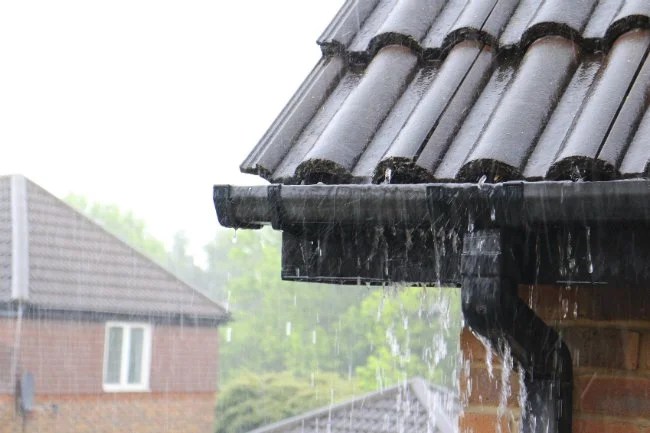
Gutters are easy to ignore. They sit quietly along the edge of the roof, collecting leaves, hosting the occasvenient time of year. Yet this simple system performs one of the most important jobs in residential water management: controlling where roof runoff goes.
Without gutters, rainwater falls from the entire roof perimeter and lands wherever gravity chooses. Sometimes that arrangement causes no immediate trouble. In other cases, it soaks the soil around the foundation, stains the siding, erodes flower beds, floods a crawl space, and creates a miniature waterfall directly above the front door.
So, are gutters actually necessary? For most American homes, the answer is yes. However, gutters are not the only possible drainage solution. A house may function safely without them when its roof, overhangs, grading, soil, climate, and ground-level drainage have all been designed to manage runoff. The important requirement is not necessarily a metal channel attached to the fascia. It is a reliable plan that carries water away from vulnerable parts of the building.
What Is the Main Purpose of Gutters?
The purpose of gutters is to collect water flowing off the roof and transport it to a controlled discharge point. A complete gutter system includes horizontal channels, outlets, downspouts, elbows, fasteners, and some method of moving discharged water away from the foundation.
That last part matters. A gutter that empties beside the basement wall is not really solving the problem. It is concentrating an entire section of roof runoff into one soggy location. That is rather like carefully mopping the kitchen and then pouring the bucket onto the floor.
Gutters Collect a Surprisingly Large Volume of Water
A roof acts as a giant rain collector. One inch of rainfall over a 2,000-square-foot roof footprint produces roughly 1,250 gallons of water. During a heavy storm, that volume can arrive quickly, striking the soil around the house with enough force to wash away mulch, carve channels through landscaping, and saturate foundation backfill.
Gutters intercept this runoff before it reaches the ground. Downspouts then carry it to splash blocks, extensions, underground drainage pipes, rain barrels, rain gardens, or another approved outlet.
Gutters Control Where Water Lands
Rain itself is not the enemy. Uncontrolled rain is. A properly designed system sends water toward a safe drainage area rather than allowing it to collect near basement walls, crawl-space vents, garage doors, patios, walkways, or neighboring property.
This control also makes landscaping easier. Instead of receiving a concentrated curtain of roof runoff, plants can receive water through a downspout connected to a rain garden or carefully positioned drainage swale.
Are Gutters Necessary on Every House?
Not every house technically needs conventional gutters, but most houses benefit from them. Whether a home can safely go without gutters depends on several conditions working together.
Most Homes Should Have Gutters When:
- The property receives moderate or heavy rainfall.
- The house has a basement or enclosed crawl space.
- The roof has little or no overhang.
- The ground is flat or slopes toward the foundation.
- The soil contains clay or drains slowly.
- Mulch, soil, or pavement is being damaged by roof runoff.
- Water regularly collects near exterior walls.
- Doors, windows, decks, or walkways sit beneath roof edges.
Gutters are especially valuable when expansive soil surrounds the foundation. Some clay-rich soils swell when wet and shrink as they dry. Concentrating rainwater on one side of a house can contribute to uneven soil conditions and unwanted foundation movement.
A Home May Work Without Traditional Gutters When:
- It is located in a very dry climate.
- Wide roof overhangs carry runoff well beyond the walls.
- The site slopes consistently away from the building.
- The foundation is elevated and designed for local conditions.
- A lined gravel bed, perimeter drain, swale, or other engineered system manages roof water.
- The roof directs runoff into carefully planned collection areas.
Even in these situations, “no gutters” should not mean “let the water figure it out.” A gutter-free design still needs splash protection, erosion control, appropriate grading, and a safe route for stormwater.
How Gutters Protect a House
1. They Help Protect the Foundation
Foundation protection is the most important purpose of gutters. When water repeatedly falls beside the house, it can saturate the surrounding soil. The moisture may enter small cracks, seep through porous masonry, or increase pressure against below-grade walls.
Over time, poor drainage can contribute to basement dampness, foundation deterioration, settlement, or movement associated with changing soil conditions. Gutters cannot repair an already damaged foundation, but they can remove one of the most common sources of unnecessary moisture.
2. They Reduce Basement and Crawl-Space Moisture
A musty basement is not always suffering from a dramatic plumbing failure. Sometimes the source is far less exciting: a clogged gutter, a disconnected downspout, or an extension that disappeared during lawn mowing season.
Directing roof runoff away from the house reduces the amount of water available to seep through foundation joints and cracks. This can help lower the risk of damp insulation, rotting wood, mold growth, and unpleasant indoor odors.
3. They Protect Siding, Trim, and Exterior Paint
Water dropping from a roof edge hits the ground and splashes back onto the building. The splash may carry soil, mulch, and grit, leaving dirty marks along the lower siding. Repeated wetting can also shorten the service life of exterior paint and accelerate deterioration in vulnerable wood trim.
Overflowing gutters can create similar damage higher on the wall. Instead of moving through the downspout, water spills over the gutter edge and runs down the siding. Dark streaks, peeling paint, algae growth, and rotting fascia boards are common warning signs.
4. They Help Preserve Roofing and Fascia
Properly installed gutters receive runoff from the roof edge without allowing water to slip behind the system. When gutters are clogged, loose, or incorrectly positioned, water may back up against the fascia or reach parts of the roof assembly that were not intended to remain wet.
In cold climates, debris-filled gutters can also interfere with drainage during freeze-and-thaw cycles. Gutters do not cause most ice damsthe larger issues usually involve roof temperature, attic air leakage, insulation, and ventilationbut blocked drainage can make winter moisture problems messier.
5. They Prevent Landscape Erosion
Anyone who has watched a flower bed during a thunderstorm knows that roof runoff is not gentle. It can flatten plants, expose roots, scatter mulch, and dig narrow trenches through freshly improved soil.
Gutters allow homeowners to direct water toward areas that can accept it safely. Downspouts can feed a rain garden, discharge across a stable lawn, connect to a properly designed dry well, or supply a rain barrel with an overflow route.
6. They Make Entrances and Walkways Safer
A roof edge above an entryway can create a sheet of water exactly where people are trying to unlock the door. In winter, runoff may freeze on steps or sidewalks. During warm weather, constantly wet pavement may develop algae and become slippery.
Strategically placed gutters and downspouts help keep entrances, patios, and walkways drier. Downspouts should not discharge across busy paths unless the water is captured by a drain or carried beneath the walking surface.
7. They Can Reduce Pest-Friendly Moisture
Standing water and persistently damp soil attract unwanted attention. Mosquitoes can breed in water trapped inside clogged gutters, while moisture around the foundation can create conditions favored by certain insects and wood-destroying organisms.
Gutters are not pest-control devices, but maintaining them is part of keeping the area around a house dry and less inviting.
Signs Your Home Needs Better Gutter Protection
A homeowner does not need to wait for a flooded basement to investigate the drainage system. Many early warning signs appear outside first.
- Water pools beside the foundation after storms.
- Mulch or soil washes away beneath roof edges.
- Mud splashes repeatedly onto siding.
- Exterior paint peels near the fascia or lower walls.
- Gutters sag, separate at seams, or pull away from the roofline.
- Water pours over the gutter during ordinary rainfall.
- Plants or weeds are growing inside the gutter.
- Basement walls develop damp spots or musty odors.
- Downspouts end directly beside the foundation.
- Ruts form in the lawn where discharged water flows.
The best time to inspect a gutter system is during steady rain, provided the inspection can be performed safely from the ground. Watch where water enters, where it overflows, and where each downspout releases it. A garden hose can also reveal clogs on a dry day.
A Gutter Is Only as Good as Its Downspout
Installing gutters without planning the discharge route solves only half the problem. Downspouts must have enough capacity, remain securely connected, and terminate where water can continue moving away from the house.
Many building-science recommendations use five feet from the foundation as a practical minimum for above-ground discharge, although the appropriate distance depends on grading, soil, rainfall, property boundaries, and local rules. Underground collection systems may need to carry water farther before releasing it.
Never assume that connecting a downspout to an underground pipe guarantees success. Buried pipes can clog, collapse, freeze, or terminate in an unknown location. The outlet should be identifiable and accessible for inspection.
Choosing the Right Gutter System
Size and Capacity
Five-inch gutters are common on many houses, while six-inch systems provide additional capacity for large roofs, steep roof pitches, long gutter runs, and regions with intense rainfall. The number and placement of downspouts matter just as much as gutter width.
A system that regularly overflows despite being clean may be undersized or poorly configured. Adding a downspout, increasing outlet size, or upgrading part of the system may be more effective than repeatedly cleaning a gutter that simply cannot handle the volume.
Material
Aluminum is widely used because it is lightweight, rust-resistant, and available in many colors. Vinyl is affordable and approachable for some do-it-yourself installations, although extreme temperatures can affect it. Steel is strong but may require more protection from corrosion. Copper and zinc provide long service lives and distinctive appearances, along with premium price tags.
Material should be selected according to climate, architecture, expected maintenance, installation method, and budgetnot because one option looked particularly heroic in a showroom display.
Seamless Versus Sectional Gutters
Sectional gutters are sold in shorter pieces and joined during installation. They are accessible to experienced DIYers, but every joint creates another potential leak point. Seamless gutters are formed to fit the house with fewer joints and are usually installed by professionals.
Gutter Guards
Gutter guards can reduce the amount of leaves and large debris entering the system, particularly on wooded properties. They do not create a maintenance-free gutter. Pine needles, roof grit, seed pods, and small debris may still collect on top of or beneath the guard.
A guarded system should still be inspected periodically. Marketing may promise that you can break up forever with gutter cleaning, but your roofline may not have received the memo.
How Often Should Gutters Be Cleaned?
Twice a year is a reasonable starting schedule for many homes: once after spring debris has fallen and again after autumn leaves have dropped. Properties surrounded by trees may need more frequent service. Homes in areas with wildfire ash, heavy pollen, pine needles, frequent storms, or winter ice may also require additional inspections.
Maintenance should include more than removing leaves. Check for loose fasteners, separated seams, corrosion, holes, standing water, incorrect pitch, damaged fascia, and blocked downspouts. Confirm that extensions remain attached and still point toward an appropriate drainage area.
Working from a ladder carries serious risk. Homeowners who lack proper equipment, stable ground, or experience should hire a qualified professional, particularly on multistory buildings or steep sites.
Alternatives to Conventional Gutters
A gutter-free home can work when the substitute system is designed rather than improvised. Potential alternatives include:
- Wide roof overhangs paired with positive grading.
- Lined gravel drip beds with underground drainage.
- French drains or perimeter collection systems.
- Swales and dry creek beds that move water across the landscape.
- Rain chains connected to suitable basins or drains.
- Rain gardens positioned far enough from the foundation.
- Permeable hardscaping that reduces surface runoff.
Rain chains are attractive, but they are best viewed as downspout alternatives rather than substitutes for the entire gutter system. They still need a stable landing area and a safe discharge route. Otherwise, the homeowner has simply replaced a plain pipe with a decorative foundation-soaking device.
Before removing gutters, consider annual rainfall, roof area, soil drainage, frost conditions, foundation type, neighboring properties, and local stormwater requirements. Consulting a drainage professional or qualified contractor is sensible when the site has a history of flooding or foundation movement.
Experience-Based Lessons From Common Gutter Problems
The following composite scenarios reflect problems frequently encountered during home inspections, maintenance projects, and drainage evaluations. They demonstrate why seemingly minor gutter details can produce surprisingly large consequences.
The Downspout That Ended Six Inches From the Wall
One common situation involves a house with clean, attractive gutters and a basement that becomes damp after every major storm. At first glance, the roof drainage appears to be working. Water enters the gutter, travels through the downspout, and exits without overflowing.
The problem is the final six inches. The downspout ends immediately beside the foundation and releases hundreds of gallons into loose backfill soil. Because backfilled soil is often more permeable than undisturbed ground, water follows the easiest route downward along the basement wall.
Adding a secure extension and correcting the nearby grade can dramatically reduce the moisture load. The lesson is simple: successful drainage is measured at the final outlet, not at the top of the downspout.
The Mystery Overflow That Was Not a Clog
Another homeowner may clean the gutters repeatedly yet still see water pouring over one corner during heavy rain. The natural assumption is that hidden debris remains in the system. However, inspection sometimes reveals that the gutter has sagged between hangers or tilts away from the downspout.
Water collects in the low spot until it spills over. Tightening, repositioning, or adding hangers restores the intended pitch and allows the system to drain. This experience shows why cleaning alone is not enough. Gutters must also be structurally supported and correctly aligned.
The Garden Bed That Became a Small Canyon
A home with wide eaves may appear suitable for life without gutters. Then a season of thunderstorms arrives. Roof runoff lands in the same narrow strip of soil, scattering mulch and exposing plant roots. The homeowner replaces the mulch several times, blaming wind, birds, squirrels, and possibly a highly organized neighborhood rabbit.
The real culprit is hydraulic force. Installing gutters on the problem roof section or creating a lined gravel drip zone with drainage stops the repeated erosion. This illustrates that a house does not always need gutters on every edge, but concentrated runoff areas must be managed.
The Gutter Guard That Inspired Too Much Confidence
A homeowner installs gutter guards and stops checking the roofline. Several years later, rainwater spills behind the gutter. Fine debris has accumulated beneath the guard, while leaves sitting on top redirect water over the front edge. A loose fastener has also created a gap beside the fascia.
The guard reduced maintenance but did not eliminate it. After cleaning, resecuring the gutter, and adjusting the affected section, water flows normally again. The practical lesson is that every gutter-protection product still requires inspection. Reduced maintenance is realistic; zero maintenance is a fairy tale with excellent advertising.
The Underground Pipe With No Known Destination
Buried downspout pipes create a clean exterior appearance, but trouble begins when nobody knows where they terminate. In one common scenario, the gutter backs up even though the visible downspout is clear. Water pushed through with a hose returns toward the house instead of emerging elsewhere.
The underground line may be blocked by roots, sediment, ice, or a collapsed section. Sometimes it ends below the soil without a proper outlet, creating a hidden saturated area near the foundation. Locating, cleaning, repairing, or rerouting the pipe restores dependable drainage.
This is why an underground system should have a known discharge location, accessible cleanouts where practical, and an overflow plan. Out of sight should not mean out of mindor into the basement.
Conclusion: Are Gutters Really Worth It?
For most homes, gutters are absolutely worthwhile. They collect roof runoff, protect foundations, reduce basement moisture, limit erosion, preserve siding, and make entrances safer. Their modest appearance hides an enormous responsibility.
A few houses can operate successfully without conventional gutters, particularly in dry climates or where wide overhangs, strong grading, gravel beds, swales, and engineered drains handle the water. The deciding question is not simply, “Does this house have gutters?” It is, “Where does every gallon of roof runoff go?”
If the answer involves pooling beside the foundation, splashing against the siding, or digging trenches through the flower beds, the drainage plan needs improvement. Install the right system, keep it clear, extend the downspouts, and let rainwater become a landscaping resource rather than an uninvited basement guest.
Note: This independently written article synthesizes established guidance from reputable U.S. home-improvement, government, building-science, university-extension, insurance, retail, and stormwater-management resources. Core gutter-purpose and home-protection findings were checked against Bob Vila, This Old House, EPA, and FEMA guidance. ading, discharge-distance, basement-moisture, and gutter-free design guidance was supported by University of Minnesota Extension, Penn State Extension, Building Science Corporation, and the U.S. Department of Energy Building Science Education Solution Center. utter guards, materials, overflow symptoms, and insurance-related drainage guidance was reviewed through Angi, Better Homes & Gardens, Allstate, Home Depot, Lowe’s, and New York City DEP.