
Before computers became sleek little rectangles that live in our pockets, computing had a louder personality. It clicked. It clacked. It hummed with the confidence of a machine that needed actual moving parts to do math. That world is what many historians mean by relay computing: systems that used electromechanical relays to process logic, store states, and execute calculations long before silicon became the king of the hill.
Relay computing may sound like a niche historical footnote, but it is really one of the great stepping stones in the story of modern technology. It sits between mechanical calculators and fully electronic computers, acting like the practical, hardworking middle child of computing history. Relay-based machines helped prove that automated, programmable calculation was possible at scale. They taught engineers how to think in binary logic, how to control sequences of instructions, and how to build machines that could solve real problems without a human babysitting every step.
If modern computing is a blockbuster franchise, relay computing was the surprisingly excellent first film that set up the whole universe.
What Is Relay Computing?
Relay computing refers to computing systems that rely on electromechanical relays as switching elements. A relay is essentially an electrically controlled switch. When current energizes a coil, a contact opens or closes. That simple action lets a machine represent yes/no states, route signals, and carry out logical operations.
In plain English, a relay can act like a tiny decision-maker. Current on? Do this. Current off? Do that. Stack enough relays together, and suddenly your machine is not just flipping switches. It is adding numbers, following instructions, branching through procedures, and imitating what we now recognize as computation.
This made relay computers a major advance over purely mechanical calculators. Mechanical devices could perform arithmetic, but relay systems added a new level of flexibility. Because relays could be wired into circuits that represented logic, engineers could design machines that were more programmable, more automatic, and more adaptable to different tasks.
Why Relay Computing Mattered So Much
Relay computing mattered because it turned the abstract idea of machine logic into a practical engineering system. It was not the final answer, but it was the first convincing draft.
These machines showed that large-scale automatic calculation was not science fiction. They could work through repetitive mathematical tasks, produce tables, solve engineering problems, and reduce the human error that came from endless manual calculation. That was a big deal in an era when many advanced computations still depended on teams of people armed with paper, pencil, and patience.
Relay computers also helped establish core computing ideas that never went out of style: binary representation, sequential control, input and output handling, remote access, machine reliability, error checking, and automated program execution. Even when relay hardware became obsolete, the thinking behind it survived and spread into electronic computing.
How Relay Computers Actually Worked
The relay as a logic element
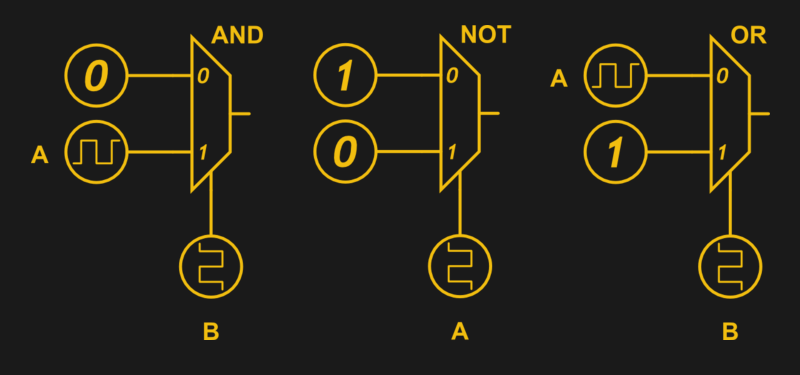
At the heart of relay computing is the humble relay contact. Because it can be either open or closed, it maps beautifully to binary logic. That means engineers could use relay networks to build functions equivalent to logical operations like AND, OR, and NOT.
This was not just clever wiring. It was a revolution in design thinking. Claude Shannon’s famous work on relay and switching circuits helped formalize the relationship between electrical switching and symbolic logic. In other words, relay circuits gave engineers a concrete way to build thinking machines out of physical components. No cape required.
Sequence control and program flow
Relay computers were not just oversized adding machines. Many could follow a programmed sequence of operations, often using punched tape, switches, or other control methods. Instructions could tell the machine what order to perform operations in, when to repeat a step, and how to move data from one part of the machine to another.
That ability to execute a series of instructions automatically is what makes relay computing historically important. It moved computation from “tool” to “system.”
Storage, speed, and trade-offs
Relays were dependable but slow. Since they depended on physical movement, each switching action took measurable time. A relay machine could absolutely solve hard problems, but it was never going to win a speed contest against later vacuum-tube or transistor systems.
Still, relay-based machines had strengths. They were easier to understand than purely electronic designs, and many engineers trusted them because their behavior was visible and relatively robust. When a relay computer made noise, it was not being dramatic. It was literally showing you the logic happening.
The Big Names in Relay Computing History
Bell Labs and George Stibitz
No conversation about relay computing is complete without Bell Labs and George Stibitz. In the late 1930s and early 1940s, Stibitz helped develop some of the earliest relay-based computing machines in the United States. His work demonstrated that telephone relays could be used not just for communications infrastructure, but for digital calculation.
One of the most memorable milestones was the remote demonstration of the Bell Labs Model I, originally known as the Complex Number Calculator. Users at Dartmouth could send problems to the machine in New York through teleprinter links and receive answers back. That may sound quaint now, but it was a stunning preview of remote computing. Before cloud computing had a marketing team, relay computing was already quietly saying, “What if the computer didn’t have to be in the same room?”
Bell Labs continued improving its relay systems, producing more advanced models that emphasized reliability and useful automation. These machines were never flashy speed demons, but they were deeply important in proving how digital computation could be organized and deployed.
Harvard Mark I
The Harvard Mark I is one of the most famous machines associated with the relay era. Designed with Howard Aiken and built with IBM’s support, it became an icon of large-scale automated calculation in the United States. The machine was enormous, and “enormous” is being polite. It stretched across a room, included vast numbers of components, and used relay-based control to run sequences of calculations.
What makes the Mark I so fascinating is not just its size, but its symbolic role. It represented a turning point: the moment when computing became undeniably industrial, institutional, and serious. This was no longer just clever hardware in a lab corner. It was large-scale programmable machinery performing work that mattered.
Grace Hopper’s early programming work on the Mark I also connects relay computing to the later rise of software as its own discipline. Hardware may get the museum spotlight, but relay computing also helped reveal that instructions, procedures, and programming methods were going to matter just as much as the machine itself.
Simon 1 and educational relay computing
Not every relay computer was the size of a heroic furnace. The Simon 1, published for hobbyists in the early 1950s, showed that relay logic could also be educational and approachable. It was a simplified relay computer designed to help people understand how digital logic worked.
That is part of relay computing’s charm. It was grand enough for military and scientific work, yet simple enough in principle that people could still learn from its structure directly. You can almost point at the logic and say, “There. That contact is why the machine just changed its mind.”
Relay Computing vs. Electronic Computing
Relay computers were a major breakthrough, but they eventually ran into a hard limit: physics. Moving contacts take time. Electronic circuits built from vacuum tubes, and later transistors, could switch far faster because they did not rely on mechanical motion.
Once electronic systems matured, relay machines quickly looked old-fashioned. Electronic computers could perform more operations in less time, making them dramatically better for increasingly complex scientific, engineering, and business tasks. That speed advantage was overwhelming.
But it would be unfair to frame relay computing as a dead end. It was more like a bridge. It made the logic of digital systems real. It trained engineers to think in terms of switching states, programmed sequences, and machine control. Even hybrid systems, such as some early IBM designs, carried relay-era ideas into the electronic future.
The Hidden Legacy of Relay Computing
Boolean logic became real hardware
Relay computing helped turn logical theory into practical engineering. Instead of logic being just a philosophical or mathematical exercise, it became something you could wire, test, hear, and fix.
Remote computing got an early preview
The Bell Labs demonstrations showed that computation could happen in one location while users interacted from another. That idea became foundational in mainframes, time-sharing, networking, and eventually the internet age.
Industrial control still carries the relay mindset
Modern industrial automation has moved far beyond banks of clicking contacts, but the relay worldview still lives on. Programmable Logic Controllers, or PLCs, use ladder logic that preserves the visual grammar of relay control. In factories and control systems, the conceptual DNA of relay computing never really packed up and left. It just got a firmware update.
Reliability still matters
Relay engineers obsessed over dependable operation, sequencing, and fault tolerance. Those same concerns still define critical computing environments today, from industrial control systems to mission-critical infrastructure.
What Relay Computing Can Teach Modern Readers
Relay computing is worth studying because it strips computing down to its bones. It shows that behind every glossy interface, intelligent assistant, or lightning-fast processor, there is still a basic question: how do you represent a decision, carry a state forward, and organize a sequence of operations?
When you study relay systems, you understand that computing is not magic. It is structured choice. It is logic embodied in hardware. That insight is useful whether you are learning programming, studying computer architecture, designing automation systems, or simply trying to appreciate how astonishing modern machines really are.
It also reminds us that progress is rarely clean. The future does not arrive fully formed. It rattles in with compromises, hybrid systems, oversized cabinets, too many wires, and a few brilliant people insisting that this noisy contraption really is the next big thing.
Relay Computing in Modern SEO and Tech Content
From a content perspective, relay computing is a rich topic because it blends computer history, digital logic, electromechanical systems, relay logic, and industrial automation. It appeals to readers interested in early computers, STEM education, engineering history, and the evolution of modern computing infrastructure.
It is also a topic that rewards specificity. Readers do not just want a vague statement that “old computers were slow.” They want to know why relays mattered, how machines like the Harvard Mark I and Bell Labs systems worked, and why the concepts behind those machines still matter now. Good SEO writing on relay computing succeeds when it balances clarity, historical depth, and a bit of storytelling flair.
Experiences Related to Relay Computing
If there is one thing people remember about relay computing, it is that it feels physical in a way modern computing usually does not. A relay machine is not shy. It announces itself. Every click is a decision. Every sequence sounds like a mechanical conversation happening at high speed. You do not just observe the machine; you experience it with your ears, your eyes, and sometimes your patience.
For students and engineers encountering relay-based logic for the first time, one of the most striking experiences is how visible the logic becomes. In a modern laptop, millions or billions of switching events happen invisibly inside silicon. In a relay system, you can often trace the path more directly. You begin to understand how one state enables another, how a contact closure becomes a condition, and how a sequence turns into action. It is like seeing the skeleton of computing instead of only its polished skin.
There is also a certain emotional effect. Relay computing makes technology feel less abstract and more handmade. You get the sense that machines did not always arrive as sealed products with glass screens and mystery chips. They were once assembled from parts that looked understandable: coils, contacts, wires, tapes, switches, and panels. That can be strangely encouraging for learners. It says, “Computers are built things. Humans made this. Humans can understand this.”
Another common experience tied to relay computing is the lesson in trade-offs. Relay systems teach that engineering is rarely about perfection. It is about choosing the right balance. Relays were slower than later electronics, but they offered clarity, reliability, and a practical path forward at a critical moment in history. Working through that lesson can reshape how people think about technology. Faster is not always better in every context. Sometimes the real breakthrough is not raw speed, but usability, stability, or the ability to solve a problem well enough that an entire field can move forward.
There is also a powerful historical experience in studying relay computers: humility. When you read about the engineers and programmers who worked with these machines, you realize how much discipline early computing demanded. Programs were not casual. Configuration was not casual. Debugging was definitely not casual. A mistake could mean hours of lost time, repeated setup, or a long search through hardware and control flow. Modern developers may groan when a build takes five minutes. Relay-era teams would probably smile politely and offer them a chair.
For hobbyists, museum visitors, and engineering students, relay computing also creates a bridge between eras. It connects the world of telephones, switchboards, motors, and industrial control with the world of algorithms and digital systems. That blend is uniquely memorable. It helps people see computing not as something that appeared out of nowhere, but as a craft that evolved from electrical engineering, mathematics, communications, and practical problem-solving.
Ultimately, the experience of relay computing is the experience of watching intelligence emerge from hardware one click at a time. It is slower than what we are used to, louder than what we expect, and far more charming than a silent black box. And that is exactly why it still matters. Relay computing lets us feel the birth of digital logic in a tangible way. It reminds us that the road to modern computing was not smooth, silent, or glamorous. It was wired by hand, tested with grit, and powered by people who could hear the future before the rest of the world saw it.
Conclusion
Relay computing may belong to an earlier chapter of technological history, but it is far from irrelevant. It helped establish the logic, structure, and engineering mindset that modern computing still depends on. Machines built from relays proved that programmed, automatic, large-scale calculation was possible. They connected theory to hardware, introduced new ways of controlling computation, and prepared the ground for the electronic revolution that followed.
So yes, relay computing was slower than what came after. It was bulky. It was noisy. It was gloriously impractical by today’s standards. But it also did something unforgettable: it showed the world that logic could be mechanized, that instructions could be automated, and that the future of computing had officially left the pencil-and-paper era behind.














