SaaS pricing looks simple until you actually have to set a price. Then suddenly a calm Tuesday afternoon turns into a spreadsheet marathon involving customer segments, churn rates, competitors, gross margins, and at least one person asking, “Why don’t we just charge $49?”
The problem is that successful SaaS pricing is not merely about choosing a number. It is about deciding what customers pay for, how that price grows as they receive more value, and which features belong in each package. A great SaaS pricing strategy can improve acquisition, expansion revenue, retention, and profitability without requiring your engineering team to invent another shiny feature.
From per-user subscriptions and freemium plans to consumption-based billing and hybrid AI pricing, modern software companies have more options than ever. The trick is choosing a model that aligns your revenue with the value customers receive.
What Is SaaS Pricing?
SaaS pricing is the framework a software-as-a-service company uses to charge customers for ongoing access to its product. Customers usually pay monthly, annually, according to usage, or through some combination of these methods.
Pricing and packaging are closely related but not identical. Pricing determines how much customers pay and the unit used to calculate that amount. Packaging determines which features, usage allowances, services, and support levels customers receive.
For example, a project management platform might charge $12 per user per month. That is the pricing model. It might then offer Starter, Professional, and Enterprise editions with different automation, security, reporting, and administrative features. That is packaging.
The most effective SaaS businesses design both together instead of treating the pricing page like the last decoration added before launch.
Popular SaaS Pricing Models
1. Flat-Rate Pricing
Flat-rate pricing offers one product or package for one recurring price. It is wonderfully easy to explain: pay this amount and receive the software.
This approach works particularly well for relatively simple SaaS products serving customers with similar needs. Billing is predictable, forecasting is straightforward, and prospects do not need a calculator, legal counsel, and three cups of coffee to understand the pricing page.
The weakness is limited flexibility. A five-person company and a 500-person company may receive dramatically different value while paying the same price.
2. Per-User or Per-Seat Pricing
Per-user pricing remains one of the best-known B2B SaaS pricing models. Customers pay according to the number of people who can use the software.
Collaboration, CRM, productivity, and workplace applications commonly use variations of this approach. Salesforce, for example, has long used per-user pricing across multiple product editions. Slack also combines tiered packages with user-based billing.
The advantage is predictability. When customers add employees, licenses increase naturally. The downside is that charging for every seat can discourage widespread adoption. A customer may think twice before inviting occasional users when every invitation increases the invoice.
Some SaaS companies address this problem through active-user pricing, charging only for people who actually use the product during the billing period.
3. Tiered Pricing
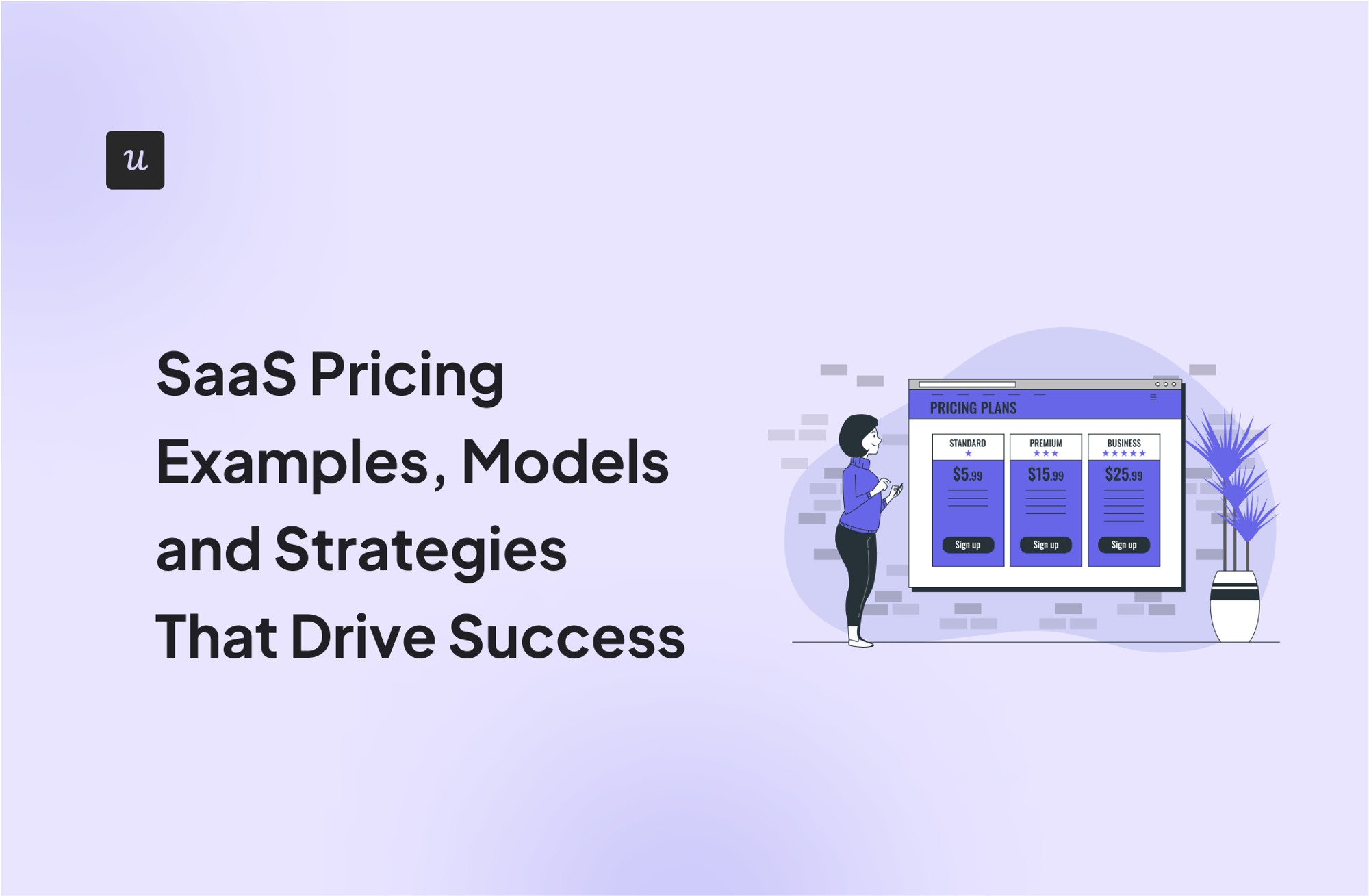
Tiered SaaS pricing creates several packages designed around different customer needs. The familiar structure is something like Basic, Pro, Business, and Enterprise.
Zoom demonstrates the logic well. A free or entry-level package can handle basic communication requirements, while higher tiers increase capabilities, administration, meeting functionality, and business features. Dropbox similarly separates offerings according to storage, collaboration, security, and organizational needs.
Tiered pricing works because customers can identify a plan that resembles their current situation while seeing a clear upgrade path.
However, more tiers are not automatically better. Twelve packages with seven add-ons and a mysterious “Premium Plus Advanced” option can make buying software feel like ordering from a restaurant menu written by an accountant.
4. Usage-Based Pricing
With usage-based pricing, customers pay according to consumption. The value metric might be API calls, messages, transactions, storage, processed records, computing resources, tokens, or another measurable unit.
Twilio is a classic example of consumption-oriented software pricing because communications usage can be measured through activities such as messages and calls. Cloud infrastructure and data platforms have also made usage-based billing familiar to business buyers.
The model has a major advantage: customers can start small and spend more as usage grows. That creates a natural land-and-expand motion.
But usage billing must remain understandable. Charging according to an obscure internal processing unit that customers cannot estimate is a reliable way to make finance departments unhappy.
5. Freemium Pricing
A freemium SaaS model gives customers meaningful access for free while reserving higher limits, advanced functionality, or business capabilities for paying subscribers.
Slack, Zoom, Dropbox, and numerous other software businesses have used free plans to reduce adoption friction. Prospective customers can experience the product before pulling out a corporate credit card.
The difficult part is designing the boundary between free and paid. Make the free plan useless and nobody becomes invested in the product. Make it too generous and users may happily remain free forever.
The free tier should demonstrate genuine value while creating logical reasons to upgrade as customers become more successful.
6. Feature-Based Pricing
Feature-based pricing charges customers according to functionality rather thanor in addition tousage or seats.
A small team might receive basic reporting and integrations, while an enterprise package unlocks advanced analytics, audit logs, automation, permissions, security controls, and premium support.
This structure can work extremely well when advanced features clearly correspond with sophisticated customer requirements. Problems begin when ordinary functionality is arbitrarily locked behind expensive packages simply because somebody discovered the “disable feature” button.
7. Hybrid Pricing
Hybrid SaaS pricing combines two or more models. A company might charge a predictable platform subscription plus usage fees once consumption exceeds an included allowance.
This approach is increasingly relevant for cloud and AI software because vendors often face meaningful variable costs while customers still appreciate predictable base spending.
A hybrid model can therefore provide recurring revenue stability while allowing revenue to expand alongside customer activity.
8. Outcome-Based Pricing
Outcome-based pricing attempts to charge according to a measurable business result rather than software access itself. An AI customer-service platform, for example, might connect pricing to successfully resolved conversations instead of simply charging for agent seats.
The attraction is powerful alignment: customers pay when the product produces results. The challenge is agreeing on exactly what counts as a successful outcome and determining how much credit the software deserves.
SaaS Pricing Examples and What They Teach Us
Slack: Reduce Friction, Then Expand
Slack illustrates how freemium, feature tiers, and user-based pricing can work together. Teams can begin with limited functionality and later upgrade when they need deeper history, administration, security, collaboration, and productivity features.
The lesson is simple: entry pricing can encourage adoption while premium functionality captures value from organizations with more demanding requirements.
Salesforce: Segment Customers by Sophistication
Salesforce demonstrates another classic SaaS pricing principle: businesses at different stages need different levels of functionality. Smaller customers can start with streamlined products while larger organizations purchase editions offering increasingly sophisticated sales management, automation, forecasting, integration, governance, and AI capabilities.
Instead of attempting to force every customer into the same product package, pricing follows organizational complexity.
Dropbox: Use Multiple Value Dimensions
Dropbox packages can vary by individual versus team use, storage capacity, collaboration features, security, administration, and support. This is an example of pricing where value comes from more than one dimension.
The broader lesson is that your pricing metric does not have to capture every difference between customers. The core metric can remain simple while packaging handles the rest.
Usage-Based Infrastructure: Grow With the Customer
Cloud infrastructure, communications APIs, data systems, and similar machine-to-machine products often benefit from usage pricing because consumption closely tracks the work performed.
When customers process twice as much data or send ten times as many requests, greater usage usually corresponds with greater business activity. That makes consumption a potentially powerful value metric.
How to Build a Successful SaaS Pricing Strategy
Start With Customer Value, Not Your Hosting Bill
Cost matters because businesses need healthy gross margins. But SaaS products should rarely be priced simply by calculating expenses and adding a markup.
A product that saves a business $100,000 annually may cost surprisingly little to host. Pricing it at $29 simply because infrastructure is cheap ignores the economic value being created.
Value-based pricing begins with customer research: What problem does the product solve? How expensive is that problem? What alternatives exist? How much time, money, risk, or labor can the software save?
Choose the Right Value Metric
The value metric determines the unit customers pay for. Examples include:
- Users or active users
- Contacts managed
- Projects created
- Transactions processed
- API requests
- Messages sent
- Storage consumed
- Records analyzed
- AI tokens or actions
A strong value metric should increase as customer value increases, remain easy to understand, and be measurable without arguments worthy of a courtroom drama.
If customers become dramatically more successful without ever needing to purchase more of your pricing unit, your expansion model may have a problem.
Research Willingness to Pay
Competitor pricing is useful for understanding market expectations, but blindly copying competitors is dangerous. Their economics, customer segments, positioning, brand strength, and product maturity may be completely different.
Interview customers and lost prospects. Ask how they currently solve the problem, what the alternative costs, which capabilities matter most, and at what point the product starts feeling expensive.
Pricing research is especially valuable when customer segments have very different willingness to pay.
Create a Natural Upgrade Path
Good SaaS packages should resemble stairs rather than walls.
A small customer should be able to begin at an affordable level. As the customer grows, the need for more users, automation, capacity, security, reporting, integrations, or support should naturally justify moving upward.
An upgrade feels healthy when customers think, “We have grown into this plan.” It feels unhealthy when they think, “They deliberately broke the cheap plan.”
Use Annual Pricing Strategically
Monthly billing lowers commitment and can improve initial adoption. Annual contracts improve revenue visibility and may strengthen retention by reducing monthly cancellation opportunities.
Many SaaS businesses therefore offer both, with an economic incentive for annual payment.
The important point is to avoid treating the annual discount as an automatic tradition. Model its effect on cash flow, retention, customer acquisition costs, and lifetime value.
Make Pricing Easy to Understand
Customers should quickly understand three things:
- Which package is intended for them.
- What they receive.
- What will make their bill increase.
If prospects need to schedule a call merely to understand whether they are looking at $50 or $50,000, self-service conversion becomes difficult.
Enterprise software may legitimately require custom quotes because implementation, usage, security, support, and contract terms vary significantly. Smaller SaaS products usually benefit from greater transparency.
Metrics That Reveal Whether SaaS Pricing Works
Pricing optimization should be measured against business outcomes rather than applause during the pricing meeting.
Conversion Rate
Monitor how many qualified visitors, trials, or product-qualified leads become paying customers. A pricing change that increases average contract value but destroys conversion may not be the victory it initially appears to be.
Average Revenue Per Account
ARPA or ARPU helps reveal whether packaging and expansion strategies are increasing revenue from the customer base.
Net Revenue Retention
Net revenue retention incorporates upgrades, expansion, contractions, and churn. Pricing models aligned with growing customer value can create stronger expansion opportunities.
Customer Churn
If cancellations spike after a pricing change, determine whether the problem is absolute price, poor packaging, confusing billing, weak perceived value, or an unpleasant migration process.
Expansion Revenue
Track revenue from additional seats, higher packages, add-ons, and increased usage. Healthy expansion suggests the pricing system can grow alongside successful customers.
Discount Rate
If nearly every sales deal requires a major discount, the official list price may be functioning mainly as office decoration. Persistent discounting can signal weak positioning, inappropriate packages, or unrealistic price points.
Common SaaS Pricing Mistakes
Setting the Price Once and Forgetting It
Products evolve. Markets change. New competitors arrive. Customer segments mature. AI changes cost structures. Your 2023 pricing strategy should not automatically receive lifetime employment.
Review pricing periodically and whenever the product or market changes significantly.
Underpricing Because the Company Is New
Founders frequently assume low pricing will make selling easy. Sometimes it does. It can also attract highly price-sensitive customers, make paid acquisition uneconomical, weaken positioning, and leave too little margin for support and product development.
Creating Too Many Plans
More choices can create decision paralysis. A few clearly differentiated tiers normally outperform a pricing maze where customers need a flowchart to discover whether they qualify for “Growth Premium Team Plus.”
Choosing a Metric Customers Hate
A technically measurable metric is not necessarily a good billing metric. Avoid charging for activity customers cannot predict, control, or connect to value.
Changing Prices Without a Migration Strategy
Existing customers care about predictability. Significant pricing changes should include thoughtful communication, reasonable timelines, clear explanations, and appropriate treatment of current contracts.
How AI Is Changing SaaS Pricing
AI products are accelerating experimentation with consumption-based, credit-based, hybrid, and outcome-oriented pricing.
Traditional seat pricing works beautifully when the product primarily helps a human employee perform work. AI agents complicate that equation. One AI system might complete tasks that previously required several human users, while every generated response or automated workflow creates variable computing costs.
This makes hybrid pricing particularly attractive. A vendor can collect a recurring platform fee for access while charging additional amounts for usage, premium models, automated actions, or successful outcomes.
The winning model will vary by product, but one principle remains constant: customers should understand how additional spending relates to additional value.
A Practical SaaS Pricing Framework
Before publishing your next pricing page, answer these questions:
- Who is the customer? Define the primary segments and buying situations.
- What measurable value does the software create? Quantify saved time, increased revenue, reduced risk, or operational improvement.
- What metric grows with that value? Select users, usage, transactions, projects, data, outcomes, or another meaningful unit.
- How should customers be packaged? Build tiers around genuinely different requirements rather than arbitrary feature collections.
- Where is the natural upgrade point? Customers should spend more when they become more successful.
- What should be free? Decide whether a free trial, freemium product, demo, or paid entry tier best reduces adoption friction.
- How will success be measured? Monitor conversion, churn, retention, expansion, ARPA, sales velocity, and discounting.
- When will pricing be reviewed? Treat pricing as an evolving operating system, not a stone tablet.
Conclusion
The best SaaS pricing model is not necessarily flat-rate, freemium, per-user, tiered, usage-based, or outcome-based. It is the model that most closely connects what customers pay with the value they receive while supporting sustainable business economics.
For software used primarily by teams, user-based subscriptions and feature tiers may remain highly effective. Infrastructure and machine-to-machine applications often fit consumption pricing. AI products increasingly benefit from hybrid approaches that combine predictable subscriptions with variable usage or outcome charges.
Whatever model you choose, simplicity matters. Customers should understand the offer, recognize why a higher tier delivers more value, and confidently predict what will happen to their bill as they grow.
Pricing should also evolve. Customer interviews, usage data, churn reasons, sales feedback, retention metrics, and controlled experiments can reveal opportunities that a competitor comparison spreadsheet never will.
Ultimately, excellent SaaS pricing creates a surprisingly elegant bargain: when customers become more successful, the SaaS company becomes more successful too.
Experience-Based Lessons From SaaS Pricing in the Real World
One of the most useful lessons from working with SaaS pricing concepts is that customers rarely evaluate a price in isolation. They evaluate it against a story. A $200 monthly tool sounds expensive when described as “software with dashboards.” The same $200 can sound inexpensive when the product demonstrably eliminates ten hours of repetitive work, prevents costly mistakes, or generates additional qualified leads every month.
That distinction changes the pricing conversation. Teams often spend enormous amounts of time debating whether a plan should cost $49, $59, or $69 while barely discussing how clearly the pricing page communicates the economic result customers receive. Improving the value story can sometimes matter more than adjusting the number.
Another practical lesson is that simple pricing usually wins the first conversation. Founders naturally understand every feature, edge case, API limit, integration, and usage dimension because they live inside the product. Prospects do not. They arrive at the pricing page with a much simpler question: “Which one should I buy?”
When three plans each target a recognizable customer type, buying feels manageable. When eight plans contain overlapping limits, custom credits, different billing frequencies, optional modules, and footnotes that look like a mortgage contract, prospects hesitate. Complexity may be technically precise while still being commercially ineffective.
Usage-based models provide another important lesson. They sound wonderfully faircustomers pay for exactly what they consumebut fairness and predictability are not always the same thing. Finance leaders frequently care about knowing approximately what next quarter will cost. A pricing system can therefore align beautifully with usage while creating anxiety if spending can unexpectedly explode.
This is why spending dashboards, alerts, committed-use discounts, prepaid credits, usage caps, and hybrid subscriptions matter. The billing mechanism is part of the product experience.
Pricing experiments also reveal that a weak conversion rate does not automatically mean prices are too high. The real problem could be unclear positioning, attracting the wrong visitors, an ineffective trial, missing integrations, weak onboarding, or insufficient product value. Lowering the price before diagnosing the problem can reduce revenue without fixing anything.
Enterprise pricing teaches a similar lesson from the opposite direction. Large buyers are often less obsessed with finding the cheapest possible software than founders expect. They may care more about security, reliability, procurement requirements, integrations, implementation, service levels, support, and contractual flexibility. Charging significantly more can be reasonable when the package solves those larger organizational problems.
Finally, pricing changes work best when treated as business experiments rather than dramatic company events. Establish the hypothesis, define the customer segment, identify metrics, make the change, monitor behavior, and learn from the result. A SaaS company does not need to discover a mythical perfect price. It needs a pricing system that becomes smarter as the product and customer base evolve.
That mindset removes some of the fear surrounding pricing. The first structure does not have to be perfect. It has to be understandable, economically sensible, aligned with customer value, measurable, and flexible enough to improve.
Note: SaaS plans, product features, and advertised prices change frequently. Specific commercial terms should always be verified before publishing exact price comparisons. This article synthesizes established pricing guidance and market patterns from recognized sources including Stripe, Paddle, AWS, McKinsey, Chargebee, ChartMogul, Zuora, HubSpot, Recurly, OpenView, ProductLed, Andreessen Horowitz, Insight Partners, and public SaaS vendor pricing materials.