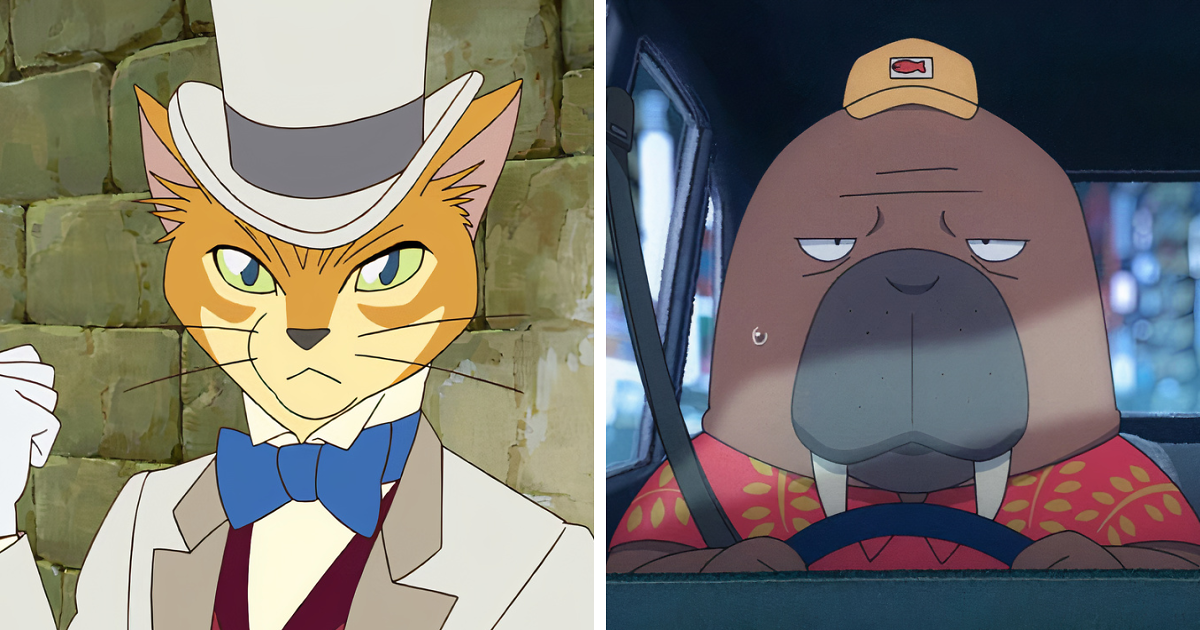
Anime has never met an ordinary animal it could not upgrade. A house cat becomes a magical adviser. A corgi becomes a supercomputer. A reindeer becomes a doctor, pirate, and walking emergency room. Even a mild-mannered red panda can turn a miserable day at the office into a death-metal concert.
That imagination is why the best animal anime characters are more than cute faces designed to sell plush toysalthough many are spectacularly qualified for the plush-toy business. They carry emotional scenes, rescue heroes, explain supernatural rules, deliver perfectly timed jokes, and occasionally demonstrate better judgment than the entire human cast.
This selection celebrates iconic anime pets, mascots, animal companions, and animal-like heroes whose personalities make them unforgettable. The characters are not ranked by combat power, because comparing Pikachu’s electricity with Jiji’s sarcasm would require a scientific committee and several liability waivers. Instead, they were chosen for their character development, cultural impact, memorable designs, and ability to make viewers whisper, “I would protect this creature with my life.”
What Makes an Animal Anime Character Truly Lovable?
Cuteness helps, but cuteness alone is not enough. The most lovable anime animals have clear personalities and meaningful roles in their stories. Some are loyal partners. Others are mentors disguised as pets. A few are chaotic roommates who would knock a glass off the counter while maintaining unbroken eye contact.
The strongest characters also create contrast. A tiny mascot can soften a dark fantasy, while a quiet pet can expose a hero’s hidden loneliness. A talking cat can say what everyone else is too politeor too frightenedto mention. That mixture of charm, usefulness, humor, and emotional depth transforms an adorable side character into a genuine fan favorite.
The Best Animal Anime Characters to Meet, Love, and Probably Feed
1. Pikachu Pokémon
Pikachu may be the bright yellow face of Pokémon, but popularity is only part of his appeal. As Ash’s longtime partner in the anime, Pikachu combines electrical power with stubborn courage, expressive reactions, and sincere affection. He can face an opponent many times his size and then become hilariously offended by a minor inconvenience. His pointed ears, red cheeks, and lightning-shaped tail form one of animation’s most recognizable designs, while his loyalty makes him feel like a friend rather than a collectible battle tool.
2. Totoro My Neighbor Totoro
Totoro feels less like a conventional character and more like the comforting spirit of childhood imagination. In My Neighbor Totoro, sisters Satsuki and Mei encounter the enormous forest creature after moving to the countryside. He does not deliver long speeches or present a detailed magical résumé. He yawns, roars, flies, waits for buses, and somehow makes an uncertain world feel safer. His leaf umbrella, giant grin, gentle nature, and association with the extraordinary Catbus have made him an enduring symbol of wonder and reassurance.
3. Tony Tony Chopper One Piece
Tony Tony Chopper is a blue-nosed reindeer who gained human qualities and became the doctor of the Straw Hat Pirates. That sentence contains more career development than many people achieve in a decade. Chopper is medically skilled, intensely loyal, and capable of several powerful transformations. However, a simple compliment can turn him into a flustered disaster pretending not to be pleased. His history of rejection gives his kindness real weight: Chopper remains compassionate even after discovering how cruel the world can be.
4. Luna Sailor Moon
Luna is the black cat who guides Usagi Tsukino toward her responsibilities as Sailor Moon. She serves as mentor, mission control, worried parent, and exhausted project manager. If the Sailor Guardians maintained a shared calendar, Luna would send reminders that nobody opened. Her intelligence balances Usagi’s early clumsiness, but she is more than an instruction-delivery system. Luna worries, makes mistakes, forms attachments, and reveals genuine tenderness beneath her disciplined attitude. Her crescent-moon marking remains one of magical-girl anime’s most recognizable symbols.
5. Ein Cowboy Bebop
Ein appears to be an ordinary Pembroke Welsh corgi, which would already make him a strong candidate for this list. In reality, he is a highly intelligent “data dog” living aboard the Bebop. He quietly observes a crew of bounty hunters who are talented at fighting and remarkably gifted at making terrible personal decisions. Ein’s humor comes from understatement; one glance can suggest that he understands the situation better than everyone else. His friendship with Edward also brings playful warmth to a series filled with loneliness and regret.
6. Jiji Kiki’s Delivery Service
Jiji is Kiki’s sarcastic black cat and trusted traveling companion in Kiki’s Delivery Service. When the young witch leaves home to begin her independent training, Jiji provides commentary, caution, and the practical skepticism every ambitious teenager needs. Their relationship feels believable because they tease each other, disagree, and face the uncertainty of a new city together. Jiji is funny without becoming a joke and supportive without surrendering his opinions. He is the dependable friend who complains about the plan while helping carry it out.
7. Happy Fairy Tail
Happy is a blue, winged Exceed who travels with Natsu in Fairy Tail. He can fly, transport allies, help during dangerous missions, and interrupt serious conversations with carefully aimed mischief. Although his cheerful appearance matches his name, his humor occasionally carries the precision of a tiny airborne troublemaker. Happy’s loyalty to Natsu gives their partnership emotional substance, especially when danger replaces comedy. He contributes to the Fairy Tail guild’s family atmosphere by behaving like a true sibling: affectionate, annoying, dependable, and suspiciously interested in fish.
8. Retsuko Aggretsuko
Retsuko is a red panda, an accountant, and the patron saint of smiling through meetings that should have been emails. In Aggretsuko, she handles workplace frustration, social expectations, romantic uncertainty, and adult disappointment by screaming death metal at karaoke. Her problems feel painfully familiar, even when presented through a cute Sanrio-style design. Retsuko is polite without being weak and angry without becoming cruel. She proves that an adorable animal protagonist can explore burnout, self-expression, loneliness, and the confusing process of building an independent life.
9. Nyanko-sensei Natsume’s Book of Friends
Nyanko-sensei resembles a round lucky cat, but his true identity is Madara, a powerful yōkai. He accompanies Takashi Natsume, who can see spirits and is returning names contained in the mysterious Book of Friends. Nyanko-sensei initially offers protection for selfish reasons, yet their relationship gradually develops into genuine loyalty. He is vain, gluttonous, argumentative, and frequently shaped like a dumpling with legs. Those qualities make his rare moments of wisdom and ferocious strength even more memorable.
10. Bond Forger SPY x FAMILY
Bond is the enormous white dog adopted by the Forger family in SPY x FAMILY. Like every member of the household, he hides an unusual secret: experiments gave him the ability to glimpse possible futures. Anya’s telepathy allows her to understand his visions, creating a partnership that is useful, sweet, and magnificently chaotic. Bond’s size suggests majestic confidence, but he is gentle, anxious, and deeply devoted to his new family. His adoption reinforces the series’ message that an improvised household can become a real family through everyday care.
11. Kirara Inuyasha
Kirara is Sango’s loyal nekomata companion in Inuyasha. In her smaller form, she resembles a tiny two-tailed cat with an innocent expression. During combat, she transforms into a large, flying, saber-toothed demon. She is therefore both travel-sized and battle-ready, which is excellent character design. Kirara rarely needs dialogue to establish her personality. Her devotion to Sango, courage in combat, and willingness to carry the group make her indispensable. Her sweetness and power feel like equally natural parts of her identity.
12. Hamtaro Hamtaro
Hamtaro turns the secret life of a household hamster into a neighborhood-sized adventure. While his owner deals with human concerns, Hamtaro meets the Ham-Hams, explores unfamiliar places, solves small problems, and treats every tunnel or sunflower seed like a major discovery. His appeal is uncomplicated in the best possible way. He is curious, friendly, and brave enough for the scale of his world. For adults, Hamtaro is also a pleasant reminder that joy does not require an apocalypse, tragic prophecy, or 40-episode tournament arc.
Why Animal Anime Companions Often Steal the Show
Animal characters can express emotion with unusual clarity. A lowered ear, wagging tail, sudden puff of fur, or suspicious stare communicates instantly across languages and age groups. Anime exaggerates those signals just enough to create comedy without erasing sincerity. Viewers may remember Ein’s silent reaction or Pikachu’s offended expression as clearly as a hero’s dramatic speech.
They also make complicated fantasy worlds emotionally accessible. A story involving spirits, pirates, secret agents, magical warriors, or interplanetary bounty hunters becomes easier to enter when a familiar animal shape is waiting at the door. The character can then surprise viewers by revealing supernatural abilities, exceptional intelligence, or, in Chopper’s case, a complete medical education.
Most importantly, the best animal anime characters reveal something about their human companions. Jiji reflects Kiki’s confidence and uncertainty. Bond shows the Forgers learning to care for one another. Chopper demonstrates how acceptance can transform shame into purpose. Totoro gives frightened children room to experience wonder. These relationships are not decorative additions; they form part of the story’s emotional architecture.
The Fan Experience: Living With These Characters Beyond the Screen
Falling in love with an animal anime character usually happens in stages. First comes recognition: the character appears, the design is charming, and your brain quietly labels it “probably important.” Then comes the personality reveal. The cute cat is sarcastic. The corgi is a genius. The red panda has enough workplace rage to power a small city. By the time the character protects someone during a crisis, the emotional contract has been signed.
A group watch makes this process especially entertaining. Different viewers often choose favorites for completely different reasons. One person loves Pikachu because of childhood nostalgia. Another claims Nyanko-sensei because he combines ancient supernatural authority with the lifestyle of a spoiled house cat. Someone else insists that Ein is the ideal companion because he is smart, quiet, and unlikely to demand a motivational speech before breakfast.
These characters also change the rhythm of rewatching an anime series. During a first viewing, attention naturally follows the central plot. On a rewatch, smaller reactions become easier to notice: Luna’s exasperation when Usagi ignores advice, Kirara’s alert posture before danger, or Jiji’s shift from teasing to concern. The animal companion often acts as an emotional barometer, reacting to tension before the human characters admit what they are feeling.
Merchandise adds another layer to the experience, and resistance is rarely dignified. A viewer may begin with a responsible statement such as, “I do not need another plush.” Ten minutes later, a large Totoro is occupying an entire chair and has somehow become a permanent member of the household. Anime mascots translate naturally into figures, key chains, clothing, stationery, and decorations. Fans are not simply purchasing a cute shape; they are keeping a physical reminder of the emotions connected to the character.
Animal anime characters can also become gateways into unfamiliar stories. A short clip of Retsuko screaming at karaoke may attract someone who normally avoids workplace comedy. A picture of Bond standing beside Anya can lead a new viewer toward SPY x FAMILY. Totoro’s welcoming image has introduced generations of audiences to Studio Ghibli. These characters lower the barrier to entry because they promise warmth, humor, or companionship even when the surrounding story contains danger and sadness.
The deepest connection comes from emotional recognition. Chopper speaks to anyone who has felt excluded. Retsuko understands bottled-up frustration. Kiki and Jiji capture the excitement and fear of leaving home. Natsume and Nyanko-sensei demonstrate how trust grows through repeated, imperfect acts. Their nonhuman forms do not make their feelings less authentic. Sometimes those forms make complicated emotions easier to recognize.
That is the secret of their staying power. Long after episode details blur, fans remember how a character made them feel: comforted, amused, brave, understood, or suddenly convinced that their apartment could accommodate a magical flying cat. The best animal anime characters become attached to childhood afternoons, late-night marathons, friendships, conventions, and the discovery of a new favorite series.
Conclusion
The best animal anime characters succeed because they combine instantly appealing designs with personalities strong enough to stand beside legendary heroes. Pikachu brings courage, Totoro brings comfort, Luna brings guidance, Chopper brings compassion, and Retsuko brings a microphone plus several years of unresolved office frustration.
Whether they are pets, partners, spirits, mascots, or full-fledged protagonists, these lovable anime characters remind us that emotional depth does not depend on being human. Sometimes the wisest member of the team has whiskers. Sometimes the bravest has paws. Sometimes the smartest passenger on the spaceship is a corgi who wisely chooses not to explain himself.
SEO Tags
Editorial note: Character information and broader selections were researched using official and reputable U.S.-facing sources, including Pokémon, GKIDS, VIZ Media, Netflix, Crunchyroll, Kodansha USA, CBR, and ScreenRant. The final list and character evaluations are editorial and subjective.