
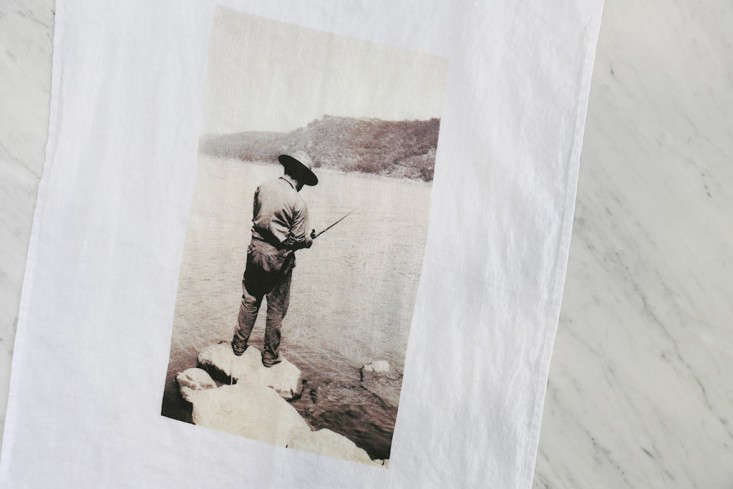
The Fisherman Tea Towel is proof that an ordinary kitchen textile can carry far more personality than its job description suggests. At first glance, it is simply a piece of linen intended to dry dishes, cover bread, or hang beside the sink. Look closer, however, and it becomes a miniature work of art: a vintage fisherman, a quiet coastal mood, and a hint of a story that happened long before the towel arrived in your kitchen.
“`
The best decorative tea towels occupy an unusual space between utility and memory. They work hard enough to earn a place near the stove, yet they are attractive enough to make their owners hesitate before wiping up spaghetti sauce with them. The Fisherman Tea Towel fits this category beautifully. It brings together stonewashed linen, photographic imagery, traditional screen printing, and the timeless visual appeal of life by the sea.
It also offers a refreshing alternative to loud nautical décor. There are no cartoon anchors shouting “AHOY,” no smiling lobsters wearing captain’s hats, and no inspirational slogans threatening you with mandatory relaxation. Instead, the fisherman image feels quiet, human, and pleasantly mysterious.
The Story Behind The Fisherman Tea Towel
From a Forgotten Photograph to a Functional Textile
The Fisherman Tea Towel most commonly associated with this name was introduced by the French textile brand Série Limitée Louise. The label was founded by designer Louise Jourdan-Gassin, whose fascination with flea markets, family photographs, and objects carrying traces of the past shaped the entire collection.
Rather than creating a conventional repeating fish pattern, the designer selected an old photograph of a fisherman and transferred that image onto washed linen. The result was called Le Pêcheur, or “The Fisherman.” American design publications featured the towel in 2015, describing it as a French-made, screen-printed linen textile based on vintage photography.
At the time, the design appeared in subdued shades including white, natural linen, and mouse gray. These restrained colors allowed the photograph to remain the focal point while making the towel easy to use in modern, rustic, coastal, or traditional kitchens.
The original collection was intentionally produced in limited quantities. That detail matters because the towel was never meant to feel like a mass-produced souvenir. Each piece belonged to a collection designed around imperfection, memory, and the individual character of hand printing.
A Fisherman With No Long Explanation
One reason the design remains appealing is that it does not explain everything. The fisherman is anonymous. Viewers do not know precisely where he lived, what he caught, or whether the day pictured was triumphant, exhausting, or merely Tuesday.
That lack of information creates room for imagination. Perhaps he has just returned with the morning catch. Perhaps he is preparing his gear before sunrise. Perhaps he is wondering why someone in the future will print his photograph on a towel and charge considerably more than he paid for lunch.
The image transforms the towel into a conversation piece without making it visually noisy. It evokes work, patience, weather, tradition, and the relationship between people and the sea. Those themes give the design emotional depth that a generic fish illustration may not possess.
Why Linen Makes the Design Special
Strong, Absorbent, and Quick to Dry
Linen is produced from fibers of the flax plant and has been valued for household textiles for centuries. It is naturally strong, absorbs moisture effectively, and releases moisture relatively quickly. These qualities make linen particularly suitable for drying glassware, silverware, plates, and hands.
Unlike thick terry cloth, smooth linen usually leaves less lint behind. That makes a linen tea towel useful when polishing wine glasses or drying delicate dishes. It also takes up less storage space than a bulky kitchen towel, which is good news for anyone whose linen drawer currently behaves like an overstuffed suitcase.
Linen is known for becoming softer with repeated washing. A new towel may feel slightly crisp, but regular use gradually relaxes the fibers. Instead of wearing out immediately, quality linen tends to develop character. Its wrinkles, softened edges, and subtle variations become part of the appeal.
The Purpose of Stonewashing
The Fisherman Tea Towel was made from stonewashed linen. Stonewashing gives new fabric a softer, more relaxed finish that resembles linen that has already been used and washed many times. It removes the stiff, formal feeling sometimes associated with new household linen.
This treatment supports the nostalgic character of the photograph. A perfectly rigid textile might look too polished for an image rooted in working life and old family archives. Stonewashed linen feels more casual, tactile, and familiar, as though it has already spent several summers in a seaside cottage.
The naturally rumpled surface is not a defect. Linen wrinkles because it has relatively little elasticity. Those creases are part of its identity. Consider them the fabric equivalent of laugh lines: evidence that something has been living rather than waiting untouched in a cabinet.
Hand Printing Adds Individual Character
The vintage images in the Série Limitée Louise collection were screen-printed individually using water-based inks. Hand printing can create small differences in placement, tone, and ink coverage. Those variations help each towel feel less mechanical and more personal.
Water-based ink also tends to integrate with the fabric rather than forming an especially thick plastic-like layer on top. The image can therefore retain a soft, textile-friendly appearance. With appropriate care, the print and linen age together instead of looking like two unrelated materials forced into an awkward partnership.
What Can You Do With a Fisherman Tea Towel?
Use It as an Actual Kitchen Towel
Despite its artistic appearance, this is still a functional household textile. It can dry clean dishes, polish glasses, handle damp hands, or cover a bowl of rising dough. Linen is particularly useful for jobs that benefit from a smooth, lint-conscious surface.
Many owners reserve the printed portion for display and use the unprinted edges for light drying. This is not strictly necessary, but it may help preserve the image if the towel is used frequently. It also prevents the fisherman’s face from becoming the designated landing zone for coffee drips.
Cover Bread and Baked Goods
A clean tea towel can be draped over warm rolls, homemade bread, biscuits, or pastries while they cool. It can also line a serving basket during brunch. The fisherman motif works especially well with rustic sourdough, seafood dinners, clam bakes, or any meal that looks better when served with a little theatrical coastal atmosphere.
Use a freshly laundered towel for food-related applications, and avoid placing printed fabric directly against greasy or strongly colored foods. Blueberry filling has never respected anyone’s limited-edition textile collection.
Turn It Into Affordable Wall Art
Decorative tea towels can be framed, clipped to a poster hanger, mounted beneath glass, or displayed from a wooden dowel. This approach works especially well for renters or anyone who wants large-scale textile art without paying gallery prices.
A fisherman towel can add softness to a breakfast nook, pantry, mudroom, dining area, lake cabin, beach house, or hallway. Because linen absorbs light differently from glossy paper, it introduces texture without overwhelming the surrounding décor.
For a clean presentation, gently press the towel according to its care instructions before framing it. A floating frame can highlight the fabric’s edges, while a simple black or natural-wood frame reinforces the vintage photograph.
Use It as Gift Wrapping
The towel can replace disposable wrapping paper around a cookbook, bottle of olive oil, bread-making kit, or seafood-seasoning collection. Fold it around the gift and secure it with cotton ribbon or kitchen twine.
The wrapping then becomes part of the present. This makes the Fisherman Tea Towel an especially fitting gift for anglers, sailors, cooks, photographers, coastal homeowners, or people who insist that their kitchen has “a vibe.”
Style It on the Table
Lay the towel beneath a breadboard, use it as a casual centerpiece base, or fold it beside a serving platter. It can also function as an oversized napkin during an informal seafood meal, provided it is clean and the dimensions are comfortable for the table.
Because the design is mostly neutral, it coordinates with white stoneware, blue-and-white ceramics, clear glass, aged wood, galvanized metal, and matte black flatware. Add a bowl of lemons or a vase of wildflowers, and suddenly dinner looks suspiciously like an editorial photo shoot.
How to Style The Fisherman Tea Towel
Coastal Style Without the Gift-Shop Look
The easiest way to use the towel is to let it provide the nautical reference on its own. Pair it with natural materials such as wood, rattan, linen curtains, ceramic crocks, or woven baskets. A few coastal elements create atmosphere; twenty-seven seashells and a sign reading “Beach This Way” create an interrogation room for mermaids.
In a coastal kitchen, hang the towel from a brass rail, an aged wooden peg, or the handle of a navy-blue range. The photograph supplies the theme while the neutral fabric keeps the room mature and understated.
Modern Minimalist Kitchens
In a white, gray, or black kitchen, the towel acts as a soft visual interruption. Its irregular linen texture contrasts with polished countertops, stainless-steel appliances, and flat cabinet fronts.
Choose the natural or gray version for a quiet monochromatic effect. Display it loosely rather than folding it into a perfect rectangle. The relaxed shape keeps a minimalist kitchen from feeling as though no human being has ever attempted to make toast there.
Farmhouse and Rustic Interiors
The vintage photograph pairs naturally with reclaimed wood, open shelving, antique cutting boards, stoneware pitchers, and copper cookware. Unlike newly manufactured “vintage-style” signs, the towel’s archival image offers a more authentic sense of age.
For a layered arrangement, hang it beside a plain striped towel. The solid or striped textile handles messier tasks, while the fisherman design remains visible and relatively protected.
Eclectic Rooms
An eclectic kitchen can combine the towel with colorful ceramics, botanical prints, old postcards, and flea-market finds. The fisherman image becomes part of a larger collection of visual stories.
Try framing it near black-and-white family photographs or vintage travel posters. The repetition of photographic imagery helps the tea towel look intentional rather than like laundry that wandered onto the wall and became confident.
What to Look for When Buying a Fisherman Tea Towel
Material
Look for 100% linen when you want the traditional texture, quick-drying performance, and natural wrinkles associated with the original design. Cotton versions can also be absorbent and easier on the budget, but they will not feel exactly the same.
Print Quality
Examine whether the image is screen-printed, digitally printed, embroidered, or transferred. A quality print should have intentional detail without feeling stiff or rubbery. Small variations may be normal on hand-printed pieces.
Dimensions
Traditional tea towels are generally rectangular and large enough for drying dishes or covering baked goods. A size around 18 by 28 inches is common, although measurements vary. Confirm the dimensions if you intend to frame the towel or use it in a specific location.
Construction
Check the hems, corners, hanging loop, and overall alignment. Secure stitching helps the towel survive repeated laundering. A hanging loop is especially convenient when the design has a preferred orientation.
Provenance and Condition
Original limited-run examples may appear through specialty retailers or vintage sellers. Ask for clear photographs, measurements, fiber content, and information about stains, fading, or repairs. A vintage towel can have gentle signs of age, but undisclosed mildew is not “patina,” no matter how poetic the listing sounds.
How to Care for Printed Linen Tea Towels
Read the Care Label First
Manufacturer instructions should take priority because inks, finishes, and linen weights differ. In general, linen can often be washed in cool or warm water and dried at low temperature or air-dried. Printed textiles may require gentler treatment than plain white household linen.
Use Mild Detergent
Wash the towel with a modest amount of mild detergent. Too much detergent may remain trapped in the fibers, making the fabric feel stiff and reducing its ability to absorb moisture.
Avoid pouring concentrated detergent directly onto the printed image. If the towel develops a stain, treat the affected area according to the care label rather than scrubbing aggressively.
Skip Fabric Softener
Liquid fabric softener and dryer sheets can leave a coating on towel fibers, reducing absorbency. Linen naturally softens through washing and use, so it does not need to be chemically persuaded into behaving like a cloud.
Be Careful With Bleach
Chlorine bleach can fade or damage printed designs and may weaken fibers when used improperly. Unless the care label specifically permits it, choose a gentler stain-treatment method. Oxygen-based products may be suitable for some washable textiles, but colorfastness should be checked first.
Dry It Completely
Hang the towel where air can circulate after each use. Leaving damp linen crumpled beside the sink encourages odors and mildew. Air drying is gentle and preserves the naturally relaxed texture. If machine drying is allowed, use low heat and remove the towel while it is still slightly damp to reduce deep creasing.
Separate Decorative and Food-Safety Jobs
Do not use a treasured decorative towel to clean spills from raw meat, poultry, or eggs. Keep separate washable cloths or disposable materials for high-risk food messes. A towel used only for clean hands and clean dishes can generally remain in service longer than one used for countertops and cooking spills.
Wash kitchen towels promptly when they become wet, stained, or soiled. A fisherman may be comfortable around water, but the towel should not remain damp for three days in his honor.
Why It Makes a Memorable Gift
The Fisherman Tea Towel is small enough to mail, useful enough to avoid becoming clutter, and distinctive enough to feel personal. It is an excellent option for a housewarming, host gift, Father’s Day present, retirement celebration, cabin opening, or coastal wedding.
For someone who fishes, the theme is obvious without being cartoonish. For someone who cooks, the linen is practical. For a person who loves vintage photography, the image carries visual history. And for the friend who frames beautiful textiles instead of using them, the towel arrives already prepared for promotion from kitchen assistant to wall celebrity.
Create a thoughtful gift bundle by pairing it with one or two related items:
- A wooden serving board and a loaf of artisan bread
- A seafood cookbook and a jar of coastal seasoning
- A bottle of olive oil and a ceramic dipping dish
- A vintage-style frame or wooden poster hanger
- A handwritten family recipe featuring fish or shellfish
Living With The Fisherman Tea Towel: An Owner’s Experience
The following composite experience reflects how a decorative linen tea towel can move from precious new purchase to familiar household favorite.
The First Impression
When the towel first arrives, the immediate reaction is usually that it looks better in person than an everyday kitchen accessory has any right to look. The linen feels light, slightly textured, and already relaxed from washing. The vintage photograph is not glossy or overly sharp. It seems embedded in the fabric, giving the fisherman the hazy quality of a family picture discovered in an old drawer.
The next reaction is hesitation. You bought a towel, but using it to dry a saucepan suddenly feels like assigning a museum portrait to clean the garage. For several days, it may hang untouched from the oven handle while an older, less glamorous towel continues doing all the work.
Finding Its Place
Eventually, the Fisherman Tea Towel settles into a comfortable role. It may become the hand-drying towel near the sink, where the image remains visible but the fabric still serves a practical purpose. In a neutral kitchen, it adds just enough contrast to make the room feel collected rather than staged.
Guests tend to notice it. Some ask whether the fisherman is a relative. Others assume the towel came from a coastal village or an antique market. That uncertainty is part of the charm. The photograph feels specific enough to suggest a real life but open-ended enough for viewers to supply their own stories.
During a weekend dinner, the towel might line a basket of warm bread. Against crusty loaves and a wooden table, the linen looks completely at home. It adds atmosphere without requiring matching plates, themed napkins, or a centerpiece shaped like a lighthouse.
The First Wash
The first wash is the moment when the towel stops being an object and becomes a possession. After a gentle cycle and air drying, the linen may emerge a little more rumpled and slightly softer. The image remains expressive, but the towel no longer looks untouched.
This is usually an improvement. The Fisherman Tea Towel was never designed to resemble a laminated poster. Its beauty comes from the relationship between photograph, ink, fiber, and use. A few wrinkles make the vintage image feel more believable.
Over time, the owner learns to hang it fully open instead of leaving it folded in a damp heap. Fabric softener disappears from the routine, and stains are treated promptly. These habits are not difficult, but they make a noticeable difference in how the linen feels and performs.
When Decoration Becomes Memory
After months or years, the towel may become associated with particular meals and moments: seafood dinners in summer, bread baked on rainy afternoons, relatives visiting for the holidays, or quiet mornings when the kitchen was the only peaceful room in the house.
At that stage, the anonymous fisherman is no longer the towel’s only story. The household has added its own history. The fabric may be softer, the color may be gentler, and one corner may refuse to lie perfectly flat. None of this makes the towel less appealing. It makes it personal.
Some owners eventually retire the towel from active duty and frame it. Others keep using it until the linen becomes thin and wonderfully soft. Either choice is reasonable. The most satisfying experience comes from allowing the towel to participate in daily life instead of preserving it forever in a drawer.
That balance is the real pleasure of The Fisherman Tea Towel. It can be art, but it does not demand silence. It can be practical, but it never feels ordinary. It brings a human face into the kitchen and quietly reminds us that useful objects can also preserve stories.
Conclusion: A Small Textile With a Large Personality
The Fisherman Tea Towel succeeds because its materials, imagery, and function reinforce one another. Strong, quick-drying linen gives it practical value. Stonewashing adds softness and an aged texture. The vintage photograph introduces mystery and emotional warmth, while hand printing helps each piece feel individual.
It works equally well beside a sink, beneath a bread basket, inside a gift package, or framed on a wall. More importantly, it avoids the disposable feeling of many decorative kitchen accessories. Quality linen can improve with use, and the fisherman’s image seems especially appropriate on a fabric that becomes more interesting as it ages.
Whether you choose an original limited-edition towel, a vintage example, or another well-made fisherman kitchen towel inspired by coastal life, look for natural material, thoughtful printing, secure construction, and a design you will enjoy seeing every day.
The kitchen contains plenty of objects that perform their duties without charm. The Fisherman Tea Towel is different. It dries the dishes, starts conversations, decorates the room, and looks as though it knows exactly when the tide is coming in.
“`
Note: The historic product details in this article refer to the vintage-photo linen design introduced by Série Limitée Louise and featured by American design publications in 2015. Availability, dimensions, colors, and resale condition may vary.
“`














