
Note: This article was written from synthesized research across reputable U.S. entertainment, franchise, science-fiction, and official studio sources, then fully rewritten in original language for web publication.
Space battles are where science fiction stops politely explaining hyperspace politics and starts throwing lasers at the problem. Done badly, they are noisy screensavers with dialogue. Done well, they are miniature war movies: strategy, sacrifice, panic, silence, and at least one officer saying something calm while everyone else is spiritually becoming soup.
The best space battles in sci-fi history are not merely “big.” They tell us who the characters are under pressure. They reveal how a universe works. They make fictional ships feel like homes worth saving. From the trench run that rewired blockbuster cinema to brutally realistic railgun combat in modern television, these legendary sci-fi battles prove that outer space is not empty at all. It is full of trauma, tactics, and very expensive visual effects.
What Makes a Great Sci-Fi Space Battle?
A great sci-fi space battle needs more than laser spam. It needs clear stakes, readable geography, emotional weight, and a sense that every maneuver matters. The audience should understand what is being risked, who is making the key choices, and why the fight could not simply be solved by pressing the “jump away” button. Bonus points are awarded for memorable ship design, clever tactics, iconic music, and at least one moment that makes fans pause the movie just to whisper, “That was ridiculous,” with deep affection.
With that in mind, here are the ten best space battles in sci-fi history, ranked for impact, spectacle, storytelling, and rewatch value.
1. The Battle of Endor Star Wars: Return of the Jedi
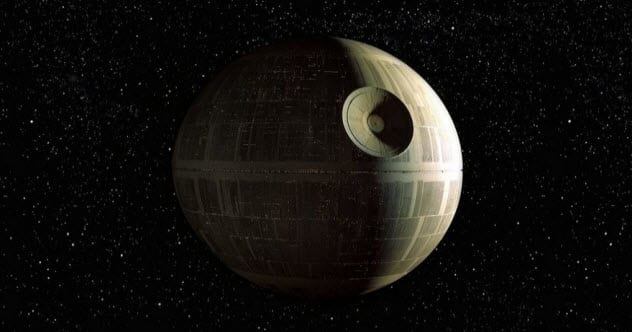
The Battle of Endor remains the gold standard for cinematic space warfare because it combines three battles into one nerve-rattling finale: the Rebel fleet against the Empire, the ground mission on Endor, and Luke Skywalker’s confrontation with Darth Vader and Emperor Palpatine aboard the second Death Star.
What makes the space portion so thrilling is its trap structure. The Rebels arrive expecting an unfinished superweapon and instead discover that the Death Star is fully operational, shielded, and protected by the Imperial fleet. Suddenly, Admiral Ackbar’s famous warning is not just a meme; it is a tactical summary.
The dogfights have weight. A-wings, B-wings, X-wings, TIE fighters, Star Destroyers, and the Millennium Falcon all move through a crowded battlefield that still feels visually understandable. The sequence has scale without turning into soup. The final run into the Death Star’s core is pure popcorn engineering: impossible turns, screaming engines, explosions everywhere, and Lando Calrissian somehow making charm look like a piloting credential.
2. The Battle of New Caprica Battlestar Galactica, “Exodus, Part 2”
If space battles had a category for “most likely to make your jaw relocate,” the Battle of New Caprica would win. The centerpiece is the legendary Adama maneuver, in which the aging Battlestar Galactica jumps into the atmosphere, drops like a burning skyscraper, launches Vipers, and jumps away before becoming a patriotic crater.
The brilliance of the scene is not just the spectacle. It fits the story. Humanity is outnumbered, exhausted, and desperate to rescue civilians from Cylon occupation. Admiral Adama cannot win by brute force, so he wins by audacity. The move is reckless, elegant, and completely in character. In other words, it is military strategy with the emotional energy of a dad kicking down a locked door.
The arrival of the Pegasus adds tragedy and triumph. Lee Adama sacrifices his ship to save Galactica, turning a tactical rescue into a costly victory. The battle works because every explosion has consequence. Ships are not toys. They are homes, communities, and last chances.
3. The Battle of Scarif Rogue One: A Star Wars Story
The Battle of Scarif is one of the best modern Star Wars battles because it makes victory feel expensive. The Rebel mission is not to destroy an empire in one glorious swoop. It is to steal the Death Star plans, transmit them, and hope someone else can use them later. That “later,” of course, becomes A New Hope.
Scarif succeeds by balancing beach warfare, orbital combat, espionage, and tragedy. In space, Rebel ships clash with Star Destroyers while trying to break through the planetary shield gate. The Hammerhead corvette maneuver, pushing one disabled Star Destroyer into another, is a perfect example of practical battlefield creativity. It is not the biggest weapon that wins the moment; it is smart use of what remains.
The battle also improves the original Star Wars story retroactively. When Princess Leia receives the plans, the audience now understands the price paid for that handoff. Scarif turns a plot device into a memorial.
4. “Sacrifice of Angels” Star Trek: Deep Space Nine
Star Trek had shown ship combat before, but Deep Space Nine changed the scale. “Sacrifice of Angels” throws the Federation and Klingon fleets against a massive Dominion force in one of television’s most ambitious space battles of the 1990s.
The episode matters because it is not just a fireworks display. It is part of the Dominion War, a long serialized arc that pushed Star Trek into darker political and military territory. Captain Sisko’s goal is clear: retake Deep Space Nine before the minefield blocking Dominion reinforcements comes down. The clock is ticking, the fleet is outmatched, and the Defiant is taking a beating that would make an insurance adjuster faint.
The battle’s strength is momentum. Ships punch through lines, formations collapse, and last-minute Klingon reinforcements arrive with operatic timing. It captures war as both strategy and chaos. For a franchise often associated with diplomacy, this episode proved that Star Trek could stage a fleet battle with the best of them.
5. The Mutara Nebula Battle Star Trek II: The Wrath of Khan
Not every great space battle needs hundreds of ships. Sometimes all you need is two damaged vessels, two brilliant enemies, and a nebula that turns advanced starships into half-blind submarines.
The Mutara Nebula battle between the Enterprise and the Reliant is one of the smartest duels in sci-fi cinema. Khan has power, rage, and tactical aggression, but Kirk has experience. The nebula disables shields and sensors, forcing both captains to think in three dimensions. The crucial insight is simple and devastating: Khan, despite his genius, thinks like a man fighting on a flat plane. Kirk uses depth, patience, and spatial awareness to win.
The result feels less like a laser battle and more like a chess match conducted inside a thundercloud. It is tense, elegant, and deeply personal. Every shot matters. Every pause matters. The battle is proof that intelligence can be more thrilling than scale.
6. The Battle Over Coruscant Star Wars: Revenge of the Sith
The opening of Revenge of the Sith drops the audience straight into the Battle over Coruscant, and it still feels like someone spilled an entire toy box into orbit in the best possible way. Republic and Separatist fleets hammer each other above the galactic capital while Anakin Skywalker and Obi-Wan Kenobi weave through the chaos to rescue Chancellor Palpatine.
The sequence is dense, colorful, and unapologetically operatic. Buzz droids crawl across starfighters. Capital ships trade broadsides at absurdly close range. Fighters spin through debris fields. The camera dives from grand fleet scale into cockpit banter without losing the sense of danger.
More importantly, the battle sets the emotional direction of the film. It begins as a heroic rescue mission but secretly serves Darth Sidious’s political plan. The space battle is thrilling on the surface and poisonous underneath. That is Star Wars at its most mythic: bright sabers, loud engines, and democracy quietly being fed into a machine.
7. The Battle of Babylon 5 Babylon 5, “Severed Dreams”
“Severed Dreams” is not just a great space battle episode. It is one of the defining moments in televised science fiction. When Captain Sheridan declares Babylon 5 independent from Earth Alliance President Clark’s regime, the station becomes both symbol and target.
The battle works because the emotional stakes are brutally clear. These are not faceless aliens attacking from nowhere. Earthforce ships are firing on other humans. Former comrades become enemies. The station is defending its right to exist, and the conflict carries the sickening weight of civil war.
Visually, Babylon 5 helped pioneer computer-generated space combat on television, and “Severed Dreams” uses that freedom to stage dynamic, three-dimensional action. Ships do not simply line up politely and trade glowing insults. They move, tumble, flank, and break apart. Then Delenn arrives with Minbari cruisers and delivers one of the coldest protective warnings in sci-fi history. It is the kind of entrance that makes villains reconsider their career choices.
8. The Battle of Sector 001 Star Trek: First Contact
The Battle of Sector 001 is brief, but it punches far above its runtime. A Borg cube reaches Earth, and a battered Federation fleet is already engaged when the Enterprise-E arrives against orders. Within minutes, Captain Picard uses his lingering connection to the Borg to identify a weakness, coordinates the fleet’s fire, and destroys the cube.
What makes the battle memorable is the feeling of dread. The Borg are not merely another enemy fleet. They are a violation. Their ships do not look like ships so much as mathematical nightmares with engines. The sight of Starfleet vessels being carved up by a single cube communicates the threat instantly.
The sequence also bridges film and television continuity. The Defiant appears, Worf is in command, and Picard’s trauma from assimilation becomes a tactical advantage. It is fan service with narrative purpose, which is the good kind of fan service: warm, crunchy, and not covered in desperation.
9. The Donnager Battle The Expanse, “CQB”
The Expanse changed the conversation about realistic space combat on television. In “CQB,” the Martian battleship Donnager faces mysterious attackers, and the result is terrifying because it feels governed by physics rather than wishful thinking.
There are no swooping airplane dogfights in open vacuum. Combat is fast, lethal, and technical. Point-defense cannons, railguns, torpedoes, acceleration, decompression, and loss of thrust all matter. When rounds punch through hulls, people do not heroically shrug. They die suddenly, horribly, and sometimes in ways that make the audience sit very still for a moment.
The battle also changes the series. The Donnager is introduced as a symbol of Martian military dominance, yet it is defeated by an unknown force. That reversal expands the mystery and tells viewers that no faction is as safe as it believes. The battle is not huge by space-opera standards, but it is one of the most convincing depictions of future warfare ever put on television.
10. The Reaver-Alliance Battle Serenity
The climactic battle in Serenity is glorious chaos with a cowboy soul. Malcolm Reynolds and the crew lure a Reaver fleet straight into an Alliance blockade near Mr. Universe’s planet, turning themselves into the universe’s most emotionally damaged delivery service.
The battle works because Mal does not defeat a superior military force by matching it ship for ship. He weaponizes terror. The Alliance expects to intercept one small Firefly-class transport. Instead, Serenity bursts out of the clouds dragging a swarm of Reaver ships behind it like the worst parade in human history.
The sequence is messy, desperate, and character-driven. Wash pilots through crossfire with impossible calm until the crash landing delivers one of the most shocking character deaths in modern sci-fi film. The space battle leads directly into the crew’s final stand, tying action to theme: the truth is worth broadcasting, even when the cost is unbearable.
Honorable Mentions That Nearly Made the List
The Death Star trench run in A New Hope is arguably the most important space battle in movie history, even if Endor offers a broader fleet spectacle. The Holdo maneuver in The Last Jedi deserves recognition for its stunning use of silence and scale. The Last Starfighter still holds nostalgic power for its arcade-dream fantasy. Stargate SG-1, Farscape, and Legend of the Galactic Heroes also offer beloved space combat, though this list focused on battles with major influence on American sci-fi film and television audiences.
Why Space Battles Still Matter
Great space battles endure because they make abstract stakes visible. “Save the galaxy” is a slogan. A burning cruiser, a desperate pilot, or a commander choosing sacrifice over retreat is a story. These battles give science fiction its thunder, but the best ones also give it a heartbeat.
They also reveal how each franchise imagines the future. Star Wars treats space combat like mythic aerial adventure. Star Trek often frames it as moral crisis and tactical intelligence. Battlestar Galactica makes it feel like survival under impossible pressure. The Expanse strips away romance and says, “Physics would like a word.” Together, they show how flexible the genre can be.
Experience Section: Watching the Best Sci-Fi Space Battles Like a Fan and a Critic
The best way to experience these space battles is not to treat them as isolated action clips. Yes, it is tempting to search for “best sci-fi space battles” and jump straight to the explosions. We are all busy. The laundry is not going to ignore itself. But these scenes hit harder when watched in context, because the real fuel is not plasma or antimatter. It is buildup.
Take the Battle of Endor. On its own, it is an excellent fleet battle. In context, it is the moment when the Rebel Alliance risks everything on intelligence that turns out to be part of the Emperor’s trap. The same is true of Scarif. If you watch only the orbital action, you get a cool battle. If you watch the full film, you feel the terrible beauty of ordinary people sacrificing themselves for a future they will never see.
For a richer viewing experience, pay attention to how each battle uses sound. Star Wars leans into roaring engines and heroic music, even though real space would be rude enough to remain silent. The Last Jedi uses silence for shock during the Holdo maneuver. The Expanse makes mechanical detail and sudden impact part of the fear. Sound design is often the invisible pilot of a great battle scene.
Also watch how commanders behave. Admiral Adama is calm because panic would infect the crew. Sisko is driven because time is collapsing around him. Picard is controlled, but his control comes from trauma. Kirk wins by noticing what Khan does not understand. These battles are leadership studies wearing laser hats.
Another rewarding approach is to compare battlefield geography. Older sci-fi often stages combat like naval warfare or World War II dogfighting. That is not a flaw; it is a visual language audiences understand. Newer shows such as The Expanse ask what combat might look like when inertia, distance, and acceleration are taken seriously. Neither method is automatically better. One gives us myth. The other gives us bruises.
Finally, rewatch these scenes with an eye for consequences. The best battles change the story afterward. Endor breaks the Empire’s central terror weapon. New Caprica saves civilians but costs Pegasus. The Donnager battle exposes a hidden power. Serenity’s final run gets the truth out but leaves the crew wounded. A weak space battle ends when the explosions stop. A great one echoes into the next scene, the next episode, and sometimes the next generation of fans.
Conclusion
The ten best space battles in sci-fi history prove that spectacle works best when it carries story, character, and consequence. The most unforgettable battles are not just about who has the bigger fleet. They are about impossible choices made under pressure: a captain risking a ship, a pilot threading a death trap, a rebellion buying hope with lives, or a crew betting everything on the truth.
That is why these scenes remain endlessly rewatchable. They satisfy the part of us that loves roaring engines and impossible heroics, but they also speak to something deeper. In science fiction, space is vast, cold, and indifferent. A great space battle makes it feel personal.














