History books are excellent at explaining treaties, elections, wars, inventions, and the occasional king who made catastrophically poor marriage decisions. What they do not always capture is the texture of ordinary life: the clothes people actually wore, the expressions they made between formal poses, or the way a city sidewalk looked on an otherwise forgettable afternoon.
That is where the “Vintage Daily” Instagram account finds its sweet spot. Its collection of rare historical photos blends famous faces, street photography, fashion, entertainment, travel, and candid moments that feel surprisingly immediate. Instead of presenting the past as a silent parade of dates, the account offers something messier and more human.
The original collection includes celebrity portraits, backstage snapshots, romantic street scenes, teenage fashion, beach culture, and glimpses of neighborhoods undergoing change. Some images are historically significant. Others are memorable simply because they make viewers think, “People really have always been people.” The following selections are based on the widely shared Vintage Daily photo collection, with all commentary newly written and expanded.
Why Rare Historical Photos Feel So Powerful
A photograph can deliver emotional information faster than several pages of explanation. A nervous smile, a wrinkled jacket, an exhausted commuter, or a group of concertgoers screaming at Elvis can instantly reveal something about an era’s mood.
Major American archives preserve millions of these visual records. The National Archives holds vast collections of analog and digital photographs, while the Library of Congress, Smithsonian Institution, New York Public Library, and George Eastman Museum provide access to images covering politics, immigration, labor, entertainment, science, neighborhoods, family life, and countless other subjects. These collections remind us that history was not experienced as a chapter heading. It was experienced one unpredictable day at a time.
50 Memorable Vintage Daily Photos Worth a Closer Look
-
1. A Mother and Daughter in New York City, 1970
The pair’s coordinated presence says more about family style and city confidence than a department-store catalog ever could. It feels intimate, fashionable, and completely unbothered.
-
2. “The Beauty of a Woman”
This simply titled portrait proves that vintage photography did not need elaborate staging. Expression, posture, lighting, and personality could carry the entire image without a truckload of props.
-
3. Paris, Circa 1951
Mid-century Paris appears romantic even without cinematic music. The image captures street-level elegance while reminding us that real Parisians were probably also late for work.
-
4. Queen Photographed by Mick Rock, 1974
The famous portrait drew inspiration from Marlene Dietrich in Shanghai Express. Queen transformed that cinematic reference into an image of theatrical confidence now inseparable from the band’s identity.
-
5. Audrey Hepburn Smiling
Hepburn’s appeal was not limited to gowns and carefully composed publicity photographs. A relaxed smile reveals the warmth that made her elegance feel approachable rather than untouchable.
-
6. RuPaul and Nirvana Backstage in 1993
This MTV Music Awards encounter is a glorious collision of cultural worlds. Glamour, grunge, television, and counterculture occupy one frame as if the 1990s planned a group project.
-
7. A Protest Frozen in Time
Even without a lengthy caption, a protest photograph invites questions about power, public space, courage, and collective frustration. The signs matter, but so do the faces holding them.
-
8. Audrey Hepburn With Her Dog, Mr. Famous, 1957
Sid Avery’s portrait softens the polished movie-star image. Hepburn and her Yorkshire terrier appear less like Hollywood royalty and more like two friends enjoying an excellent day.
-
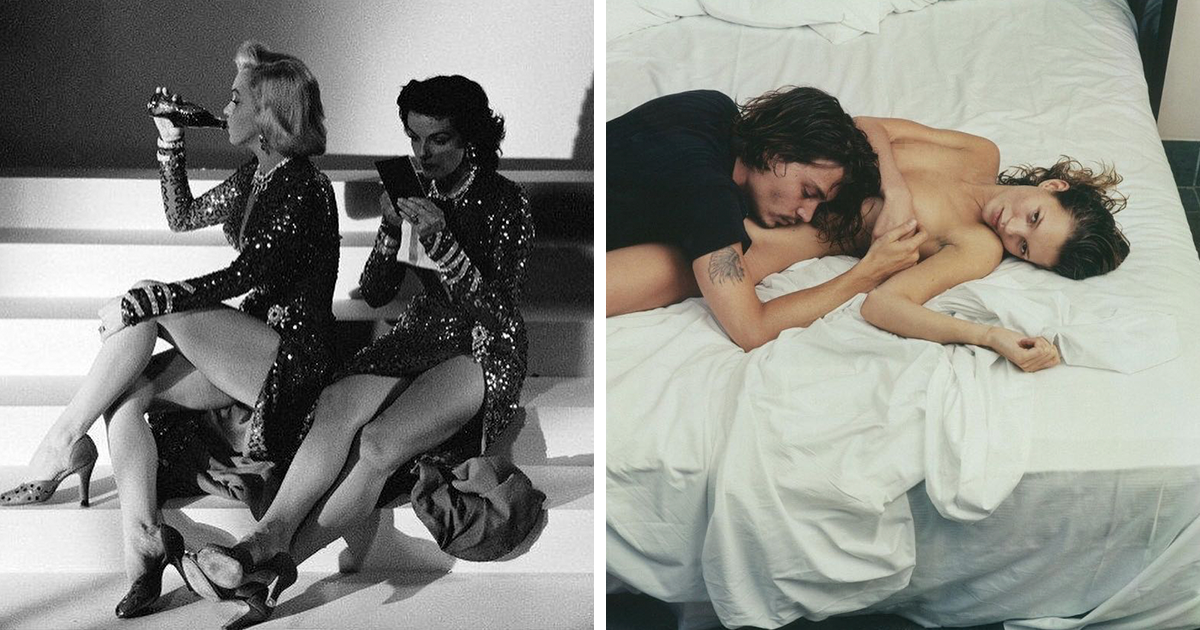
9. Marilyn Monroe and Jane Russell in 1953
Photographed during the making of Gentlemen Prefer Blondes, the two stars radiate chemistry and confidence. The image also preserves the machinery of Hollywood glamour before social media made backstage access routine.
-
10. Sophia Loren, Circa 1955
Ormond Gigli’s photograph captures Loren at the beginning of her international fame. Her direct gaze demonstrates why the camera seemed less like an observer and more like a willing accomplice.
-
11. Queen Filming “I Want to Break Free” in 1984
The band’s domestic costumes remain instantly recognizable. Behind the comedy was a willingness to challenge rock-star seriousness, gender expectations, and the apparent belief that vacuuming cannot be dramatic.
-
12. Meryl Streep’s High School Photographs
Seeing a future screen legend as an ordinary student creates a pleasant crack in the celebrity myth. Before the awards and iconic roles, there were yearbooks, hallways, and probably homework.
-
13. A Crow Lighting Tippi Hedren’s Cigarette in 1963
Taken during the production of Alfred Hitchcock’s The Birds, the photograph combines movie magic with surreal comedy. Apparently, even the avian cast understood the importance of networking on set.
-
14. Marlene Dietrich Kissing a Returning Soldier, 1945
The exuberant embrace captures the relief surrounding the end of World War II. It is a public moment, yet the emotion is personal enough to make the crowd disappear.
-
15. A Young Slash
Long before the top hat, stadium solos, and unmistakable silhouette, Slash was simply a young musician developing his identity. Early photographs make rock mythology look wonderfully unfinished.
-
16. Hedy Lamarr in Ziegfeld Girl, 1941
Lamarr’s screen beauty often overshadowed her inventive mind. The glamorous film still therefore carries an interesting tension between the image Hollywood marketed and the complex person beyond it.
-
17. Capri, Italy, 1949
The island appears sunlit and effortlessly stylish. Yet the photograph’s real attraction is its atmosphere: postwar travel, Mediterranean leisure, and the timeless desire to escape somewhere with better weather.
-
18. A Young Heath Ledger
Early portraits of Ledger feel poignant because viewers know the acclaimed career that followed. His youthful expression contains ambition, vulnerability, and none of the heavy symbolism added by hindsight.
-
19. David Bowie in The Man Who Fell to Earth, 1976
Bowie’s otherworldly appearance made him an ideal choice for an alien visitor. The image blurs performer and character so effectively that Earth seems like the stranger place.
-
20. Stefani Germanotta Before Lady Gaga, 1998
Photographs from before her transformation into Lady Gaga reveal an artist still assembling her public identity. The talent was developing; the meat dress remained safely in the future.
-
21. Johnny Depp and Kate Moss, 1994
Annie Leibovitz photographed one of the decade’s most scrutinized celebrity couples. The image helped shape the romantic, rebellious mythology that followed them throughout the 1990s.
-
22. Susan Sarandon at Cannes, 1978
Sarandon appears poised without looking overly managed. The photograph recalls an era when festival style felt less like a global marketing operation and more like glamorous improvisation.
-
23. Mott Haven, New York City, 1979
David Gonzalez’s street photography documents a Bronx neighborhood through the people who lived there. Such images preserve community life that official histories frequently reduce to statistics.
-
24. Cher, Elton John, and Diana Ross in 1975
Photographed together at the Rock Music Awards, the trio delivers enough star power to create its own electrical grid. Their clothing alone deserves a separate museum wing.
-
25. Amy Winehouse in 2004
This early magazine portrait shows Winehouse before her signature visual style became globally familiar. Her directness is already present, suggesting an artist who never needed much help commanding attention.
-
26. Benicio del Toro and Parker Posey, 1995
Mark Seliger’s portrait pairs two performers known for unconventional screen energy. The result feels playful, slightly mysterious, and perfectly suited to the independent-film spirit of the decade.
-
27. Sharon Tate in 1968
Shahrokh Hatami’s photograph presents Tate as a vibrant young actor rather than merely a figure in a notorious tragedy. Images like this restore individuality that later headlines often erase.
-
28. Freddie Mercury at Nagoya Castle, 1975
Mercury’s visit to Japan reveals his curiosity beyond the stage. The setting creates a striking contrast between historic architecture and a performer building his own form of modern legend.
-
29. Salma Hayek’s Casting Polaroid, Circa 1995
A casting Polaroid is designed for practicality, not immortality. Yet Hayek’s photograph captures the transitional moment when an aspiring performer stands just outside widespread recognition.
-
30. High School Fashion in 1969
The students’ clothes reveal how trends actually appeared away from runways. Hemlines, hairstyles, shoes, and attitudes offer a more useful style lesson than polished advertisements.
-
31. Leonardo DiCaprio With His Parents, 1976
A family photograph of the future actor removes decades of fame in an instant. He is simply a child with his parents, unaware of the iceberg jokes awaiting him.
-
32. David Bowie Photographed by Steve Schapiro, 1975
Schapiro’s Bowie portraits combine theatricality with psychological intensity. The musician appears to be inventing a new character while simultaneously examining the person underneath it.
-
33. Brittany Murphy in 1998
Murphy’s photograph captures the lively, expressive quality that made her performances memorable. Like many vintage celebrity images, it now carries a tenderness the original audience could not have predicted.
-
34. Teenagers at an Elvis Presley Concert, 1957
The excitement inside the Philadelphia Arena is almost audible. Screaming fans prove that intense celebrity fandom existed long before hashtags, livestreams, and arguments over concert-ticket fees.
-
35. Polaroids of the Clueless Cast, 1995
These casual images complement the film’s carefully designed fashion universe. The cast looks young, playful, and not yet fully aware that their wardrobe would be copied for decades.
-
36. Two Women on a Harlem Fire Escape, 1978
The setting transforms a practical architectural feature into a social space. The photograph documents friendship, neighborhood life, and the creative ways city residents claim room for themselves.
-
37. South Korea in the 1990s
A street-level image from South Korea offers a visual record of everyday life during a period of rapid economic and cultural change, far beyond the simplified language of development charts.
-
38. Debra Jo Fondren in 1979
Fondren’s famous long hair and carefully styled image reflect late-1970s beauty culture. The photograph is simultaneously a portrait, a fashion artifact, and a reminder that hairspray once had serious responsibilities.
-
39. Roller-Skating at Venice Beach, 1979
The scene captures Southern California leisure at its most photogenic: skates, sunshine, motion, music, and public performance. It looks spontaneous because spontaneity required less documentation then.
-
40. Jessica Lange in New York, 1975
Photographed before her film breakthrough, Lange appears at the threshold of a major career. The city backdrop adds the familiar feeling of ambition meeting opportunity.
-
41. St. Petersburg, Florida, 1973
This slice of Florida life preserves local architecture, clothing, automobiles, and street activity. Small details turn an ordinary scene into valuable evidence once enough decades have passed.
-
42. Santa Monica, California, 1955
Elliott Erwitt was celebrated for finding humor and humanity in everyday situations. His Santa Monica image rewards close observation, proving that excellent street photography often begins with patient curiosity.
-
43. Claudia Schiffer and Christy Turlington in Paris, 1994
Seen at a Versace after-party, the supermodels represent an era when fashion personalities became as recognizable as movie stars. The photograph is polished, chaotic, and gloriously 1990s.
-
44. Jayne Mansfield With Miss Hollywood of 1957
The pose reflects Hollywood’s talent for turning publicity into performance. Mansfield understood the camera exceptionally well and rarely allowed an ordinary promotional appearance to remain ordinary.
-
45. The Kiss by the Hôtel de Ville, 1950
Robert Doisneau’s famous Paris photograph helped define the visual language of romantic street photography. Whether encountered as art or cultural mythology, its emotional simplicity remains effective.
-
46. Michelle Pfeiffer as Elvira Hancock in 1983
Pfeiffer’s sleek costumes in Scarface became enduring fashion references. The photograph captures a character whose controlled appearance barely conceals the danger surrounding her.
-
47. Kellie Everts in 1979
The image reflects the era’s fascination with bold personalities, physical culture, and theatrical self-presentation. It is the kind of photograph that practically arrives with its own soundtrack.
-
48. Nirvana in Manhattan, 1993
The photograph’s “Men Don’t Protect You Anymore” setting creates a sharp visual contrast with the band. Advertising language, urban space, and grunge skepticism collide in one frame.
-
49. A “55 DSL” Fashion Editorial From 2004
Jamie Brunskill’s editorial for Dazed captures early-2000s fashion at its most deliberately unruly. The styling reminds viewers that subtlety occasionally took an extended vacation.
-
50. A Birthday Tribute to David Bowie
The final post thanks Bowie for encouraging others to become themselves. That message explains why his photographs remain powerful: he treated identity not as a fixed label, but as creative material.
The dates, subjects, and original captions above follow the published Vintage Daily collection, while the interpretations have been independently written for this article.
How to Read Old Photos Without Letting Nostalgia Take Over
Check the Caption and Original Context
A photograph may look spontaneous while actually being staged, cropped, retouched, or created for publicity. Before treating an image as historical proof, identify the photographer, date, location, intended audience, and original publication whenever possible.
Both the Library of Congress and the National Archives encourage viewers to ask who created a photograph, why it was made, what is happening outside the frame, and what additional evidence might confirm the interpretation. Those questions do not spoil the fun. They prevent a stylish image from quietly becoming a stylish misunderstanding.
Notice the People History Usually Leaves Out
Celebrity portraits naturally attract attention, but ordinary street scenes may reveal more about how an era functioned. Look at workers, spectators, children, storefronts, public transportation, household objects, and background figures. The person standing near the edge of the frame may tell a more revealing story than the person centered in it.
Separate Visual Appeal From Historical Evidence
Vintage photographs can make earlier decades appear consistently elegant. This illusion exists partly because damaged, badly composed, or thoroughly boring pictures are less likely to be preserved and recirculated. The surviving highlights are not a complete sample of the past.
Photographs also deteriorate through fading, poor storage, disasters, and physical damage. Digitization and archival preservation give the public greater access, but they cannot automatically restore missing captions or lost context. A beautiful image may survive while the name of its subject disappears.
What Browsing the Vintage Daily Collection Feels Like
Spend twenty minutes scrolling through an account like Vintage Daily and the experience begins as entertainment. You recognize Freddie Mercury, Audrey Hepburn, David Bowie, or Marilyn Monroe and pause because familiarity provides an easy doorway into the past. The celebrities look different from their polished official images. They laugh, travel, stand backstage, hold pets, or wait between performances. Fame temporarily becomes ordinary.
Then the quieter photographs begin to take over. A mother and daughter walking through New York may linger longer in the imagination than a movie star. Two women sitting on a Harlem fire escape invite questions that the caption cannot answer. Were they neighbors? Sisters? Friends? What were they discussing? Did either woman ever see the photograph? The image provides evidence, but it also creates an absence, and that absence keeps the viewer looking.
The most enjoyable part of the experience is spotting details that nobody intended to preserve for future audiences. A pair of shoes, a handwritten sign, a storefront awning, a car parked at the curb, or a teenager’s haircut may have been completely unremarkable when the shutter clicked. Decades later, those background details become the main attraction. Time has promoted the extras.
Fashion produces some of the strongest reactions. High school students from 1969 do not look like historical figures; they look like people who might reappear in a current style campaign. The cycle of wide-legged pants, short skirts, leather jackets, oversized glasses, and carefully casual hair demonstrates that fashion rarely vanishes. It hides in a closet until a new generation announces its discovery.
There is also a strange emotional compression in seeing an entire life reduced to one early portrait. A young Heath Ledger, Brittany Murphy, Amy Winehouse, or Sharon Tate appears unaware of the meaning later viewers will attach to the image. That knowledge can make the photograph feel heavier than it originally was. The challenge is to see the individual in the captured moment rather than treating every smile as foreshadowing.
Another pleasure comes from comparing public personas with unguarded behavior. Queen’s elaborately composed band portrait is theatrical by design, while Freddie Mercury sightseeing in Japan feels curious and relaxed. Audrey Hepburn’s studio elegance is famous, but her interaction with her dog communicates a different kind of charm. These contrasts reveal that identity is not necessarily fake when it is performed. People contain multiple versions of themselves, and cameras happen to catch a few.
The experience also encourages healthy skepticism. Social media can detach a photograph from its creator, crop away identifying information, simplify a complicated event, or repeat an incorrect date until it appears authoritative. A captivating caption should therefore function as an invitation to investigate, not the final word. Searching an archive, locating another version, or checking the photographer’s notes can transform casual scrolling into genuine historical research.
Ultimately, old photographs are memorable because they collapse distance. A person living seventy years ago may be dressed differently, but embarrassment, affection, boredom, rebellion, pride, and excitement remain recognizable. Teenagers at an Elvis concert behave much like fans at a modern arena show. Friends pose together. Families document children. Performers experiment with identity. Protesters demand to be heard.
The technology changes. The emotional vocabulary does not.
Conclusion: The Past Looks Better When It Is Allowed to Be Human
The finest rare historical photos do more than decorate a social media feed. They complicate familiar stories, preserve overlooked communities, and return personality to people flattened by textbook summaries. Vintage Daily succeeds because its photographs make history feel less like a completed timeline and more like an enormous collection of interrupted lives.
View these pictures for their beauty, humor, fashion, and celebrity appealbut also inspect their edges. Ask who made them, who preserved them, whose name was recorded, and whose identity disappeared. Every photograph shows something. Every photograph also leaves something outside the frame.