
There are abandoned buildings, and then there are abandoned schoolsthe kind of places that seem to keep whispering long after the last bell has rung. A factory can look impressive in ruins. A theater can look dramatic. But an empty school hits differently. It is not just brick, tile, staircases, and broken windows. It is lockers that once held algebra homework, gym floors that once squeaked under sneakers, and classrooms where somebody absolutely tried to convince a teacher that “the printer broke” was a valid excuse in 1998.
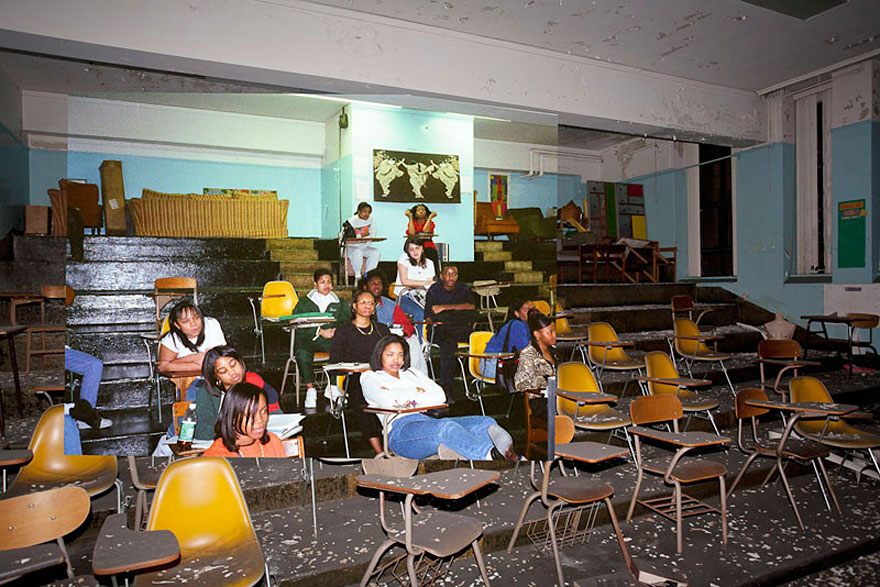
The famous then-and-now photos of an abandoned Detroit school tell that story better than any history lecture could. The project centered on the old Lewis Cass Technical High Schoolbetter known as Cass Techone of Detroit’s most legendary public schools. By layering archival images of student life over photographs of the building after abandonment, the series created a visual time machine: one moment, a hallway buzzes with teenagers; the next, the same hallway is dim, peeling, and silent.
These images are not just “cool ruins” for the internet to gawk at between coffee refills. They are a powerful reminder of Detroit’s rise, decline, reinvention, and unresolved neighborhood challenges. They show how architecture can carry memory, how public schools anchor communities, and how quickly a building can move from civic pride to civic problem when it is left behind.
The School Behind the Photos: Old Cass Technical High School
Old Cass Technical High School was not an ordinary school. Founded in 1907, Cass Tech became a symbol of Detroit’s industrial ambition and educational innovation. At a time when the city was expanding rapidly and the auto industry was transforming American life, Cass Tech offered technical and vocational training designed to prepare students for real careers. It was a school built for a city that believed the future could be engineered, drafted, machined, performed, and composed.
The famous old building, located near downtown Detroit along Second Avenue, grew into a massive Collegiate Gothic landmark. Its architecture looked more like a university than a typical high school, which was part of the magic. Students were not simply walking into a place with desks; they were entering a building that seemed to say, “Stand up straight, kid. You are part of something big.”
And many students were. Cass Tech produced artists, engineers, musicians, public figures, business leaders, and everyday Detroiters who carried the school’s reputation into the wider world. The old building had science labs, shops, music rooms, a library, a pool, an auditorium, a gymnasium, and enough corridors to make a freshman feel like they needed a compass, a packed lunch, and possibly a small rescue team.
What Makes the Then-and-Now Photos So Powerful?
The best then-and-now photography does more than compare old paint to new decay. It creates emotional contrast. In the Cass Tech images, archival photos of students, teachers, athletes, musicians, and school spaces are superimposed over the abandoned rooms as they later appeared. The result is haunting without being cheap. It is history with goosebumps.
In one scene, a basketball game appears over the damaged gym, letting viewers see both the energy of the past and the emptiness of the present. In another, the old library appears alive with computers, books, and student activity, while the modern abandoned view shows deterioration and loss. A hallway that once carried rushing students becomes a corridor of dust. A pool once associated with school routines becomes a strange, hollow chamber. The yearbook room, perhaps the most symbolic space of all, looks especially painful because yearbooks are supposed to preserve memoryand here the room itself became a memory.
The technique works because it avoids shouting. It does not need dramatic captions like “LOOK HOW SAD THIS IS.” The images simply place then and now in the same frame and let the viewer do the emotional math. Spoiler: the math is not cheerful.
Why Was the Old Cass Tech Building Abandoned?
A common misconception is that the old Cass Tech building was abandoned because of a 2007 fire. The timeline is more complicated. Cass Tech moved into a new, modern building during the 2005–2006 school year. The old structure was left vacant after the transition, while the new campus continued the school’s legacy nearby. The 2007 fire damaged the already-closed building and accelerated concerns about safety, cost, and long-term reuse.
By 2011, demolition of the old building began. The decision was part of a larger effort to remove vacant Detroit school buildings considered unsafe or too expensive to maintain. The old Cass Tech building, despite its history and emotional importance, was ultimately torn down. Its story did not end with total erasure, though. The new Cass Technical High School remains active today, serving thousands of students with rigorous academics, arts, STEM opportunities, and career-focused programs.
Detroit’s Larger Abandoned School Story
Old Cass Tech is the most famous subject of the then-and-now photo project, but it is only one chapter in a much larger Detroit story. Since 2000, Detroit has seen a huge number of school closures tied to population loss, declining enrollment, shifting education policy, charter school growth, aging buildings, and financial stress. Entire neighborhoods that once supported large student populations changed dramatically over several decades.
Detroit’s school buildings were often built to last. Many were constructed in the early twentieth century with strong masonry, generous windows, wide corridors, auditoriums, gyms, and decorative details that would make modern budget committees quietly faint. But a durable building still needs students, maintenance, heat, security, and a plan. When those disappear, even a beautiful school can become vulnerable to water damage, vandalism, scrapping, and weather.
The City of Detroit later studied dozens of vacant historic-age school properties to assess their condition and redevelopment potential. That kind of work matters because abandoned schools are not only architectural objects. They affect property values, neighborhood safety, community pride, and the daily experience of residents who must pass them on the way to work, church, the grocery store, or another school that is still open.
Why Abandoned Schools Feel Different From Other Ruins
There is a reason abandoned school photos travel so widely online. They combine nostalgia, mystery, and discomfort. Almost everyone understands school spaces. You do not need to be an architect to know what a classroom means. You know the rhythm: bells, lockers, lunch trays, pencils, announcements, awkward dances, pep rallies, tests, and the universal teenage art of looking busy while doing absolutely nothing productive.
When those familiar spaces are empty, the contrast feels personal. A broken classroom is not just a broken room. It is a place where somebody learned to read a poem, solve an equation, play trumpet, build a cabinet, dissect a frog, or flirt badly enough to deserve a public apology. The abandoned Detroit school images are powerful because they ask viewers to imagine the lives that once filled the space.
They also challenge the easy “ruin porn” version of Detroit photography. For years, outsiders photographed Detroit’s vacant buildings as symbols of collapse, sometimes without much concern for the people still living, working, studying, and rebuilding there. The best then-and-now projects do something more thoughtful. They do not simply say, “Look at this decay.” They ask, “What happened here, who remembers it, and what should come next?”
The Architecture of Memory
Old Cass Tech’s architecture made the photos even more dramatic. The building was large, formal, and full of institutional confidence. Its staircases, auditorium, laboratories, and long corridors reflected an era when public education was treated as a civic monument. The structure suggested that technical learning, arts education, and academic ambition deserved serious space.
That is why the abandoned images feel so strange. The building was designed to project permanence, but the photos show impermanence winning the argument. Plaster falls. Paint peels. Windows break. Nature sneaks in like a quiet substitute teacher nobody scheduled. The camera captures the uncomfortable truth that even strong buildings are fragile when communities lose the resources or population needed to sustain them.
Still, the then-and-now format refuses to reduce the school to decay alone. By layering active school life over the abandoned rooms, the images restore people to the frame. The viewer sees the building not as an empty relic, but as a container of human motion. That is the secret sauce. The photos are not about emptiness; they are about absence.
From Demolition to Reuse: What Can Detroit Do With Vacant Schools?
Detroit’s vacant school buildings raise a hard question: should old schools be preserved, reused, sold, demolished, or left alone until nature files the final paperwork? There is no one-size-fits-all answer. Some buildings are too damaged or too costly to save. Others are structurally sound but need millions of dollars in repairs. A few have strong enough architecture, location, and community support to become housing, arts centers, offices, community hubs, or mixed-use spaces.
Recent redevelopment efforts show what is possible. The transformation of the historic William E. Higginbotham School into affordable housing and community space is one example of how a vacant school can begin a second life. Projects like that are difficult, expensive, and slow, but they also prove that old schools do not have to remain permanent neighborhood wounds.
Adaptive reuse has practical benefits. It can preserve neighborhood identity, reduce demolition waste, and keep beautiful historic materials in use. But it requires money, patience, legal clarity, environmental assessment, community trust, and developers willing to wrestle with buildings that were not designed to become apartments or studios. Turning a classroom into a living room sounds charming until someone has to solve plumbing, accessibility, heating, parking, tax credits, and the question of what to do with a gym that echoes like a thunderstorm.
How Then-and-Now Photos Help People Care
Photos cannot fix a school district, repair a roof, or write a redevelopment agreement. But they can make people care, and that is not a small thing. A spreadsheet may say “vacant property.” A photograph says, “This used to matter.” A then-and-now image goes further: “This still matters, even if it looks forgotten.”
The Cass Tech series became widely shared because it made Detroit’s school vacancy problem visible in a deeply human way. Instead of presenting abandonment as an abstract policy issue, the images translated it into scenes people could feel. A gym without players, a library without readers, an auditorium without applausethese are simple visual stories, but they carry a heavy civic meaning.
For alumni, the photos can be bittersweet. They may bring back memories of teachers, friends, performances, competitions, and long walks between classes. For younger viewers, they can feel like a portal into a Detroit they never knew. For city planners, preservationists, and residents, they raise practical questions about what should be saved, what must be removed, and how communities can shape the future of public buildings.
Lessons From the Abandoned Detroit School Photos
1. Buildings Are More Than Real Estate
A school is not just a parcel, structure, or line item. It is a social anchor. When it closes, the loss can ripple through a neighborhood. Families lose a familiar gathering place. Alumni lose a physical connection to memory. Nearby residents may inherit a vacant building that attracts dumping, scrapping, or safety concerns.
2. History Needs Maintenance
People often say they love historic buildings, but love does not patch a roof. Preservation requires funding, planning, and realistic reuse. Without those, even beloved landmarks can decline beyond repair. The old Cass Tech building shows how quickly a celebrated institution can become vulnerable once it is empty.
3. Detroit’s Story Is Not Just Decline
The abandoned school photos are emotional, but they should not be mistaken for the whole story of Detroit. Cass Tech continues in a newer building. Other vacant schools are being studied, marketed, demolished, or redeveloped. Detroit is not frozen in ruin; it is constantly negotiating between memory and reinvention.
4. Then-and-Now Images Are a Form of Public History
These photos work because they are accessible. You do not need a degree in urban planning to understand them. They invite viewers to compare, reflect, and ask questions. That makes them valuable public history, especially in a city where built environments carry deep stories of migration, industry, segregation, education, disinvestment, and resilience.
Experiences Related to Then-and-Now Photos of Abandoned Detroit School
Looking at then-and-now photos of an abandoned Detroit school feels a little like opening a yearbook that has been left in the rain. The faces are still there, the structure of memory is still there, but everything has softened at the edges. The first reaction is usually fascination. The second is sadness. The third, if you stay with the images long enough, is curiosity: who studied here, who taught here, who swept the floors, who played the trumpet too loudly in the music room, and who got sent to the principal’s office for a crime against cafeteria etiquette?
The experience is powerful because schools are among the first public buildings many people truly know. As children, we learn the geography of a school with almost military precision. We know which stairwell is fastest, which hallway smells like floor wax, which teacher lets class out late, and which bathroom is mysteriously always “out of order.” When a school becomes abandoned, those ordinary details become strangely precious. A cracked tile might have no market value, but to an alum it may be part of a daily route walked for four years.
Then-and-now photography also changes how viewers understand time. A normal abandoned-building photo shows what exists now. A historical photo shows what existed then. But a combined image forces both realities into the same moment. That is why the Cass Tech images stay in the mind. They do not allow the past to remain safely behind glass. They drag it into the present and make the viewer stand between two versions of the same room.
For anyone interested in urban history, the photos offer a lesson in humility. Cities are not permanent machines. They expand, shrink, adapt, stumble, and rebuild. A school that once felt indestructible can become vacant. A vacant building can be demolished. A demolished landmark can still live in memory, archives, photographs, alumni stories, and the identity of a new school carrying the same name forward.
For photographers, the project is a reminder that technique should serve meaning. The superimposed images are visually clever, yes, but the emotional impact comes from respect for place. The best shots are not trying to make decay look glamorous. They are trying to restore context. They say, “Before this was empty, it was full.” That single idea separates thoughtful documentary work from shallow ruin tourism.
For Detroit residents and alumni, the experience can be more complicated. Outsiders may see drama; locals may see personal loss, policy failure, neighborhood frustration, or pride that refuses to disappear. That is why abandoned school photography should be handled carefully. These buildings are not movie sets. They are tied to real communities, real public decisions, and real people who may still live next door.
In the end, the then-and-now photos of the abandoned Detroit school are compelling because they are not only about what was lost. They are also about what remains: memory, documentation, debate, and the possibility of reuse elsewhere. They remind us that every empty school once had a morning rush, a last bell, and somebody who believed the future was waiting just beyond graduation.
Conclusion
The then-and-now photos of abandoned Detroit school spaces are more than striking internet images. They are visual essays about memory, public education, architecture, and urban change. Old Cass Technical High School was once a proud educational landmark in a city built on invention and industry. Its abandoned rooms later became a canvas for reflection, showing the distance between Detroit’s booming past and the difficult realities that followed.
But the story should not end with dust and demolition. Cass Tech lives on in a newer building, and Detroit continues to wrestle with the future of its vacant schools. Some will be lost. Some may be reborn. All of them deserve to be understood not just as empty structures, but as places where generations once practiced becoming adultsawkwardly, brilliantly, loudly, and with at least one forgotten lunch tray.
Note: This article is based on real public information about old Cass Technical High School, Detroit school closures, historic vacant school studies, redevelopment efforts, and documented then-and-now photography projects.














