Most family Christmas cards follow a familiar recipe: matching sweaters, a politely decorated tree, carefully arranged smiles, and at least one child staring at something mysterious outside the frame. Danielle and Mike chose a different recipe. Theirs contains classic holiday songs, visual punchlines, digital trickery, cooperative children, occasionally complicated pets, and just enough chaos to make relatives wonder what on earth arrived in the mailbox.
Beginning in 2013, the couple transformed their annual holiday greeting into a continuing comedy series. Each funny family Christmas card used a familiar Christmas song as its theme, then turned the title or lyrics into a staged visual joke. What started as one creative pregnancy announcement became a seven-year tradition that friends and relatives eagerly anticipated.
The cards are amusing on their own, but the complete collection is even better. Viewed year by year, it functions as a family album with a mischievous personality. Pregnancies become plot developments. Children grow into increasingly active cast members. Pets make appearances, disappear from the main image, and inspire concerned questions from viewers. Meanwhile, the family’s creative ambition keeps expanding like an inflatable Santa with a malfunctioning air pump.
A Funny Christmas Card Tradition Begins
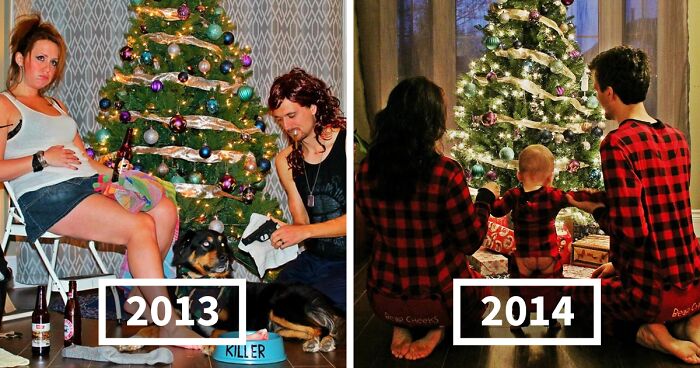
Danielle reportedly developed the idea while pregnant with the couple’s first child. Rather than sending a conventional portrait, she wanted to create something that reflected her slightly twisted sense of humor. The result was the family’s 2013 card, titled “I’m Dreaming of a White (Trash) Christmas.” It immediately established the basic formula: start with a recognizable holiday song, reinterpret it literally or unexpectedly, and build a photograph around the joke.
That first experiment could easily have been a one-time gag. Instead, the reaction from family and friends encouraged Danielle and Mike to continue. A tradition was bornnot because anyone signed a formal holiday contract, but because once people expect an annual comedy production, there is apparently no peaceful way to return to beige sweaters and a generic “Season’s Greetings.”
One Familiar Song, One Unexpected Scene
The family’s creative rule gave the project useful structure. Every year, they selected a classic Christmas song and found a way to convert its title or lyrics into a visual concept. The rule was simple enough to repeat but flexible enough to support a completely different scene each season.
The 2014 card borrowed a line from “The Little Drummer Boy” and was titled “Our Finest Gifts We Bring, Pa Rum Bum Bum Bum.” In 2015, while Danielle was pregnant with the couple’s second child, the family created “Silent Night.” Subsequent cards included “O! Christmas Tree” in 2016, “Baby, It’s Cold Outside!” in 2017, “Mele Kalikimaka” in 2018, “Rocking Around the Christmas Tree” in 2019, and “I’ll Be Home for Christmas” in 2020.
The titles alone demonstrate why the series remained fresh. Some songs offered obvious physical jokes. Others invited absurd costumes, exaggerated domestic scenes, or playful cultural references. Because the audience already knew the song, the family did not need to explain the setup. The viewer could recognize the reference and discover the punchline in a few seconds.
Why These Funny Family Christmas Cards Work
Plenty of holiday photos are technically excellent. Fewer have a clear point of view. Danielle and Mike’s cards stand out because they do more than document appearances; they reveal the family’s shared personality.
The Series Has a Consistent Creative Identity
The recurring Christmas-song concept connects all the cards. Colors, costumes, props, and locations may change, but the central idea remains recognizable. This consistency turns separate photographs into a collection.
It is the same principle that makes a successful television series work. The audience understands the format while remaining curious about the next episode. Friends receiving the card know they will get a holiday-song joke, but they do not know which song, which family member will become the comic victim, or what strange disaster will appear to be unfolding.
The Children Become Part of the Story
As the family grows, the cards naturally gain new characters and possibilities. A pregnancy can become part of the joke. A toddler can contribute an expression no adult actor could reproduce. An older child can participate more deliberately, suggest ideas, or deliver the exact look of holiday exhaustion a scene needs.
This changing cast gives the series emotional weight beneath the comedy. Viewers are not merely watching increasingly elaborate jokes. They are also watching a family develop over time. Hairstyles change. Children get taller. Parents become more experienced at organizing mild photographic mayhem. The result is both humorous and unexpectedly sentimental.
The Humor Feels Personal
The cards are polished, but they do not feel like corporate advertisements. Their appeal comes from recognizable family life: clutter, fatigue, imperfect cooperation, unpredictable children, and adults trying to hold everything together long enough to take a picture.
A flawless portrait says, “We successfully stood still.” A funny Christmas card can say much more: “This year was chaotic, we survived it together, and we are still capable of laughing.” That message is especially relatable during a season when families are balancing travel, meals, decorations, school events, shopping lists, and the annual mystery of where all the tape went.
How Danielle Creates the Staged Holiday Photos
The family’s scenes may appear to capture one perfectly timed moment, but they are built through careful planning and photo compositing. Danielle has explained that she uses a camera and tripod to photograph two or three separate arrangements. She then blends the images in Photoshop to create the completed scene.
This technique solves one of the oldest problems in family photography: getting every child, adult, and pet to perform correctly at the same time. Instead of demanding one miraculous frame, Danielle can photograph different family members separately while keeping the camera locked in the same position.
Digital editing also allows her to add props and effects that would be uncomfortable, impractical, or unsafe to use during the actual shoot. For example, an object that appears attached to a person may be a digital addition rather than something used physically. The photograph can suggest cartoon-level danger without placing anyone in genuine danger.
A Tripod Makes the Illusion Possible
Keeping the camera stationary is essential when combining several photographs. If the angle, height, or framing changes between shots, the background will not align cleanly. A tripod allows family members to move in and out of the scene while the room, furniture, and decorations remain consistent.
Professional equipment is not mandatory. A smartphone mounted securely on a tripod can work well, especially when paired with a timer or remote shutter. The important ingredients are stable framing, consistent lighting, and enough patience to accept that someone will blink during the best take.
Editing Supports the Joke Rather Than Replacing It
The strongest effects in these funny Christmas cards begin with a clear concept. Photoshop helps combine the pieces, but the software is not responsible for the humor. The joke already exists in the song choice, costumes, body language, props, and arrangement of the scene.
This distinction matters for anyone attempting a similar project. Adding twenty digital snowflakes, six explosions, and a flying reindeer will not automatically create a funny photograph. Sometimes it will only create a photograph that appears to have lost an argument with the special-effects department.
The Family Sends the Finished Cards to a Real Audience
After completing each design, Danielle and Mike print the card and mail it to approximately 50 close friends and relatives. Recipients have reportedly saved the collection, displayed older cards during the holidays, and shared the jokes with guests.
That physical connection is important. A social media post may receive immediate reactions before disappearing into an endless feed. A printed holiday card can remain on a refrigerator, mantel, bulletin board, or bookshelf for weeks. Some families store favorite cards and bring them out again with the decorations.
Christmas remains one of America’s biggest card-sending occasions, even as everyday communication becomes increasingly digital. A personalized card feels deliberate because someone planned it, printed it, addressed it, purchased postage, and sent it through the mail. In other words, it required considerably more commitment than tapping a snowman emoji in a group chat.
What Happened to Guinness the Dog?
When the card collection was shared online, some viewers noticed that the family dog, Guinnessalso jokingly called Killerwas no longer appearing prominently in every main photograph. Concerned commenters apparently wanted confirmation that Guinness was safe and well.
The family reassured viewers that both Guinness and their cat, Maisy, remained part of the household. Their photos continued to appear inside the cards. Including two children and multiple pets in every elaborate front-cover composition had simply become too complicated.
This small episode shows how closely audiences can follow a long-running photo series. Recurring pets become characters. Their absence becomes a plot mystery. Before long, an ordinary dog is fielding more public concern than several television actors who disappeared between seasons.
How to Create Your Own Funny Family Christmas Card
Choose a Repeatable Theme
A strong series needs a framework. Christmas songs worked beautifully for Danielle and Mike, but other possibilities include holiday movies, family occupations, famous paintings, yearly headlines, children’s books, or exaggerated versions of ordinary household problems.
The theme should be broad enough to generate new ideas for several years. “Everyone wears a different hat” may struggle to remain exciting by year four. “Classic holiday movies recreated with household objects” offers much more room to grow.
Find the Joke Before Buying Props
Write the concept in one sentence. For example: “The children are treating the Christmas tree like an amusement park while the parents attempt to remain calm.” If the joke is understandable without a long explanation, it will probably work visually.
Only after defining the idea should you choose costumes and props. This prevents the common creative mistake of purchasing twelve inflatable candy canes and then desperately trying to invent a reason for owning them.
Create a Simple Storyboard
Sketch where each person will stand, sit, or appear to move. The drawing does not need artistic merit. Stick figures, arrows, and labels are enough. A storyboard helps determine whether the scene is readable and whether several exposures will be needed.
Plan the background first, then the major characters, followed by smaller details. Leave open space for printed text if the song title or greeting will appear on the front of the card.
Photograph People Separately When Necessary
Set the camera on a tripod and avoid moving it until every required image has been captured. Keep the lighting consistent. Photograph an empty background plate before anyone enters the frame; this clean image can make editing easier later.
Young children and pets should be photographed during brief, comfortable sessions. Capture their part first rather than expecting them to wait while adults debate whether a plastic wreath looks funnier on the wall or on Dad.
Keep Every Staged Scene Safe
Comedy should be created through camera angles, harmless props, acting, and digital editingnot genuine hazards. Do not place children or pets at heights, near open flames, around unstable trees, or within reach of electrical cords and breakable decorations.
The Consumer Product Safety Commission recommends keeping candles supervised, avoiding overloaded outlets, and using properly maintained holiday lights. Pet-safety guidance also emphasizes keeping wires, batteries, fragile ornaments, toxic plants, and tempting decorations away from animals. Any dangerous-looking element should be simulated safely or added digitally.
Print a Test Before Ordering the Full Batch
Images can look brighter on a screen than they do on paper. Print one proof to check facial expressions, contrast, text size, spelling, and cropping. Make sure no important detail sits too close to a trim line.
Then order early enough to address and mail the cards without turning the project into a December 23 emergency. The U.S. Postal Service publishes seasonal mailing recommendations each year, so checking current deadlines can prevent your “Merry Christmas” card from becoming an accidental Valentine.
Why a Seven-Year Creative Tradition Matters
The funniest part of this project may be the individual jokes, but its lasting value comes from repetition. Family traditions gain meaning because they return. Each new version connects the present year with the years that came before it.
The American Academy of Pediatrics notes that family rituals and holiday traditions can support connection, participation, storytelling, and a sense of continuity. A tradition does not need to be formal or solemn to provide those benefits. It can involve cooking a inherited recipe, decorating an old ornament, singing badly in the car, or transforming the living room into a ridiculous Christmas-card set.
Danielle and Mike’s series records more than physical changes. It preserves how the family collaborated, what made them laugh, and how their creativity evolved. Years later, the children will have an unusual visual history of their childhoodone featuring loving parents, familiar pets, elaborate jokes, and probably several conversations beginning with, “You want me to wear what?”
Experience Notes: What Families Learn From Creating an Annual Comedy Card
Beginning a funny Christmas card tradition sounds simple when the finished photograph is already printed and sitting attractively on a mantel. The actual experience is less tidy. The first lesson is that creative family projects require flexibility. A carefully planned expression may disappear when a child becomes distracted. A pet may refuse to face the camera. A prop that looked hilarious in a sketch may look like unidentified plumbing equipment in the photograph.
The most useful response is not to force perfection. It is to adapt the concept around the personalities involved. Children often provide better material when they are allowed to react naturally. A skeptical stare, uncontrolled giggle, or dramatic pout can become funnier than the pose originally planned. The goal is not to make every participant behave like a professional model. The goal is to create a scene that feels like your family.
Another important experience is learning to divide the project into manageable stages. Trying to develop the idea, decorate the set, dress everyone, photograph the scene, edit the image, design the card, and address 50 envelopes in one weekend is an excellent method for testing whether holiday cheer has legal limits.
A calmer process begins several weeks earlier. Brainstorm the concept first. Collect inexpensive props gradually. Test the camera angle before anyone changes clothes. Prepare costumes in labeled piles. Photograph the most unpredictable participants first. Editing and printing can happen later, when no toddler is wearing an elf hat and demanding payment in cookies.
Families also discover that each annual card raises expectations. Once recipients love the first few designs, the creators may feel pressure to produce something bigger every year. That pressure can drain the fun from the tradition. A better approach is to measure success by participation and originality rather than complexity. A clever idea photographed in a simple room can be more memorable than an elaborate set that exhausts everyone.
Digital compositing becomes especially valuable as the family grows. Photographing people separately reduces waiting, allows several expressions to be tested, and makes it easier to include relatives or pets with different attention spans. However, consistent lighting and camera placement matter. Even excellent editing software struggles when one person is photographed beside a bright window and another appears under the mysterious green light of a basement laundry room.
Including children in the brainstorming process can also change the experience. As they get older, they can suggest songs, draw storyboards, choose costumes, arrange props, or help select the final image. The tradition then becomes something the family creates together rather than something adults require children to endure. Their ideas may be strange, expensive, or structurally dependent on a real sleigh, but they often contain the best comic spark.
Finally, the audience becomes part of the tradition. Relatives remember favorite cards, notice recurring details, and ask what will happen next. Some display the entire collection each December. That response transforms the project from a private photo session into a shared seasonal event.
The greatest reward may arrive years later, when the family looks through the cards in order. They will remember not only the final images but also the laughter, negotiations, failed takes, improvised props, and ordinary rooms temporarily turned into miniature movie sets. A funny Christmas card lasts because the joke is printed on paper. A funny Christmas card tradition lasts because the experience becomes part of the family story.
Conclusion
Danielle and Mike’s staged Christmas cards demonstrate what happens when humor, photography, and family tradition meet. By building each card around a classic holiday song, they created a format that was instantly recognizable yet endlessly adaptable. The project documented pregnancies, growing children, beloved pets, creative experiments, and seven years of shared laughter.
The brilliance of the series does not depend on expensive equipment or flawless posing. It comes from a clear idea, consistent commitment, safe staging, and a willingness to treat ordinary family chaos as creative material. Anyone can send a polished portrait. Creating an annual comedy episode that relatives save and redisplay requires something rarer: imagination, patience, and family members willing to look mildly ridiculous for the sake of Christmas.
Note: Dangerous-looking scenes should always be simulated with safe positioning, harmless props, camera tricks, or digital editing. Children and animals should never be exposed to real hazards for a photograph.