
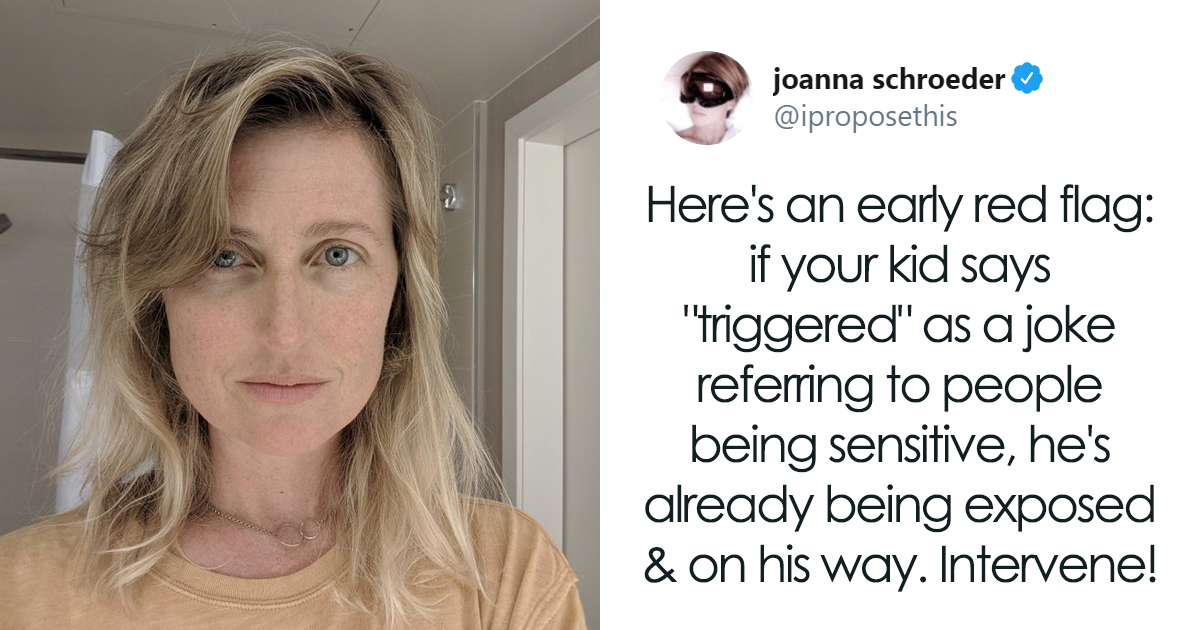
It rarely starts with a swastika and a speech. More often, it starts with a joke. A meme. A smug little video clip. A comment that sounds “edgy” enough to get laughs and vague enough to dodge accountability. Then comes the shrug: Relax, it’s ironic. And that is exactly why this conversation matters.
For many parents, the frightening part is not that hateful content exists online. We all know the internet can be a carnival ride operated by raccoons. The frightening part is how ordinary the on-ramp can look. A boy can begin with gaming videos, prank accounts, reaction channels, “dark humor” memes, or anti-politically-correct content and slowly get nudged toward racist ideas that are packaged as rebellious, funny, or somehow “forbidden truth.”
The point is not that every boy who shares a dumb meme is one click away from joining an extremist movement. That would be lazy, alarmist nonsense. The real issue is that racist ideas are often introduced through humor, repetition, peer validation, and algorithmic suggestion. When those ingredients mix together, prejudice can start to feel normal before a child even realizes what he is absorbing.
This is why so many parents, educators, and child-development experts are urging adults to stop treating memes as harmless wallpaper. Sometimes they are just jokes. Sometimes they are delivery systems. And if we want to understand how social media can pull young boys toward racism, misogyny, antisemitism, and other forms of hate, we need to understand the mechanics of the pipeline, not just the ugliest end result.
Why Memes Are So Good at Smuggling Bad Ideas
Memes work because they are fast, emotional, and low-friction. They do not ask a child to read a manifesto or sit through a lecture. They ask for a laugh, a reaction, a share, or a private little yeah, kind of true though. That is what makes them powerful. They lower a young person’s defenses.
A racist meme rarely introduces itself as racist. It disguises itself as “satire,” “facts no one wants to say,” “just trolling,” or “equal-opportunity humor.” It relies on plausible deniability. If someone objects, the poster can act offended that anyone took it seriously. That performance matters because it teaches boys a dangerous habit: say something ugly, then hide behind irony.
That irony shield is not a side issue. It is the sales pitch. A boy who would reject open white supremacy may still laugh at a meme that stereotypes immigrants, mocks Black people, or turns antisemitic conspiracy thinking into a punchline. Repeated often enough, the joke stops being a joke and starts becoming a worldview. The emotional reaction comes first; the ideology moves in later and unpacks its bags.
Humor also creates community. Kids want belonging the way houseplants want sunlight. If the group chat, gaming server, or comment section rewards cruelty with attention, a boy may start repeating what gets laughs even if he does not fully believe it at first. Over time, performance becomes habit, and habit can become identity. Nobody wakes up one morning and announces, “Today I shall become radicalized by image macros.” But many people do drift there one laugh at a time.
How Social Media Turns Curiosity Into a Rabbit Hole
Social media platforms are extremely good at one thing: serving more of what keeps people watching. That design can be mildly annoying when it means three hours of air-fryer recipes. It becomes dangerous when the engagement bait is grievance, humiliation, outrage, or hate.
A boy clicks one video mocking “sensitive people.” Then he gets another video ridiculing feminism. Then another framing diversity as a scam. Then content that presents racism as “pattern recognition,” antisemitism as “asking questions,” and cruelty as courage. At each step, the material becomes a little bolder, a little meaner, and a little more certain that empathy is weakness.
This is especially potent in spaces where boys are already being trained to treat toughness as a personality. In some corners of gaming culture, livestream culture, forum culture, and short-form video culture, the ideal male is detached, dominant, mocking, and perpetually allergic to vulnerability. That makes racist content easier to smuggle in because hate often arrives wearing the costume of confidence.
The “edgy humor” trap
Young boys are often told, explicitly or indirectly, that adulthood means developing a thicker skin. Online hate merchants exploit that message brilliantly. They frame empathy as weakness, kindness as fake, and objections to racism as overreaction. In that worldview, the “cool” kid is the one who is never offended and never apologizes.
That is how a child can move from laughing at provocative jokes to distrusting entire groups of people. He is not just consuming content. He is being trained to treat moral concern as embarrassing.
The grievance machine
Many racist online ecosystems do not begin with race at all. They begin with grievance. Boys are told that they are being lied to, replaced, silenced, emasculated, or robbed of status. The villains change depending on the channel: women, immigrants, Black activists, Jews, LGBTQ+ people, “woke teachers,” “the media,” or some mashed-together conspiracy smoothie made of all of the above.
Once a boy accepts the idea that the world is rigged against him, racist explanations can start to feel strangely satisfying. They offer villains, certainty, and belonging all at once. Terrible values, yes. But tidy values. And the internet loves tidy stories.
Why Boys Can Be Especially Vulnerable
To be clear, hate is not a “boy problem” alone. Girls can encounter and spread harmful content too. But boys are often targeted in distinct ways because many radical online spaces are deeply male-coded. They recruit through status games, dominance language, locker-room humor, irony, gaming culture, and promises of masculine power.
Adolescence is already a season of identity experiments. Boys may be wondering how to act, how to fit in, how to be respected, and what kind of man they are supposed to become. If the loudest online voices tell them that real manhood means control, contempt, and tribal loyalty, some will absorb that message long before they have the maturity to challenge it.
There is also the simple fact of exposure. Boys spend time in digital environments where slurs, “jokes,” and dehumanizing banter can feel ambient rather than exceptional. When hateful language becomes background noise, it stops sounding like a warning siren and starts sounding like the soundtrack.
That normalization matters. Racism does not need to arrive as a dramatic conversion experience. It can settle in as a style of speech, a set of assumptions, or a reflexive hostility toward anyone cast as “other.”
What Parents Often Notice First
Parents usually do not discover this shift through some cinematic smoking gun. They notice smaller changes. A son starts using terms he never used before. He becomes dismissive when race comes up. He parrots phrases about “overreacting,” “victim mentality,” or “people being too sensitive.” He shares memes that are technically deniable but emotionally unmistakable.
Sometimes the change shows up as contempt before it shows up as ideology. He mocks girls. He sneers at teachers. He seems fascinated by humiliation. He treats empathy like weakness and conflict like entertainment. He insists everything is a joke while getting defensive the second anyone questions him.
This is where many adults make a costly mistake: they wait for certainty. They tell themselves it is probably a phase, probably harmless, probably just internet culture. But early intervention matters precisely because the early signs are often socially disguised. Once hateful beliefs harden into identity, they become much harder to challenge.
The Damage Goes Far Beyond Bad Opinions
Racism online is not just a “difference of viewpoint.” It affects real children in real schools, neighborhoods, and group chats. It makes classmates feel unsafe. It contributes to bullying, harassment, isolation, and mental-health harm. It teaches boys to interpret other people’s pain as comedy. That is not independence. That is corrosion.
And the damage boomerangs. Boys who absorb this worldview are not being made stronger. They are being made smaller. Racism narrows curiosity, flattens empathy, distorts relationships, and traps young people inside a brittle identity that depends on hierarchy. A boy taught to hate is also being taught to fear complexity, tenderness, and truth.
That is part of the tragedy here. Online radicalization markets itself as empowerment. In practice, it often leaves kids more paranoid, more isolated, more angry, and less capable of forming healthy connections.
What Parents, Schools, and Communities Can Do
1. Start earlier than feels necessary
If adults wait until a child has already encountered racism online, they are playing defense on a muddy field. Conversations about fairness, bias, stereotypes, and dignity should begin early and grow with the child. Kids do not need a graduate seminar. They need clear moral language and repeated practice using it.
2. Teach meme literacy, not just media limits
It is not enough to say, “Get off your phone.” Kids need help decoding what they are seeing. Ask questions like: Who is the butt of this joke? What emotion is this post trying to trigger? What happens if you repeat this enough times? Who benefits if you become more cynical, more angry, and less trusting?
That kind of analysis is gold. It helps children see that a meme is not just a vibe; it is a message.
3. Stay connected without becoming a digital dictator
Children, especially teenagers, need privacy and dignity. They also need adults who are paying attention. Open conversation, platform awareness, family media rules, and occasional check-ins will usually get you further than storming into the room like a one-person cyber police unit. The goal is not surveillance theater. The goal is trust plus guidance.
4. Challenge “just joking” every single time
Adults do not need to panic, but they do need a backbone. If a boy uses racist language or shares hateful memes, say so plainly. Do not let irony do the cleanup work. A calm, firm response teaches that humor is not a moral eraser.
5. Offer a better model of masculinity
Boys need examples of men who are confident without being cruel, strong without being domineering, and funny without punching down. If the internet is offering one cartoonish version of manhood, home and school need to offer a better one that is rooted in self-respect, curiosity, and accountability.
What These Experiences Often Look Like in Real Life
Picture a mother scrolling through her son’s feed after he laughs at something during dinner and refuses to explain it. She is not expecting a crisis. Maybe a few dumb jokes, maybe some gamer slang, maybe the usual internet clutter. Instead, she finds a trail: meme pages full of “ironic” race jokes, clips of creators mocking women and immigrants, comments praising cruelty as honesty, and a steady stream of content that treats empathy like a character flaw.
At first, nothing seems dramatic enough to justify alarm. That is what makes it so hard. There is no single post screaming, Hello, I am extremist propaganda. There are just fragments. One meme implies Black people are the problem. Another says feminism ruined society. Another jokes about Jewish conspiracies. Another sneers at refugees. Another says anyone upset by any of this is weak, hysterical, or brainwashed. The mother can feel the pattern before she can neatly label it.
She starts asking questions. Her son rolls his eyes. He says it is only humor. Everyone talks like that online. It is not serious. He says adults do not understand internet culture. He says she is being dramatic. And for a moment, she wonders if maybe he is right. That moment of self-doubt is common. Hate online often depends on making concerned adults feel old, clueless, and slightly ridiculous.
But then she notices changes beyond the screen. He has become more contemptuous. He interrupts his sister differently. He talks about people as categories instead of individuals. He seems less curious and more certain. He repeats phrases that sound borrowed, polished, and emotionally flat, as if someone else has prewritten his opinions and mailed them directly into his mouth.
Teachers sometimes describe similar shifts. A student who once made regular middle-school-level bad jokes starts “debating” whether racism is real, baiting classmates with stereotypes, or posting things designed to upset people and then calling their reaction proof of weakness. Friends may notice it too. The boy seems more online even when he is offline, as if his personality has become a comment section.
Not every story ends in catastrophe. In many cases, the turning point is ordinary but important: an adult notices, stays calm, names the behavior, and keeps talking. A parent asks what the joke is really saying. A coach challenges the cruelty. A teacher explains how propaganda often hides inside humor. A school counselor helps unpack the anger, loneliness, or identity confusion that made the content appealing in the first place. The goal is not shame for sport. The goal is interruption.
And sometimes that interruption works. A boy admits he kept sharing things because it got laughs. Or because the creators seemed confident. Or because it felt good to be on the side that looked fearless. Underneath the swagger, there is often insecurity, boredom, loneliness, or a desperate hunger to belong somewhere. That does not excuse the harm. But it does explain why connection matters so much. Kids are less likely to fall for dehumanizing ideologies when they are anchored by adults who help them think critically, stay empathetic, and find identity without needing an enemy.
Conclusion
The lesson here is not that memes are evil or that every teenage boy with a phone is doomed. The lesson is simpler and more urgent: hate has adapted to digital culture, and adults need to adapt too. Racism no longer arrives only through explicit ideology. It can arrive as entertainment, irony, identity, and algorithmically delivered repetition.
When parents understand that process, they are much better equipped to interrupt it. They can ask better questions, notice earlier warning signs, and build the kind of home environment where cruelty is not mistaken for confidence. Boys do not become decent by accident. They become decent because adults help them practice empathy, courage, honesty, and responsibility until those habits feel stronger than the lure of cheap laughs and uglier tribes.
In other words, if the internet is trying to recruit boys with jokes, the answer is not panic. It is presence. Steady, informed, morally clear presence.












