
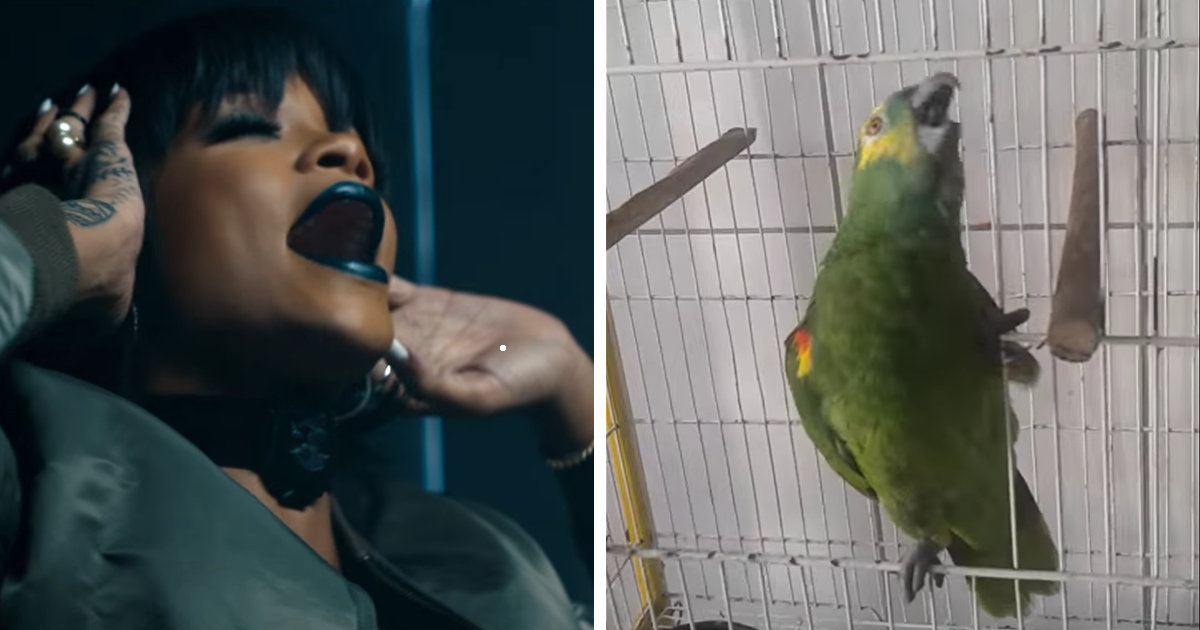
Every now and then, the internet delivers a clip so gloriously ridiculous that nobody bothers pretending to be normal about it. A dramatic bird opens its beak, a familiar melody kicks in, and suddenly the timeline becomes a full-blown talent show with feathers. That is exactly the energy behind the viral obsession with a parrot that appears to sing the Rihanna hook from The Monster. Within seconds, people are making the same joke: forget a cover version, this bird may have just dropped the definitive performance.
Now, is a parrot actually out-singing one of the biggest pop stars on the planet? Of course not. Rihanna is still Rihanna, the original song is still a monster hit, and no serious music historian is about to rewrite the record books because one extremely theatrical bird discovered the power of timing. But that is not why people love the clip. They love it because it lands at the perfect intersection of pop culture, animal intelligence, comedy, and pure internet chaos. It is surprising, weirdly catchy, and just polished enough to make your brain say, “Wait… why does this work so well?”
That question is what makes the story more interesting than a one-line meme. The viral moment is funny, yes, but it also opens the door to something genuinely fascinating: parrots are not random noisemakers with pretty feathers. They are among the most skilled vocal learners in the animal world. Some species can mimic human words, household noises, rhythms, and repeating sound patterns so well that they blur the line between imitation and performance. Once you know that, a parrot “singing” a pop chorus no longer feels like a fluke. It feels like the inevitable result of a bird brain built for sound, attention, social bonding, and just a dash of showbiz.
Why This Video Hits So Hard
The first reason the clip works is simple: The Monster is the kind of song people recognize almost immediately. Released in 2013 as an Eminem and Rihanna collaboration, it became a No. 1 hit on the Billboard Hot 100 and later won the Grammy for Best Rap/Sung Collaboration. That means the audience brings a built-in memory to the joke. Even before the bird finishes a phrase, viewers already know where the melody is supposed to go. Their brains do half the work, and the parrot gets all the credit. That is a pretty sweet arrangement if you are a bird with excellent instincts and zero concerns about royalties.
The second reason is contrast. Rihanna’s part in the song is polished, powerful, and emotionally controlled. A parrot version, by comparison, sounds like pop music got trapped inside a tiny feathery chaos goblin. The contrast makes the whole thing funnier. It is the same reason people love unexpected covers in general. Put a very familiar song in an unfamiliar voice, and the result instantly feels fresh. Put it in a parrot voice, and the result feels like the universe itself is doing improv comedy.
Then there is the timing. Viral animal clips rarely take off because they are merely cute. They take off because the timing feels uncannily right. In this case, the bird’s phrasing syncs with a chorus that already has a dramatic, repetitive shape. It is musical enough to be recognizable and chaotic enough to be hilarious. Viewers do not just hear noise. They hear intention, even if some of that intention is projected by humans who are desperately eager to believe their favorite meme bird has stage presence.
What Parrots Are Actually Doing When They “Sing”
Parrots are famous for mimicry, but that word can make their abilities sound cheap, like they are just living tape recorders with trust issues. In reality, parrots are vocal learners. That matters. A vocal learner does not simply make a fixed set of calls from birth. It listens, processes sound, stores patterns, and reproduces them. Researchers and science writers have pointed out for years that parrots sit in a rare group of animals capable of learning new sounds across their lives, and newer work has continued to show just how specialized their brains are for that job.
That is one reason parrots can pick up words, whistles, laughter, ringtones, and melodies. It is also why some birds seem to use sounds in the “right” situation often enough to creep people out a little. Studies and expert commentary suggest that parrots do not necessarily understand every abstract phrase the way humans do, but they can absolutely learn patterns, associations, and context. If a certain sound gets attention, affection, food, laughter, or social contact, a smart bird will remember that very quickly. Frankly, many humans operate on the exact same reward system, just with less impressive feathers.
Researchers have also found that companion parrots vary widely by species and by individual ability. African gray parrots, Amazons, cockatoos, and macaws are especially famous for their mimicry skills. Some birds build large repertoires of words and sounds. Others focus more on whistles, household effects, or short recurring phrases. That helps explain why one viral parrot may sound like a tiny backup singer while another specializes in microwave beeps, evil laughter, or what can only be described as airborne sarcasm.
And yes, there is a musical angle too. Science coverage of parrots like Snowball the dancing cockatoo helped popularize the idea that some parrots can move in time with a beat, not just copy noises. More recent research on cockatoos has even cataloged a surprisingly large variety of dance moves. So when a parrot seems to lock onto a hook or rhythm, people are not imagining everything. The performance may still be messy, but it is messy in a way that reflects real sensory and cognitive talent.
Why ‘The Monster’ Is Such a Perfect Song for a Parrot
Not every hit song would work in a parrot mashup. Some tracks are too lyrically dense, too flat melodically, or too dependent on subtle phrasing. The Monster is different. Its hook is bold, repetitive, emotionally legible, and built around a shape that is easy for the human ear to latch onto. That makes it perfect for parody, imitation, remixing, and now, apparently, avian reinterpretation.
The chorus also has something else going for it: drama. Parrots are not minimalists. These are not understated little indie birds sipping black coffee and whispering deep cuts from the B-side. Parrots like sounds that cut through the room. They thrive on repetition, reaction, and social payoff. A hook with emotional punch gives the bird a better chance of producing something humans interpret as a “performance.” In other words, if a parrot is going to accidentally become a pop star for twenty seconds, you could do a lot worse than a giant, memorable chorus from a song called The Monster.
There is also a hidden layer to why viewers react so strongly. The original song is about inner chaos, pressure, and the strange relationship people have with their own public selves. A parrot version strips all that down and replaces it with comic absurdity. The emotional weight is still there in the melody, but the singer is a bird. That mismatch creates instant entertainment. It feels dramatic and unserious at the same time, which is basically the internet’s favorite flavor.
The Internet’s Favorite Genre: Animals With Main-Character Energy
If there is one thing social media has taught us, it is that audiences adore animals who seem to possess a suspicious amount of personality. A dog with side-eye becomes a reaction meme. A cat knocking over a lamp becomes a legend. A parrot belting a recognizable chorus becomes an overnight icon. People are not only watching the animal. They are building a character around it. The bird is no longer “a parrot making sounds.” The bird is now a diva, a rival vocalist, a chaotic roommate, a feathered chaos agent with a recording contract pending.
That kind of anthropomorphism is part of the fun, but it also reflects something real: parrots are highly social, highly intelligent animals whose behavior often feels uncannily expressive. They react to people. They seek engagement. They repeat things that get responses. That social loop is one reason pet parrots can seem so intensely theatrical. They are not performing for a faceless void. They are performing for a flock, and in a home environment, humans become the flock. Once you laugh once, clap once, or play the song again, congratulations: you have joined the band.
Still, the funniest bird content works best when people remember that parrots are not novelty toys. Animal welfare groups and avian experts consistently warn that parrots have complicated care needs, require enrichment and social stimulation, and can suffer when they are bored or isolated. A bird who can wow the room with a pop hook is still a living animal with a demanding inner life. The viral moment is delightful, but the bird itself is not just a meme with a beak.
So… Is It Better Than the Original?
In the literal sense, no. The original remains a major pop-rap record with a chart history, a Grammy, and the kind of polished production that a household bird is unlikely to reproduce unless someone secretly gave it a very expensive studio deal. But in the internet sense, absolutely yes. For one glorious minute, the parrot version wins because it is unexpected. It hijacks a familiar song and returns it in a form nobody requested but everybody clicks. It is not better musically. It is better comedically. And sometimes comedy is the whole point.
That distinction matters because viral culture is not a serious competition. People saying the bird is “better than Rihanna” are not filing a formal review for a music journal. They are expressing delight through exaggeration. Hyperbole is the native language of online fandom. Everything is either iconic, cursed, elite, unhinged, or better than the original. The parrot clip checks at least four of those boxes, which is basically a clean sweep.
What makes the video memorable is not perfection. It is personality. Pop music has always rewarded strong vocal character, and this bird has character for days. The sound is imperfect, but the vibe is immaculate. That is why people replay it. Not to replace the original song, but to enjoy the absurd joy of hearing a familiar cultural object bounce off a completely unexpected performer.
Why Clips Like This Keep Us Watching
At a deeper level, people are drawn to videos like this because they offer a tiny, funny form of wonder. We live in an age of algorithmic sameness, recycled takes, and a truly heroic number of people filming themselves pointing at text. Then a parrot shows up and appears to deliver a pop chorus with suspicious conviction. It breaks the pattern. It reminds viewers that intelligence, rhythm, and surprise can show up in forms that still catch us off guard.
There is also comfort in the shared reaction. A viral bird video creates instant community. One person says, “This is ridiculous.” Another says, “No, this bird ate.” A third starts sending it to everyone they know with no explanation. For a brief moment, people from very different corners of the internet agree on something important: a parrot has accidentally improved the day.
And maybe that is the best way to understand the whole phenomenon. The clip is not really about replacing a superstar. It is about the delight of hearing something familiar made strange again. It is about talent, mimicry, rhythm, surprise, and the very human habit of laughing with our whole chest when an animal seems to understand the assignment better than we do. Rihanna gave the song its iconic power. The parrot gave it fresh chaos. The internet, naturally, decided to call that a masterpiece.
Experiences People Have Around a Viral Singing Parrot
One of the funniest experiences tied to a clip like this is the instant replay spiral. You watch it once because someone sent it to you with a caption like, “Please tell me this bird is not doing what I think it is doing.” You watch it again because your brain needs confirmation. By the third replay, you are no longer verifying reality. You are analyzing stage presence. Somewhere around play number five, you start defending the bird’s phrasing like you are on a panel judging a televised singing competition. This is how internet humor works now: one minute you are minding your business, and the next you are emotionally invested in a parrot’s pop career.
Another common experience is the group-chat explosion. Viral animal clips spread fast because they do not require setup. Nobody needs a paragraph of context before seeing a parrot appear to sing a globally recognizable hook. The joke is immediate. That makes the clip perfect for family chats, friend threads, workplace side conversations, and those late-night message chains where people communicate mainly through disbelief. The responses are usually identical: laughing emojis, all-caps panic, and at least one person insisting the bird has more charisma than half the music industry. It is silly, but it is also social glue.
For people who actually live with parrots, the video often feels both impressive and completely believable. Bird owners know that parrots can become obsessed with specific sounds, routines, or songs. One bird might mimic the coffee maker. Another might whistle the same melody every morning with the determination of a tiny union boss reporting for duty. Others learn phrases that they deploy with suspiciously good comic timing. So when the internet acts shocked that a parrot can sound musical, bird people tend to smile the smile of the deeply unsurprised. They have been living with feathered chaos long enough to know that birds are part comedian, part toddler, part noise engineer.
There is also the oddly emotional experience of seeing an animal connect with human culture in a way that feels playful rather than forced. A singing parrot clip can make viewers laugh, but it can also make them curious. They start wondering what the bird hears, what it remembers, and why certain sounds seem to stick. That curiosity often leads people down a much bigger rabbit hole of parrot videos, articles about vocal learning, and a whole new respect for just how cognitively rich these animals are. A joke clip becomes a gateway to genuine fascination.
Then, of course, there is the experience of comparing the bird version to the original song and realizing that the comparison is the whole joke. Nobody is seriously replacing Rihanna on the playlist. What they are doing is enjoying the thrill of contrast: polished pop stardom on one side, unfiltered bird enthusiasm on the other. The delight comes from holding both at once. You can admire the original and still laugh yourself silly at the remix-by-parrot situation. In fact, that is what makes the clip so replayable. It is not mocking music. It is celebrating how deeply music lives in culture, to the point that even a bird-shaped interruption can feel instantly legible.
In the end, experiences like these stick because they combine humor, surprise, and a rare kind of harmless joy. A viral singing parrot does not ask you to pick a side in a culture war, solve a crisis, or decode ten layers of irony. It just appears, makes a gloriously recognizable noise, and improves the mood. In a crowded online world full of stress, that kind of delight is not trivial. It is one of the few forms of internet magic that still feels genuinely earned.














