
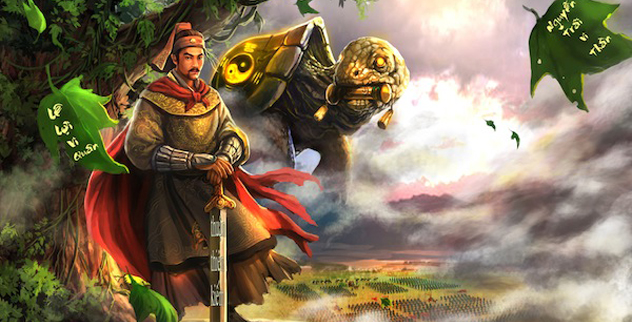
Ranking military commanders is a little like ranking hot sauces: everybody has strong opinions, somebody is definitely going to accuse you of disrespecting a legend, and sooner or later things get spicy. Still, if we judge commanders by a mix of battlefield success, strategic imagination, state-building impact, and long-term influence, some names stand above the rest. East Asia produced an extraordinary range of military minds, from cavalry empire-builders and naval innovators to patient unifiers and strategist-authors whose ideas still show up in boardrooms, war colleges, and competitive sports commentary.
This list is not a morality contest, and it is not simply a tally of who conquered the most territory. Plenty of rulers won battles and then built nothing durable. Others lost the occasional campaign but transformed the way wars were planned, fought, or remembered. The commanders below earned their place because they changed history in ways that lasted far beyond one campaign season. Some built empires. Some saved states. Some did both. And one of them managed to become famous for teaching people how to win without fighting too much, which is honestly the ultimate efficiency flex.
How This Ranking Works
To keep this list useful and not just dramatic, four standards shape the ranking: tactical skill, operational consistency, strategic innovation, and historical legacy. Tactical skill asks whether the commander could win real battles against capable opponents. Operational consistency looks at logistics, coordination, discipline, and the ability to sustain campaigns over time. Strategic innovation measures whether the commander changed the rules of the game, whether through doctrine, mobility, naval design, political-military organization, or combined civil and military leadership. Historical legacy asks the big question: did the commander leave behind institutions, methods, texts, or political outcomes that continued to matter after the dust settled?
That means this list includes both field commanders and commander-statesmen. It also means legendary reputation alone is not enough. A brilliant image helps, but it does not move supply wagons, hold alliances together, or keep a fleet from turning into expensive driftwood. With that said, here are the ten East Asian commanders who make the strongest case for greatness.
The Top 10 East Asian Military Commanders
1. Genghis Khan
If military greatness had a “please do not attempt this at home” setting, Genghis Khan would be it. His achievement was not merely conquest; it was the transformation of fractured steppe tribes into a disciplined war machine capable of defeating much larger, richer, and more settled states. He built a command culture based on mobility, intelligence, strict discipline, merit, and ruthless adaptability. That combination allowed his armies to campaign across enormous distances with terrifying speed.
What makes Genghis Khan number one is scale matched with method. Plenty of conquerors win big once. Genghis repeatedly translated organization into momentum. He used flexible command structures, psychological warfare, feigned retreats, and excellent communication to outmaneuver enemies who often had more cities, more money, and more assumptions about how war was supposed to work. He did not just enlarge territory; he changed Eurasian military history. That is not a résumé. That is a continent-sized mic drop.
2. Yi Sun-shin
Admiral Yi Sun-shin has one of the strongest cases for pure command brilliance on this list. During the Japanese invasions of Korea in the 1590s, he turned naval warfare into strategic strangulation. His victories mattered not because they were flashy alone, but because they cut Japanese supply and reinforcement lines at the very moment those lines mattered most. Winning at sea is impressive. Winning at sea in a way that reshapes the entire war is greatness.
Yi combined preparation, discipline, local knowledge, and technical innovation. He improved readiness before invasion, used the famous turtle ship as part of a broader tactical system, and repeatedly beat Japanese forces despite political interference and severe pressure. His record has made him a national hero for good reason: he did not merely defend Korea; he prevented Japan from turning early land success into durable strategic control. In rankings of naval commanders anywhere, not just East Asia, Yi belongs near the top of the conversation.
3. Li Shimin (Emperor Taizong of Tang)
Li Shimin is one of those figures who makes historians sound like they are trying very hard not to overpraise him and then overpraise him anyway. Before ruling as Taizong, he distinguished himself as a battlefield commander during the fall of the Sui and the rise of the Tang. His military role in the conquest of Luoyang and the consolidation of power was decisive. He was not just brave or charismatic; he was structurally important to victory.
What lifts Li Shimin so high is that he excelled in both war and governance. Many commanders know how to win campaigns. Fewer know how to convert military success into durable political order. Under Taizong, the Tang became one of China’s strongest dynasties, and his prestige extended well beyond China’s core territory. His record shows how elite command is not only about battlefield flair but also about securing the peace that follows. He fought like a commander and ruled like someone who understood what victory was for.
4. Sun Tzu
Yes, putting Sun Tzu this high will annoy somebody who wants a list made only of men standing in mud with swords. I understand. I proceed anyway. Sun Tzu’s exact biography remains less solid than that of some later commanders, but his influence is too large to ignore. The Art of War remains one of the foundational texts of military thought, and its emphasis on intelligence, deception, terrain, timing, leadership, and economy of force still feels startlingly modern.
Sun Tzu ranks here because military greatness is not only measured in battle reports but also in the power to shape how generations think about conflict. He transformed warfare from brute-force contest to disciplined strategic reasoning. Commanders across centuries have borrowed from his ideas, often without realizing it. When a military leader values flexibility over stubbornness, information over swagger, and shaping the enemy over smashing him head-on, Sun Tzu is somewhere in the room, quietly winning an argument he started more than two millennia ago.
5. Tokugawa Ieyasu
Tokugawa Ieyasu was not always the loudest man in the room, which is one reason he outlasted so many louder men. His genius lay in patience, alliance management, timing, and the ability to turn military success into stable political architecture. The victory at Sekigahara in 1600 did not just win him a battle; it opened the path to a shogunate that would dominate Japan for more than 250 years.
Ieyasu’s military strength was inseparable from his organizational intelligence. He knew when to fight, when to wait, and when to let rivals exhaust themselves. That kind of restraint is harder than it looks, especially in an era packed with ambitious warlords who treated moderation as a personality defect. His legacy was not simply unification, but managed order. In military history, longevity matters. A commander who wins the war and then sets the terms of peace for generations deserves a place near the top.
6. Oda Nobunaga
Oda Nobunaga was the great disruptor of late Sengoku Japan. If Tokugawa Ieyasu was the architect of durable order, Nobunaga was the man with the demolition permit for the old system. He broke the power of the Ashikaga shogunate, defeated rivals with relentless energy, and pushed Japanese warfare toward new levels of centralized command and more effective use of firearms. He had no interest in playing the old game politely; he preferred rewriting the rules in bold ink.
Nobunaga ranks slightly below Ieyasu because he did not live to complete national unification, but his role in creating the conditions for it was enormous. He was fast, aggressive, and strategically modern in instinct. He understood that military innovation and political intimidation often worked best together. In short, Nobunaga dragged Japan toward unification at swordpoint and musket pace. He was not subtle. He also did not need to be.
7. Kublai Khan
Kublai Khan often gets overshadowed by his grandfather’s larger-than-life legend, which is unfair because his own record is formidable. He completed the conquest of Song China in 1279 and became the first Yuan ruler of all China. That required more than inheriting a famous last name and a horse. It demanded administrative imagination, adaptation to Chinese statecraft, and the ability to command warfare on a scale that blended nomadic military traditions with the demands of ruling a vast sedentary empire.
Kublai’s military importance lies in successful transition. Some conquerors are brilliant at taking territory and terrible at holding it. Kublai showed that sustained command could include political integration, bureaucratic use, and large-scale governance. He was not identical to Genghis Khan, nor did he need to be. His greatness lies in proving that expansion and administration could reinforce each other. In military history, that kind of second-generation achievement is rare and extremely difficult.
8. Cao Cao
Cao Cao is one of the most fascinating command figures in Chinese history because he combined battlefield skill, political ruthlessness, literary talent, and administrative ability into one very busy life. At the end of the Han dynasty, when China was fragmenting into chaos, Cao Cao emerged as the strongest power in the north. He suppressed rebellion, consolidated territory, and created the political-military base that enabled the Wei state.
He ranks highly because he understood that war is won by grain, organization, and opportunity as much as by personal courage. Cao Cao could recruit talent, impose order, and move quickly within a collapsing political environment. He was not unbeatable, and the defeat at Red Cliffs remains famous for a reason, but greatness does not require perfection. His real strength was his ability to build power in conditions where most leaders merely reacted. Cao Cao did not just survive disorder; he weaponized it.
9. Zhuge Liang
Zhuge Liang remains one of East Asia’s most admired strategist-statesmen, and not only because later fiction wrapped him in a halo of near-supernatural cleverness. Strip away the folklore and the core achievement still stands: he helped turn the Shu-Han state into a functioning and resilient power through administrative discipline, logistical competence, and clear strategic vision. He was the rare figure whose intelligence mattered not as ornament but as infrastructure.
Zhuge Liang ranks below Cao Cao because his battlefield record was more limited and because he worked from a weaker base. Yet that weaker base is part of why his reputation endures. He kept a smaller state viable against stronger rivals, led campaigns with seriousness and order, and embodied the principle that command is not only about heroic charges but also about systems, supply, and leadership credibility. He is the patron saint of everyone who has ever tried to do more with less and still make it look calm.
10. Yue Fei
Yue Fei closes the list not because he lacks greatness, but because his historical career was cut short by politics before it could fully mature into a larger strategic settlement. Even so, he became one of China’s most revered generals through a combination of battlefield effectiveness, discipline, personal reputation, and symbolic power. In the Southern Song struggle against the Jin, Yue Fei emerged as a commander associated with mobility, morale, and determined resistance.
His legacy is unusually powerful because it sits at the crossroads of military history and cultural memory. Yue Fei became more than a successful general; he became a model of loyalty and patriotic virtue. That can distort historical analysis if taken too far, but it also reveals something important: command greatness is not only measured by territory held. Sometimes it is measured by what a commander comes to represent when a society asks what courage, discipline, and service should look like.
What These Commanders Still Teach Us
Put these ten figures side by side and patterns emerge. First, logistics is king. Genghis Khan’s mobility, Yi Sun-shin’s control of sea lanes, Cao Cao’s administrative base, and Zhuge Liang’s careful organization all prove the same point: strategy collapses without supply. Second, timing separates strong commanders from merely energetic ones. Tokugawa Ieyasu waited for the right moment. Oda Nobunaga created momentum before his rivals could recover. Taizong paired battlefield success with political consolidation. Third, adaptability matters more than style. The best commanders on this list did not cling to one trick. They changed methods as situations changed.
Another lesson is that military greatness is rarely just military. Sun Tzu turned war into theory. Taizong and Kublai turned victory into rule. Tokugawa turned battlefield success into institutions. Yi turned naval defense into national survival. That is why the best commanders are remembered not simply for fighting well, but for understanding what force can and cannot achieve. A commander who wins battles but loses the future is interesting. A commander who wins battles and changes the future is great.
Experiences Related to Studying the Top 10 East Asian Military Commanders
Why the Topic Feels Bigger the More You Explore It
One of the most interesting experiences related to this topic is realizing how different these commanders feel once you move beyond short summaries and actually compare their worlds. At first, they can blur together as “famous generals from East Asia.” Then you start reading campaign maps, dynasty timelines, naval accounts, political edicts, and strategic texts, and the differences become vivid. Genghis Khan feels like motion itself. Yi Sun-shin feels precise, disciplined, and almost mathematically calm under pressure. Oda Nobunaga feels explosive. Tokugawa Ieyasu feels patient in a way that becomes almost unnerving. Zhuge Liang feels methodical. Sun Tzu feels like the voice in the room reminding everyone that the obvious move is often the wrong move.
Another common experience is discovering that the commanders who seem the most dramatic are not always the most impressive on second look. A reader may begin with the expectation that the “best” commander is simply the one with the most famous conquest. But after spending time with these figures, it becomes clear that command is really a bundle of skills. It includes morale, information, training, deception, flexibility, diplomacy, and the ability to keep people moving toward a clear objective without falling apart. That shift in perspective is part of what makes the topic rewarding. It changes the way you look at leadership in general, even outside military history.
There is also a powerful experience in seeing how memory shapes reputation. Some commanders become larger than life because literature, nationalism, or later political culture turns them into symbols. Yue Fei is an obvious example. Zhuge Liang is another. Their reputations are not false, but they are layered. You are not only studying what they did; you are studying what later generations needed them to mean. That makes the topic richer, because it turns military history into a story about culture, identity, and collective memory as well as war.
For many readers, the most memorable experience comes from comparing land and sea command. Yi Sun-shin’s career makes that especially clear. When you study naval warfare next to steppe warfare or civil-war campaigning in China and Japan, you begin to appreciate how command brilliance changes form depending on terrain. A commander at sea thinks differently about timing, visibility, supply, and retreat than a commander leading cavalry over open steppe or armies through river systems and fortified cities. That contrast makes the subject feel less like a generic “great generals” list and more like a master class in how geography shapes strategy.
Finally, spending time with this topic tends to make modern leadership clichés sound much smaller. Today people throw around phrases like “know your strengths,” “stay flexible,” and “think long term” as if they invented wisdom yesterday afternoon. Then you read Sun Tzu, look at Tokugawa’s patience, examine Cao Cao’s political opportunism, or follow Taizong’s transition from war leader to ruler, and suddenly those clichés regain substance. The experience is humbling in a good way. It reminds you that human beings have been wrestling with uncertainty, ambition, fear, organization, and decision-making for centuries. The uniforms change. The questions do not.
Final Thoughts
The top East Asian military commanders were not all alike, and that is exactly why the list matters. Some conquered on horseback, some commanded fleets, some wrote strategy, and some built governments sturdy enough to outlast the battlefield itself. If one theme ties them together, it is this: greatness in command is never just about force. It is about using force intelligently, economically, and in service of a larger objective. The commanders who understood that truth did more than win. They shaped the map, the state, and the memory of their civilizations.
If you came looking for a simple list of “who was toughest,” sorry to disappoint your inner action-movie trailer. History is more interesting than that. The best commanders were thinkers, organizers, improvisers, and builders. They knew that the hardest part of victory is not the battle. It is everything that comes after.














