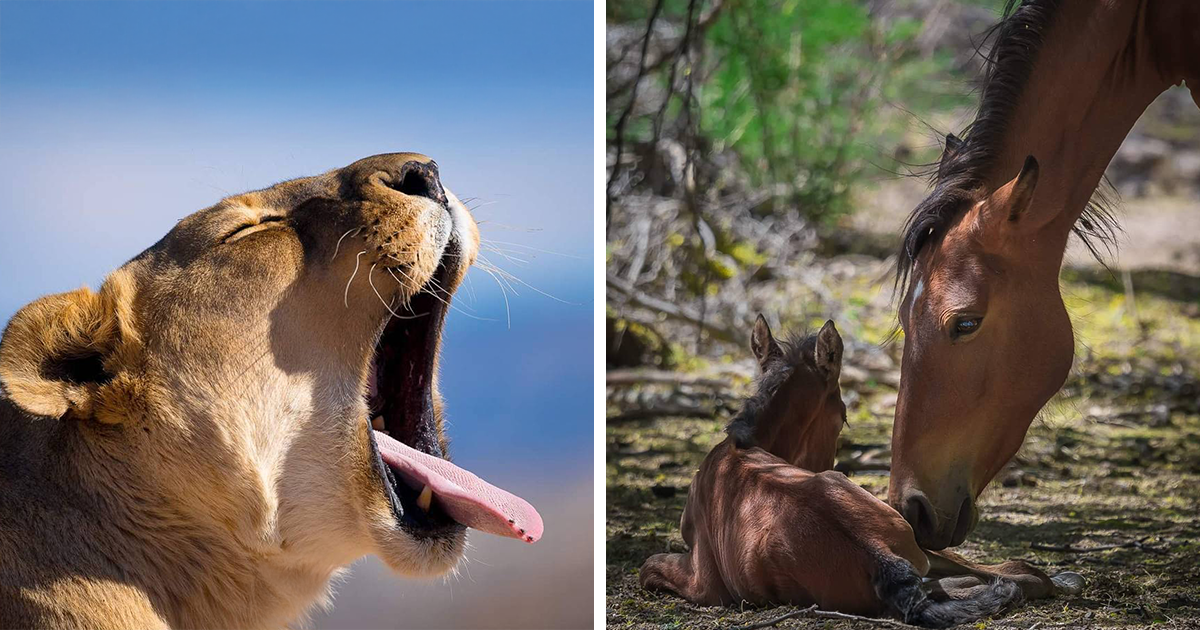
Nature does not do retakes. No makeup chair. No “let’s try that one again, but with better lighting.” That is exactly why the best wildlife photos feel so electric. A great image of an animal in the wild captures a moment that is raw, unpredictable, and gloriously uninterested in human schedules. One second, a fox is listening to the snow. The next, it is airborne like a fuzzy orange missile. One second, a whale is a dark shadow under the water. The next, it is exploding upward through a ring of bubbles with its mouth open like a living cave.
That kind of photography is more than pretty wallpaper for people who like trees and own at least one reusable water bottle. The strongest wildlife images reveal behavior, habitat, timing, survival, family bonds, and sometimes the uncomfortable truth that wild animals are dealing with a world increasingly shaped by people. In other words, these photos are not just beautiful. They are evidence. They show the drama, tenderness, weirdness, and resilience of animals as they actually live.
This collection-style article explores 26 incredible photo moments that showcase animals in the wild at their most honest. Some scenes are powerful, some funny, some quietly moving. Together, they remind us that the natural world is not staged for our entertainment. We are just lucky when we get to witness it.
Why Wild Animal Photos Hit So Hard
The best wildlife photography works because it freezes a split second most people would otherwise miss. A bird’s defensive posture. A predator’s patience. A sea otter mother grooming her pup. A crane mid-dance, looking like it accidentally joined a ballet company. Scientists and conservationists also rely on images from field photographers and camera traps because photos can document elusive species, capture natural behavior, and reveal how animals use landscapes with minimal disturbance.
Just as important, ethical wildlife photography keeps the wild in wildlife. The most respected guidance is simple: do not bait animals, do not crowd them, do not chase a “perfect shot,” and if your presence changes their behavior, you are too close. In other words, the goal is not to win a staring contest with a bear. The goal is to leave with a great image and the comforting knowledge that nobody, including the bear, had a terrible day.
26 Incredible Wildlife Photo Moments Worth Celebrating
1. A Fox Diving Headfirst Into Snow
A photo of a red fox mid-pounce is pure comedy and pure science at the same time. The body arches, the ears lock in, and suddenly the fox disappears nose-first into white powder in pursuit of hidden prey. It is the kind of image that looks ridiculous for half a second, then brilliant forever. Wild animals do not mind looking silly if dinner is involved.
2. A Snow Leopard Standing on a Wind-Shaved Ridge
Few animals photograph like the snow leopard because so much of its power lies in what is almost invisible. In a strong image, the cat seems to appear out of the mountain itself, perfectly built for steep, cold terrain. The photo tells a bigger story about camouflage, patience, and life in places that look breathtaking to us and exhausting to everyone else.
3. A Bald Eagle Snatching a Fish From the Surface
This is the classic action shot for a reason. Wings flared, talons extended, spray flying everywhere like the lake itself is applauding. A wild eagle photo works best when it captures both force and precision. It is not chaos. It is timing. The fish may disagree, but the composition is excellent.
4. Wolves Moving Single File Through Deep Winter
A photograph of wolves in snow often feels cinematic, but its real magic comes from social behavior. The line, the spacing, the direction, the shared focuseverything suggests coordination. A good photo here does not need snarling or drama. Quiet movement across a cold landscape can say more about a pack than any growl-filled cliché ever could.
5. A Humpback Whale Breaking Through a Bubble Net
One of the most jaw-dropping marine wildlife scenes is a humpback whale lunging through a circle of bubbles after corralling prey. The image is huge, explosive, and strangely elegant. It also reveals intelligence and coordinated feeding behavior. In the best versions of this shot, the ocean looks less like open water and more like a stage for one enormous, perfectly timed ambush.
6. A Great Gray Owl Hovering Over a Meadow
An owl photo can feel almost supernatural because the bird appears to float rather than fly. A great gray owl hovering above grass, listening for movement below, captures a hunter working with silence instead of speed. Feathers become engineering. Stillness becomes strategy. The result is part portrait, part suspense film.
7. A Sea Otter Mother Carrying Her Pup on Her Chest
Wildlife photography is not all teeth and talons. Some of the most unforgettable images are tender. A sea otter mother with a pup resting on her body while she grooms it is one of those moments. It is adorable, yes, but it is also survival. Grooming helps maintain the insulation and buoyancy that otters depend on. Cute, in this case, is doing serious work.
8. Sandhill Cranes Dancing in a Marsh
If you ever needed proof that birds can out-perform humans at ceremonial movement, here it is. Sandhill cranes leap, bow, toss vegetation, and spread their wings in courtship displays that are both elegant and delightfully theatrical. A great crane photo catches that exact instant when grace and absurdity shake hands and agree to be beautiful together.
9. Elephant Calves Running Under a Cloud of Dust
A photograph of young elephants charging after adults with oversized ears and zero concept of subtlety is pure joy. Dust hangs in the air, legs blur, trunks bounce, and the whole frame feels alive. Yet the image also hints at the importance of herd structure, learning, and protection in elephant societies. Chaos, yes. Meaningless chaos, absolutely not.
10. A Polar Bear Pausing on Sea Ice
In the strongest polar bear images, the animal is not always in motion. Sometimes the stillness says more. A lone bear on fractured ice can create an image that is powerful, haunting, and quietly political without needing a caption to shout. Habitat, scale, isolation, and climate pressure all sit inside one frame.
11. A Mountain Goat on a Cliff That Looks Impossible
Some photos make you question both physics and your own life choices. A mountain goat standing on a cliff the width of a sandwich board is one of them. The image showcases balance, hoof adaptation, and confidence that borders on rude. It is nature’s way of saying, “You needed hiking boots for that? Interesting.”
12. A Jaguar Emerging From Riverbank Shadows
A great jaguar photo is all mood. Shadow, muscle, amber eyes, and a body that looks like it was built by someone who took “stealth” personally. In the wild, jaguar images are compelling because they place the cat in habitat, not on a pedestal. Water, mud, reeds, and darkness all help tell the story.
13. A Murmuration of Birds Folding Across the Sky
Thousands of birds moving as one shape can feel almost abstract in a photograph, like smoke suddenly decided to organize itself. The best images of flocking behavior capture both pattern and scale. They remind us that collective behavior can look artistic from a distance while serving very practical functions up close.
14. A Dolphin Leaping at Dawn
A dolphin photo can be overdone if it feels like a postcard. But when it captures wild behavior in real habitat, it lands differently. Dawn light, ocean texture, a clean arc above the waterlinesuddenly the image becomes less about a trick and more about movement, timing, and life in a marine environment shaped by feeding, travel, and social interaction.
15. Monarch Butterflies Clustering During Migration
Not every incredible wildlife image needs claws. A tree filled with monarchs can look like a living stained-glass window, delicate until you remember the scale of the migration behind it. A good photo communicates both fragility and endurance. Small wings, long journey, zero complaints filed.
16. Salmon Leaping a River Barrier
This type of photo is all effort. Water rushes, bodies twist, and every fish seems to be attempting the world’s wettest obstacle course. It is dramatic, but more than that, it visually translates migration, instinct, and endurance. You can practically hear the splash and determination.
17. A Pronghorn Sprinting Across Open Grassland
Speed is hard to photograph well, which is why a sharp image of a pronghorn at full stride is such a win. The background blurs, the animal stays crisp, and the frame communicates the open-country design of a species built to move. It is a portrait of athleticism without any gym membership required.
18. Sea Lions Resting Between Bursts of Motion
Sometimes the best wildlife photos come from contrast. A group of sea lions piled together on rock, looking drowsy and oddly judgmental, can be just as memorable as an action shot. Then one lifts its head, another barks, and suddenly the scene becomes social, noisy, and layered with personality. Stillness in wildlife photography is never really empty.
19. A Chameleon or Octopus Vanishing Into Its Background
Camouflage photos are visual puzzles, and that is exactly the fun. The eye searches, adjusts, and then finally finds the animal. Whether it is a reef octopus shifting color and texture or a reptile blending into bark and leaves, the photo highlights one of nature’s greatest tricks: being present without being obvious.
20. Fireflies Flickering Over a Summer Field
A field full of fireflies is one of the gentlest wildlife spectacles on Earth, and a photograph that captures the glow without flattening the magic is worth celebrating. These images feel dreamlike, but they are rooted in behavior, seasonality, and communication. Nature’s tiniest light show still outperforms most party decorations.
21. A Grizzly Catching Salmon Mid-Splash
Here the frame is usually full of muscle, water, and concentration. A grizzly standing in a river is impressive enough. Add a flying fish and a spray of droplets lit like glass, and the image becomes unforgettable. It is the kind of shot that screams wilderness without actually needing to scream.
22. A Tiny Shorebird Defending Its Nest
Big-animal charisma gets plenty of attention, but small birds can deliver some of the boldest behavior. A shorebird puffing up, calling loudly, or feigning injury near a nest site makes for a compelling image because it reveals just how fierce vulnerability can be. Size and courage are clearly not reading from the same script.
23. Frogs Calling From a Rain-Filled Wetland
Wetland wildlife photography often shines when it leans into mood: reflective water, reeds, low light, and a frog caught mid-call. The open mouth and expanded throat sac transform a tiny amphibian into the loudest performer in the pond. It is funny, dramatic, and scientifically fascinating all at once.
24. Bison Moving Through a Summer Storm
A herd of bison under dark clouds can make a landscape feel ancient. The scale, the posture, the weather, the mass of the animalseverything adds weight. A strong photo here is not just about an iconic species. It is about place, weather, and the continuing presence of large wild grazers on North American grasslands.
25. Camera Trap Eyeshine in the Night
Some of the most powerful wildlife images are not polished at all. A camera trap photo of glowing eyes in the dark, maybe a leopard, fox, or deer passing through at 2:13 a.m., feels intimate because it was taken without human performance pressure. These images are quiet proof that wildlife lives full, complicated lives when nobody is clapping.
26. A Mother Bird Arriving at the Nest With Food
There is something timeless about a photo of an adult bird landing at a nest while chicks reach upward like impatient customers at a diner. The image is busy, tender, and deeply familiar. It also showcases one of the most essential stories in the wild: care, repetition, and the exhausting heroism of raising young.
What These Images Really Teach Us
Together, these wildlife photos do more than impress the eye. They reveal the core truth of unscripted nature: animals are not symbols first; they are living beings with behaviors shaped by habitat, season, hunger, competition, parenting, migration, and survival. The most meaningful images do not flatten wildlife into decoration. They show context.
They also remind us why ethical viewing matters. Wildlife experts consistently warn against getting too close, feeding animals, blocking their paths, or forcing a reaction for the camera. In many protected areas, viewers are expected to keep substantial distance from wildlife, especially from large mammals and predators. Telephoto lenses, patience, blinds, and camera traps are better tools than ego. If a photographer makes an animal flee, stare, vocalize in alarm, or abandon normal behavior, the shot has already cost too much.
And then there is the conservation angle. Photos can help the public care about species they may never see in person. A single image of a whale feeding, an owl hovering, or a pup depending on its mother can make science feel immediate. That matters. People protect what they can emotionally connect to, and wildlife photography is often the bridge between data and empathy.
A Longer Reflection on the Experience of Seeing Unscripted Nature
There is a particular feeling that comes with watching wildlife in real time, and the best photos somehow preserve it. It is not just excitement, though there is plenty of that. It is a mixture of suspense, humility, and gratitude. You notice it when a trail goes quiet and suddenly every sound matters. You notice it when everyone around you stops talking because a heron has landed, a fox has appeared at the edge of a field, or a distant splash hints that something enormous is moving just below the water.
The strange part is how quickly those moments rearrange your sense of scale. Human schedules start to feel silly. Emails become less dramatic. The animal is not performing for you, and that is exactly what makes the encounter feel real. A deer lifting its head from the brush is not trying to be majestic. A whale surfacing is not trying to be inspirational. A crane dancing in a marsh is not auditioning for applause. They are simply living, and that honesty is disarming in the best way.
People often assume the magic lies in the rarest sightings, but that is only half true. Yes, seeing a snow leopard or a jaguar would be unforgettable. But even common wildlife can feel extraordinary when you slow down enough to actually observe it. A gull timing the wind. A squirrel freezing with comic seriousness. Swallows cutting loops through evening light. Once attention sharpens, ordinary nature stops being ordinary. It becomes layered, precise, and unexpectedly moving.
That is one reason wildlife photography matters so much. It trains us to notice. A strong image says, “Look again.” It asks the viewer to recognize behavior rather than just species. Not merely a bird, but a bird defending a nest, courting a mate, feeding a chick, or navigating migration. Not merely a bear, but a bear fishing, teaching, resting, or reacting to habitat pressure. Photos turn split-second animal decisions into stories we can read.
There is also a quiet emotional lesson in these moments. Wild animals do not live curated lives. Their world includes risk, hunger, weather, noise, competition, tenderness, and astonishing resilience. When a photograph captures that honestly, it can feel more grounding than any motivational slogan ever printed on a coffee mug. The natural world is beautiful, but not because it is polished. It is beautiful because it is alive.
And perhaps that is the biggest gift of unscripted nature. It pulls us out of our own heads. For a moment, we stop narrating ourselves and start paying attention to something older and less self-conscious. A camera can preserve that flash of awareness, but even without one, the experience lingers. You remember the stillness before the motion. The sound before the sighting. The way an entire landscape seemed to hold its breath for one second. The best wildlife photos do not just show animals in the wild. They help us remember what it feels like to be fully present there, too.
Conclusion
Unscripted nature is powerful because it refuses to be polished. The 26 wildlife photo moments above show animals as they really are: resourceful, vulnerable, intelligent, funny, fierce, social, and deeply connected to the places they live. Whether the image features a whale feeding, a crane dancing, a fox hunting, or a bird delivering food to its young, the impact comes from authenticity. These are not staged scenes. They are glimpses into real lives unfolding in real habitats.
That is why the best wildlife photography stays with us. It offers beauty, yes, but also perspective. It reminds us to observe with patience, respect wild animals from a safe distance, and value the ecosystems that make such moments possible. In a noisy world, unscripted nature still knows how to stop us in our tracks.