
When investors saw the headline “Vanguard sells retirement accounts to Ascensus,” many did what responsible retirement savers do best: they opened seventeen browser tabs, checked three forums, and wondered whether their nest egg had just been shipped to a mysterious company in a cardboard box labeled “handle with compound interest.”
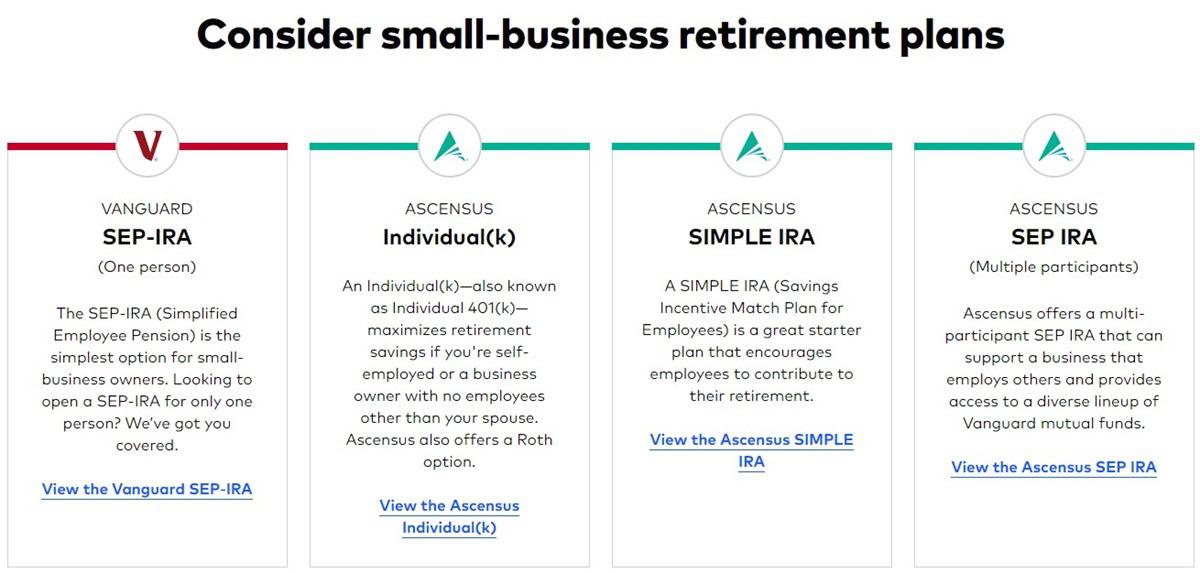
The good news is that the story is less dramatic than the headline. Vanguard did not sell every retirement account it touches. Your traditional IRA, Roth IRA, taxable brokerage account, workplace plan, or regular Vanguard mutual fund account was not automatically swept into a financial witness protection program. The transaction centered on a specific corner of the retirement world: Vanguard’s small-business retirement plan business, including Individual 401(k), Multiple Participant SEP, and SIMPLE IRA plans.
Still, the move matters. For solo entrepreneurs, freelancers, consultants, doctors, designers, family businesses, and tiny companies trying to do the responsible thing, a retirement plan is not just a tax form with a login screen. It is the structure that turns irregular business income into long-term financial security. So let’s unpack what happened, why Vanguard made the move, what Ascensus does, and what account holders should review before pretending the whole thing is “probably fine” and going back to ignoring quarterly statements.
What Actually Happened?
Vanguard agreed to sell its Individual 401(k), Multi-SEP, and SIMPLE IRA plan business to Ascensus, a large U.S. retirement administration company. In plain English, Ascensus took over the behind-the-scenes administration and servicing of these plans. That includes recordkeeping, client service, plan administration, tax reporting support, transaction processing, and other operational duties that make small-business retirement plans function without the owner needing a law degree, an actuarial calculator, and a calming herbal tea.
The key detail is this: the sale was about certain small-business retirement plans, not all Vanguard retirement accounts. Vanguard continued to offer other retirement solutions, and one-person SEP-IRAs for self-employed people without employees remained a separate Vanguard option. The acquired plans were folded into Ascensus’ retirement platform, while participants retained access to Vanguard mutual funds through Ascensus’ plan lineup.
That distinction is important for SEO, for investor sanity, and for avoiding Thanksgiving arguments with the cousin who read one headline and announced that “Vanguard sold everybody’s IRA.” No, cousin. Please pass the mashed potatoes.
Which Accounts Were Affected?
The affected plan types were aimed at small businesses and self-employed owners. These plans often look simple from the outside, but administratively they can be surprisingly fussy. A small employer may need plan documents, employee notices, eligibility tracking, contribution calculations, tax forms, and annual updates. That is not exactly beach reading.
Individual 401(k) Plans
An Individual 401(k), sometimes called a solo 401(k), is typically used by a self-employed person or business owner with no common-law employees other than a spouse. It can be powerful because the owner may contribute as both employee and employer. That combination can allow higher savings than a plain IRA, especially for profitable self-employed people.
Multiple Participant SEP Plans
A SEP-IRA, or Simplified Employee Pension IRA, lets an employer contribute to retirement accounts for eligible employees. Vanguard continued to offer one-person SEP-IRAs for certain self-employed owners, but multi-participant SEP arrangements were part of the Ascensus transaction. The difference between “one-person” and “multi-participant” is not a tiny footnote; it is the kind of footnote that determines where you log in and who handles administration.
SIMPLE IRA Plans
A SIMPLE IRA is generally designed for small employers that want a retirement plan without the full complexity of a traditional 401(k). It can be a practical starter plan for businesses with employees, but it still requires proper payroll handling, employee notices, contribution rules, and employer matching or nonelective contributions.
Why Would Vanguard Sell This Business?
Vanguard is famous for low-cost investing, index funds, and a long-standing culture of putting investor costs under a microscope. But low-cost investing and small-business retirement plan administration are not the same business. Running a mutual fund platform is one thing. Administering thousands of tiny retirement plans, each with its own participants, forms, elections, tax requirements, and service calls, is another.
The practical explanation is specialization. Small-business plans require operational scale and administrative focus. Ascensus already operates heavily in retirement plan recordkeeping, third-party administration, education savings, and tax-advantaged account services. Vanguard’s message was essentially that clients in these particular plans may be better served by a provider whose core business is plan administration.
That does not mean every account holder applauded. Investors tend to like stability. Retirement account holders like stability with a side of “please do not change my login during tax season.” A provider transition can create anxiety even when the money remains invested and the plan continues. Account holders naturally worry about fees, service quality, investment menu changes, paperwork, Roth contribution access, loan rules, and whether the new platform will feel like a modern dashboard or a filing cabinet with Wi-Fi.
Who Is Ascensus?
Ascensus is not a brand that every household knows, but in the retirement administration world it is a major player. The company provides recordkeeping, administration, and technology services for retirement, college savings, and other tax-advantaged programs. In this transaction, Ascensus became the administrator and service provider for the acquired Vanguard small-business plans.
For account holders, the practical takeaway is simple: Ascensus is the new operational home for the affected plans. The Vanguard name may still appear in the investment lineup because the plans feature Vanguard mutual funds, but plan administration runs through Ascensus. Think of it like moving from one apartment building to another while keeping the same furniture. Your couch is still your couch, but the front desk, mailroom, elevator rules, and maintenance number may be different.
Did Investors Lose Access to Vanguard Funds?
One of the biggest concerns was whether plan participants would be forced out of Vanguard investments. Based on public information from Ascensus and Vanguard-related plan materials, affected participants retained access to a lineup of Vanguard mutual funds through the Ascensus platform.
That matters because many small-business owners chose Vanguard in the first place for its low-cost funds. If a self-employed consultant built a simple portfolio using Vanguard target-date funds or broad index funds, the biggest concern was not necessarily the fund lineup. The bigger question was whether the platform, fees, service model, and plan features would still fit the owner’s needs.
Investors should still review their actual plan documents and current investment menu. Retirement platforms can update available funds, share classes, fees, and administrative terms over time. “Still has Vanguard funds” is comforting, but it is not a substitute for reading the current fee schedule. Yes, reading fee schedules is less fun than watching paint dry, but paint does not quietly nibble at your retirement return.
What Changed for Account Holders?
The most visible changes for many users were operational. Account holders needed to use Ascensus systems for plan access, service, administration, and certain transactions. Some plan sponsors also had to become familiar with Ascensus’ employer portal and participant login process.
Fees became a major topic of discussion because a low-cost plan can feel different once recordkeeping and custodial costs are listed in a new format. Current Ascensus materials for Individual(k) plans featuring Vanguard investments show a quarterly recordkeeping fee per participant and an annual custodial and trading fee assessed on a limited asset base. Because pricing can change, account holders should confirm their own plan’s fee schedule directly through the platform or plan documents.
Plan features also deserve attention. An Individual 401(k) may allow pre-tax and Roth employee contributions, but loans may not be available under the Ascensus Individual(k) plan featuring Vanguard investments. Withdrawal rules, hardship access, plan termination procedures, and annual filing support can vary by plan terms. The boring plan document is where the interesting details hide.
What Should Small-Business Owners Do Now?
If your plan moved from Vanguard to Ascensus, the first step is not panic. Panic is rarely a retirement strategy, although it does produce excellent cardio. Instead, gather your plan documents, log in to the Ascensus portal, and verify the basics.
1. Confirm Your Plan Type
Make sure you know whether you have an Individual 401(k), SIMPLE IRA, multi-participant SEP, or one-person SEP-IRA. The plan type determines contribution rules, employee coverage rules, reporting requirements, deadlines, and available features.
2. Review Fees
Look for recordkeeping fees, participant fees, custodial fees, trading costs, fund expense ratios, and any plan termination or transfer charges. A low expense ratio is wonderful, but it is only one part of the total cost. The best retirement plan is not always the cheapest one, but nobody wants to pay extra for confusion with a password reset button.
3. Check Investment Options
Compare the current lineup with your existing allocation. If you previously used a specific Vanguard target-date fund, total stock market fund, bond fund, or balanced fund, confirm it remains available and review whether the ticker, share class, or expense ratio changed.
4. Confirm Contribution Features
For Individual 401(k) users, verify whether the plan supports pre-tax contributions, Roth contributions, employer profit-sharing contributions, and catch-up contributions if applicable. For SIMPLE IRA users, confirm employee salary deferral procedures and employer contribution obligations.
5. Watch Reporting Requirements
Solo 401(k) owners should pay special attention to Form 5500-EZ filing rules once plan assets reach the applicable threshold. The plan administrator may provide support materials, but the responsibility often remains with the business owner. Translation: “I did not know” is not a magical IRS invisibility cloak.
Should You Stay With Ascensus or Move Elsewhere?
There is no universal answer. Some account holders may be perfectly satisfied staying with Ascensus, especially if they value access to Vanguard funds, do not need exotic features, and prefer a provider focused on retirement plan administration. Others may compare alternatives such as Fidelity, Schwab, E*TRADE, Employee Fiduciary, a local third-party administrator, or a self-directed solo 401(k) provider.
The right choice depends on your business structure, employee situation, desired investments, Roth needs, loan needs, plan balance, willingness to handle administration, and tolerance for paperwork. A freelance writer with no employees and a simple index-fund strategy may have different priorities from a high-income physician seeking advanced Roth strategies or a small employer with staff eligibility questions.
Before moving a plan, understand the difference between transferring assets, terminating a plan, restating a plan, and rolling money into another retirement account. These are not interchangeable actions. A poorly handled move can create tax headaches, reporting issues, or accidental loss of plan features. When in doubt, consult a qualified tax advisor, financial planner, or retirement plan professional who understands small-business plans.
What This Deal Says About the Retirement Industry
The Vanguard-Ascensus transaction reflects a larger trend: retirement administration is becoming more specialized. Investors want low costs, digital tools, personalized service, Roth options, automatic features, clean tax reporting, and compliance support. Small-business owners want all of that while also running payroll, finding customers, paying invoices, replacing the office printer, and pretending they know where the W-9 folder went.
At the same time, federal and state policy has pushed more small employers toward retirement plan coverage. SECURE 2.0 expanded credits and options for small employers, while many states have launched or expanded retirement savings mandates. That means the small-business retirement market is growing, but it is also getting more complex. Providers with administration scale may have an advantage.
For Vanguard, exiting these plan lines may allow it to focus on core investing services and other retirement solutions. For Ascensus, the acquisition expanded its reach in small-business plans and gave it a larger base of customers who already value Vanguard investments. For plan sponsors, the deal created one big homework assignment: understand what changed, what did not, and whether the new arrangement still fits.
Common Misunderstandings About the Vanguard-Ascensus Move
“Vanguard Sold All Retirement Accounts”
No. The transaction involved specific small-business plan lines. It did not mean every Vanguard IRA, Roth IRA, 401(k), or brokerage retirement account was sold to Ascensus.
“My Investments Automatically Changed”
Not necessarily. Many affected plans retained access to Vanguard mutual funds through Ascensus. However, every investor should check the actual current lineup and account holdings.
“Ascensus Is a New Tiny Company”
No. Ascensus is a large retirement and tax-advantaged savings administrator. It may be less familiar to retail investors than Vanguard, but it is well known in plan administration.
“I Must Immediately Transfer Everything”
Not necessarily. Moving a retirement plan can be appropriate, but it should be deliberate. Compare fees, features, service, investment choices, and administrative obligations before making a move.
Experience Section: What the Transition Felt Like for Real Small-Business Owners
For many affected investors, the Vanguard-to-Ascensus transition felt less like a dramatic financial event and more like a surprise software migration. The money was still retirement money. The funds were often still Vanguard funds. But the experience changed because the daily relationship moved from a familiar retail investing brand to a specialized plan administration platform.
Imagine a self-employed graphic designer who opened a Vanguard Individual 401(k) years ago because it seemed clean, low-cost, and easy enough. She contributed when cash flow allowed, used a target-date fund, and logged in a few times per year. After the transition, her biggest task was not rebuilding her portfolio. It was learning where to log in, how to view employer and employee contribution categories, and how to download the right tax records. The investing part was still simple. The administrative part became the main character.
Now picture a married couple running a small consulting business. Both spouses participate in the plan. For them, the move raised questions about participant fees, Roth contributions, and whether their previous contribution rhythm still worked. They did not want to become retirement-plan hobbyists. They wanted to save aggressively, keep costs reasonable, and avoid accidentally doing something weird with payroll. Their best move was to create a checklist: confirm plan adoption documents, verify investment lineup, check contribution limits, review fees, and save year-end statements in one folder.
For a small employer with a SIMPLE IRA, the experience could be different. The owner may care less about investment theory and more about whether employees can enroll easily, whether payroll contributions flow correctly, and whether the employer match is documented. In that situation, Ascensus’ specialization may be useful, but only if the employer takes time to understand the service model. A retirement plan is an employee benefit, not a decorative plant. It needs watering.
The emotional experience also matters. Vanguard built a lot of loyalty among do-it-yourself investors. People trusted the brand because it was associated with low costs, index investing, and investor-first messaging. When a trusted provider says, “Your plan is moving,” even a perfectly rational person may hear, “Please enjoy this unexpected financial side quest.” That is normal. Retirement savers are allowed to be skeptical. Skepticism is not panic; it is due diligence wearing sensible shoes.
The best experience stories share one pattern: the investors who handled the move calmly treated it as a review opportunity. They did not assume the change was terrible, and they did not assume it was irrelevant. They checked fees, verified contributions, reviewed plan features, saved documents, and compared alternatives. Some stayed. Some moved. The winners were not necessarily the ones who found the absolute cheapest provider; they were the ones who understood their plan well enough to make an informed decision.
Final Thoughts
The headline “Vanguard sells retirement accounts to Ascensus” sounds bigger and scarier than the underlying transaction. Vanguard sold a specific small-business retirement plan business, not its entire retirement empire. Ascensus took over administration for Individual 401(k), Multi-SEP, and SIMPLE IRA plans, while Vanguard funds remained available through the Ascensus platform for these plans.
For affected investors, the smartest response is practical: confirm your plan type, review fees, check your investment lineup, understand contribution and reporting rules, and compare alternatives only after you know what you have. Retirement planning rewards calm attention. It does not require panic, rumors, or a spreadsheet named “DOOM_final_v7.xlsx.”
Note: This article is for educational and informational purposes only. It is not tax, legal, investment, or retirement plan advice. Small-business owners should review official plan documents and consult qualified professionals before changing, transferring, terminating, or restating a retirement plan.












