
Looking for a full-body workout that feels less like punishment and more like sneaking fitness into a mini-vacation? Water exercises may be your new favorite way to move. Whether you are following a video on water exercises for your entire body, joining a pool class, or building your own routine in the shallow end, aquatic workouts can help train your arms, legs, core, balance, and cardiovascular system without the heavy pounding that comes with many land-based workouts.
That does not mean water exercise is “easy.” Water is sneaky. It supports your body while also pushing back against every movement you make. Lift your knee, press your arms forward, jog in place, or kick behind you, and the pool quietly says, “Cute. Now try that against resistance.” This is why water aerobics, pool walking, aqua jogging, swimming drills, and aquatic strength exercises are useful for beginners, active adults, older adults, and anyone who wants a joint-friendly workout with a surprisingly serious fitness payoff.
This guide breaks down how to use a video-style water workout for your whole body, which exercises to include, how to modify the moves, and how to make each session safe, effective, and enjoyable. No fancy pool choreography required. If you can walk, lift your arms, and occasionally laugh at yourself when water splashes your face, you are qualified.
Why Water Exercises Work So Well for the Entire Body
Water exercise is popular because it gives you two helpful things at once: support and resistance. The buoyancy of water reduces some of the pressure on joints, while the natural drag of water makes muscles work harder as you move. That combination is especially helpful for people who want low-impact exercise but still want to build strength, improve endurance, and feel like they actually did something besides gently bob around like a pool noodle with goals.
A full-body water workout can include aerobic exercise, strength training, flexibility, coordination, and balance practice. In one session, you can move your legs with water walking, train your arms with underwater pushes and pulls, challenge your core with knee lifts and standing twists, and improve balance with single-leg movements. Because the pool slows everything down, many people also feel more confident practicing movements they might avoid on land.
What Makes a Good Water Exercise Video?
A helpful video on water exercises for your entire body should be clear, safe, and easy to follow. The instructor should demonstrate each movement slowly before increasing the pace. Good videos usually include a warm-up, a main workout, a cool-down, and modifications for different fitness levels. Bonus points if the instructor explains where you should feel the exercise, how to keep posture tall, and when to reduce intensity.
Watch for practical cues such as “keep your shoulders relaxed,” “brace your core,” “land softly,” “move through the water with control,” and “slow down if your form changes.” A water workout does not need to look like an Olympic training montage. In fact, if the video makes you feel like you need a synchronized swimming background and three backup dolphins, pick a simpler one.
Before You Start: Simple Safety Tips
Start in water that is about waist- to chest-deep. This depth gives enough resistance for exercise while allowing most people to stand comfortably. Wear water shoes if the pool floor is slippery. Keep drinking water nearby because, yes, you can sweat in a pool even if your body tries to keep it mysterious. If you are new to exercise, pregnant, recovering from injury, managing a health condition, or dealing with pain, check with a qualified healthcare professional before starting a new routine.
Use the “talk test” as a simple intensity guide. During moderate exercise, you should be able to talk but not sing. If you are gasping, dizzy, or feeling pain beyond normal muscle effort, slow down or stop. Water can make exercise feel easier in the moment, but your muscles may politely send a complaint letter later.
A Full-Body Water Exercise Routine to Follow With a Video
The following routine works well as a 25- to 35-minute pool workout. It is designed to match the structure of a video on water exercises for your entire body, so you can imagine each section as a guided segment. Move at a comfortable pace, focus on good form, and rest as needed.
1. Warm-Up: Water Walking
Begin with five minutes of water walking. Walk forward across the shallow end, then backward, then side to side. Swing your arms naturally under the water. Keep your chest lifted, shoulders relaxed, and feet landing flat. This raises your heart rate gradually and prepares your joints and muscles for more movement.
To make it easier, slow your pace and shorten your steps. To make it harder, pump your arms more strongly or lift your knees higher. Think of it as marching with purpose, not wandering around the pool searching for your missing flip-flop.
2. Aqua Jogging
Jog in place or move across the pool for two to three minutes. Keep your core engaged and your arms moving like you would during a light run. Aqua jogging trains the legs, hips, arms, and cardiovascular system without the same impact as running on pavement.
If you are in deeper water, use a flotation belt and maintain an upright posture. Avoid leaning too far forward. Your goal is controlled movement, not recreating a cartoon character sprinting in midair.
3. High Knees With Arm Presses
Stand tall and lift one knee toward hip height while pressing both hands down through the water. Alternate sides for one to two minutes. This move targets the hip flexors, thighs, shoulders, arms, and core. The downward arm press adds resistance for the upper body while the knee lift challenges balance.
For a beginner-friendly version, keep the knee lower and perform the arm press slowly. For more intensity, increase the speed while keeping your posture steady.
4. Side Steps With Wide Arm Sweeps
Step to the right, bring your left foot in, then continue for several steps before switching directions. As you step, sweep your arms out and in under the water. This movement works the outer hips, inner thighs, chest, back, and shoulders.
Move with control instead of letting the water throw your arms around like inflatable tube men outside a car dealership. The resistance is most useful when you push and pull intentionally.
5. Pool Squats
Stand with feet about shoulder-width apart. Bend your knees and hips as if sitting back into a chair, then press through your feet to stand. Perform 10 to 15 repetitions. Pool squats strengthen the thighs, glutes, and core. The water helps support your body, which can make the movement feel more comfortable than land squats for some people.
Keep your knees tracking in the same direction as your toes. Avoid collapsing inward or bouncing at the bottom. If you need support, hold the pool wall lightly.
6. Standing Leg Kicks
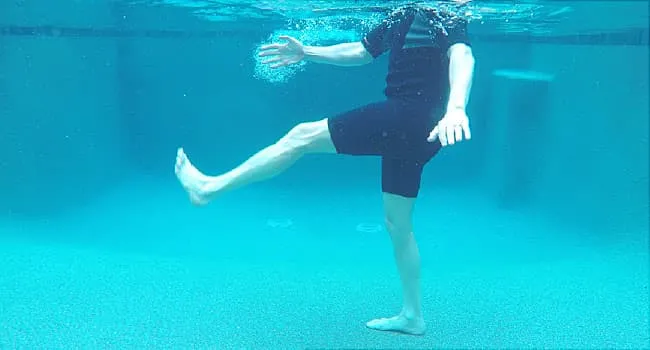
Hold the pool wall or stand freely if your balance is strong. Kick one leg forward, return to center, then kick to the side, return, and kick backward. Repeat 8 to 12 times on each leg. This exercise trains the hips, thighs, glutes, and core while improving mobility.
Keep the movement smooth. Bigger is not always better. A smaller controlled kick beats a wild splashy kick that scares nearby swimmers and possibly one lifeguard.
7. Underwater Chest Press
Stand with your hands near your chest, palms facing forward. Push both arms straight out in front of you, then pull them back. Repeat for 12 to 15 repetitions. This simple move works the chest, shoulders, arms, and upper back. You can increase resistance by opening your fingers less, using webbed gloves, or moving more slowly with stronger pressure.
Keep your ribs stacked over your hips and avoid shrugging your shoulders. The goal is strength, not neck tension with a side of regret.
8. Arm Circles and Figure Eights
Extend your arms under the water and make small circles for 30 seconds, then reverse direction. Next, draw figure eights with your hands for another 30 seconds. These movements challenge the shoulders, arms, chest, back, and core stabilizers.
Because water resists movement in every direction, even small circles can become surprisingly spicy. If your shoulders feel strained, reduce the range of motion.
9. Standing Core Twists
Stand with feet hip-width apart and knees slightly bent. Hold your arms in front of your body under the water. Rotate your torso gently from side to side for one minute. This trains the obliques, deep core muscles, and spine mobility.
Move from your torso, not just your arms. Keep the hips relatively stable. Imagine your upper body turning like a lighthouse, not a shopping cart with one bad wheel.
10. Pool Plank at the Wall
Place your hands on the pool wall or edge. Step your feet back until your body forms a long diagonal line. Hold for 20 to 40 seconds while tightening your core and keeping your shoulders away from your ears. This is a beginner-friendly way to train the abs, shoulders, chest, and back.
For a harder version, perform slow knee drives toward your chest while maintaining the plank position. For an easier version, stand closer to the wall.
11. Jumping Jacks or Step Jacks
Perform water jumping jacks for one minute. If jumping feels uncomfortable, do step jacks: step one foot out to the side while opening the arms, then return to center and alternate sides. This move raises the heart rate while training the shoulders, hips, thighs, and calves.
The water slows the movement, which can make jacks feel smoother and more controlled than on land. Still, keep your knees soft and land gently.
12. Cool-Down and Stretching
Finish with three to five minutes of easy walking, gentle arm swings, calf stretches, chest opening, and slow breathing. Stretch the thighs, hips, shoulders, and back. Cooling down helps your body transition from workout mode to “I am now a calm aquatic creature” mode.
How Often Should You Do Water Exercises?
For general fitness, many adults aim for a weekly mix of aerobic activity and muscle-strengthening exercise. Water workouts can contribute to both. A practical starting point is two or three pool sessions per week, especially if you are new to exercise. Each session can last 20 to 40 minutes depending on your current fitness, comfort level, and schedule.
If your goal is better endurance, include more continuous movement such as water walking, aqua jogging, lap swimming, or water aerobics intervals. If your goal is strength, emphasize slower resistance movements, larger arm pushes, leg kicks, squats, and equipment such as foam dumbbells or resistance gloves. If your goal is balance and mobility, add controlled single-leg moves, side steps, core rotations, and gentle range-of-motion exercises.
Best Equipment for Water Exercises
You do not need much equipment to get started. A swimsuit that stays put is already a victory. Water shoes can improve traction. Foam dumbbells add resistance for arm movements. A kickboard can support balance drills or leg exercises. Webbed gloves increase drag during arm pushes and pulls. A flotation belt helps with deep-water jogging.
Start simple. Buying every aquatic fitness accessory at once may make you look prepared, but it can also make you resemble a very determined pool store display. Add equipment only when you understand your routine and want a new challenge.
Who Can Benefit From Full-Body Water Workouts?
Water exercise can be useful for many fitness levels. Beginners often like it because the movements are approachable and low impact. Older adults may appreciate the balance support and joint-friendly environment. People returning to exercise after time away may find the pool less intimidating than a gym floor. Athletes can use aquatic workouts for cross-training or recovery days. Office workers with stiff hips and tight shoulders may enjoy the mobility benefits.
That said, water workouts are not automatically right for everyone. People with certain medical conditions, open wounds, uncontrolled symptoms, or high fall risk should get individualized guidance. Safety matters more than finishing every rep in a video.
Common Mistakes to Avoid
The first mistake is moving too fast with sloppy form. Water makes movement feel playful, but your joints and muscles still need alignment. The second mistake is skipping the warm-up. Cold muscles do not become heroic just because they are wet. The third mistake is forgetting hydration. Pool workouts can be sweaty, even when sweat is hard to notice.
Another common mistake is doing only leg exercises. A true full-body water workout should include arms, back, chest, core, hips, and balance. Finally, avoid comparing your pace with someone else’s. In water fitness, progress is personal. Your neighbor may be doing turbo frog jumps while you are perfecting water walking. Both count.
How to Make a Water Exercise Video More Effective
Before pressing play, preview the workout. Make sure the instructor uses clear cues and offers modifications. Set your space near the pool wall if you want extra balance support. Keep any equipment within reach. During the video, focus on posture first and speed second. If you cannot maintain form, reduce the range of motion or slow down.
You can also use intervals. For example, perform 40 seconds of work followed by 20 seconds of easy movement. Repeat this pattern with water jogging, arm presses, squats, kicks, and core twists. Intervals make the workout organized and prevent the classic pool problem of accidentally turning exercise time into casual floating time.
Sample 30-Minute Full-Body Water Workout
Here is a simple plan you can follow while watching or filming a video on water exercises for your entire body:
- Minutes 0–5: Water walking forward, backward, and sideways
- Minutes 5–8: Aqua jogging or marching with arm swings
- Minutes 8–12: High knees, side steps, and step jacks
- Minutes 12–18: Pool squats, leg kicks, and wall-supported lunges
- Minutes 18–24: Chest presses, arm circles, and figure eights
- Minutes 24–27: Core twists and wall planks
- Minutes 27–30: Easy walking and stretching
This structure trains the whole body without making the routine complicated. As you improve, repeat the main circuit twice, add equipment, or increase the work intervals.
Conclusion: A Pool Workout That Actually Pulls Its Weight
A video on water exercises for your entire body can be more than a light splash session. Done well, it becomes a practical, joint-friendly, full-body workout that builds cardiovascular fitness, muscle endurance, balance, and mobility. The pool supports your body, but it also challenges every movement with natural resistance. That is the magic: water makes exercise feel gentler while still making your muscles show up for work.
Start with simple moves such as water walking, aqua jogging, squats, arm presses, kicks, and core twists. Use good posture, warm up properly, drink water, and choose intensity based on your fitness level. Whether you are exercising for health, strength, mobility, or simply because land workouts have been giving you attitude, aquatic exercise is a smart and enjoyable option. Plus, it is one of the few workouts where splashing counts as atmosphere.
Personal Experience: What It Feels Like to Do Water Exercises for Your Entire Body
The first thing many people notice during a full-body water workout is how friendly it feels at the beginning. You step into the pool, the water supports your body, and you think, “This is pleasant. I am basically exercising inside a giant refreshing hug.” Then the instructor asks you to jog in place, press your arms through the water, lift your knees, kick backward, and perform squats. Suddenly, the refreshing hug has opinions.
One of the best experiences with water exercise is the way it reduces fear around movement. On land, a squat may feel intimidating if your knees are sensitive. In the pool, the water gives support, and the movement often feels more manageable. You can focus on alignment instead of worrying about impact. Side steps feel smoother. Marching feels lighter. Balance drills feel less scary because the pool wall is nearby and the water slows quick movements.
Another memorable part is how sneaky the resistance can be. During arm circles, the first 10 seconds feel almost too easy. By 30 seconds, your shoulders begin filing paperwork. By 45 seconds, you understand why aquatic instructors smile so calmly; they know the water is doing half the coaching. The same thing happens with chest presses and figure eights. There are no metal weights, no machines, no dramatic clanking sounds, yet the muscles are clearly working.
Water workouts also make cardio feel different. Aqua jogging raises the heart rate, but the lack of pounding can make it feel less harsh than running on a hard surface. You can move continuously, breathe rhythmically, and adjust speed quickly. If you need a break, you slow to a walk. If you want more challenge, you drive the knees higher or push the arms harder. The pool gives you an easy intensity dial.
The social side is another bonus. In a class or video-following group, nobody looks perfectly graceful all the time. Someone moves left when everyone else moves right. Someone’s foam dumbbell escapes. Someone splashes dramatically during a move that was supposed to be “controlled.” This makes the atmosphere relaxed and human. Fitness becomes less about looking impressive and more about showing up, moving well, and leaving with more energy than you came in with.
After a good full-body water workout, the body often feels pleasantly worked rather than beaten up. The legs feel awake from squats, kicks, and jogging. The arms feel trained from pushing and pulling against the water. The core feels engaged from twists, knee lifts, and balance work. You may not notice how much effort you used until you climb out of the pool and gravity returns like an unpaid bill.
The biggest lesson from water exercise is that effective workouts do not have to be loud, extreme, or miserable. A pool session can be fun, gentle on the joints, and still serious enough to improve fitness. The key is consistency. Follow a well-structured video, repeat the routine two or three times per week, increase difficulty gradually, and pay attention to how your body responds. Over time, those simple pool moves can build real strength, better stamina, and more confidence in movement.
Note: This article is written for general educational and fitness content purposes. Readers with medical conditions, injuries, pregnancy, dizziness, chest discomfort, or unusual pain should seek personalized guidance from a qualified healthcare professional before beginning aquatic exercise.














