
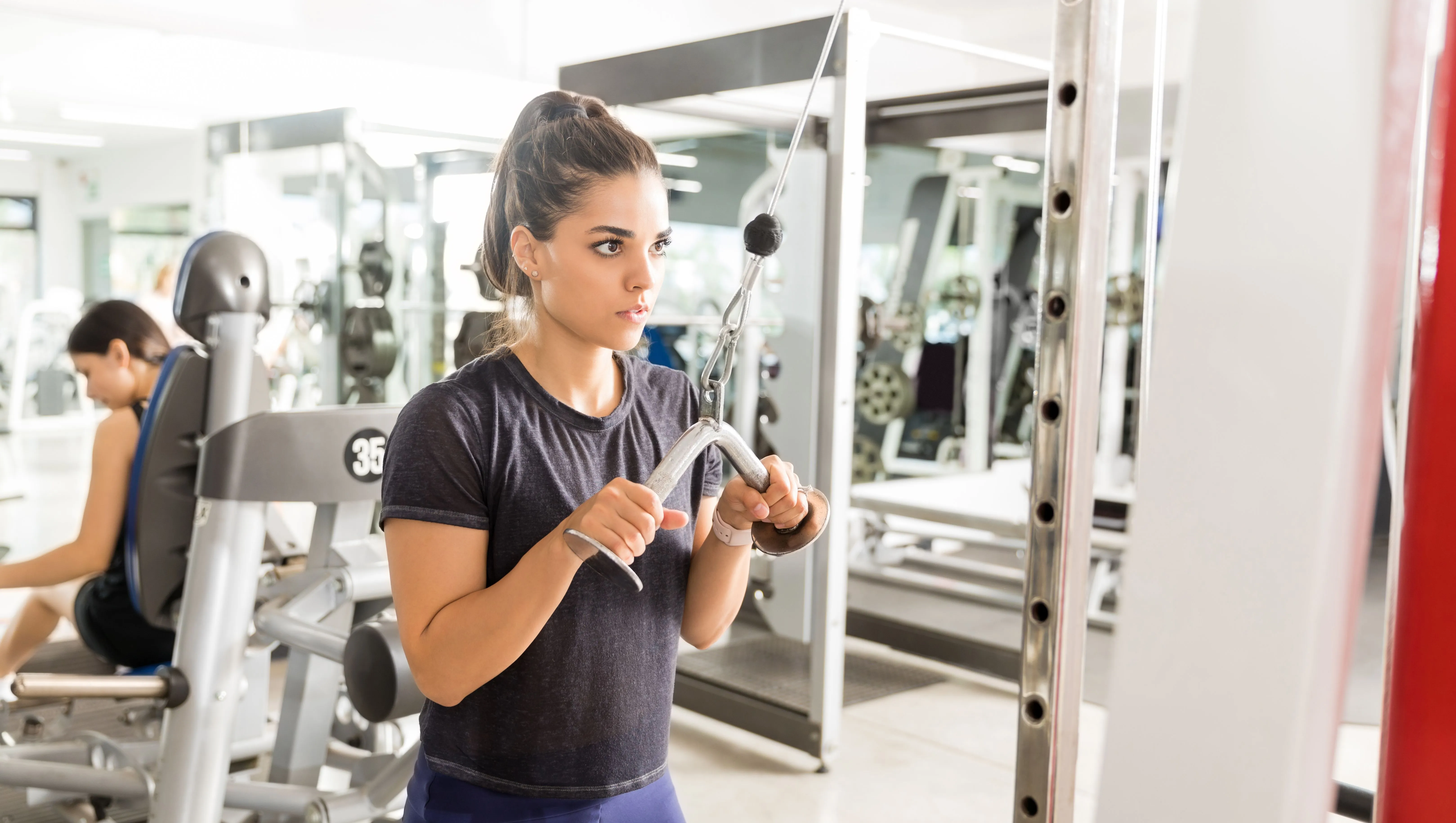
Walk into a gym for the first time and the arm machines can look like a friendly robot convention: cables dangling, pads everywhere, handles pointing in mysterious directions, and at least one machine that seems designed by someone who really, really loved levers. The good news? You do not need to use every machine in the building to build stronger arms. You just need to understand which exercise machines for arms actually target your biceps, triceps, forearms, shoulders, and supporting upper-body muscles effectively.
The best arm workout machines are usually the ones that let you train with control, adjust resistance safely, and feel the target muscles working without turning the exercise into a circus act. For most people, that means a smart mix of cable machines, assisted pull-up and dip machines, preacher curl machines, triceps extension machines, rowing machines, lat pulldown stations, and a few upper-body press or pull machines.
This guide breaks down the best exercise machines for arms, how they work, who they are best for, and how to use them without accidentally training your ego more than your muscles. Spoiler: your ego has terrible form.
What Makes an Exercise Machine Good for Arms?
A great arm machine does more than make your sleeves feel dramatic. It should help you train the major arm muscles through a useful range of motion while keeping your joints in a comfortable position. Your arms are not just “biceps in front, triceps in back.” They are part of a larger system that includes shoulders, upper back, chest, wrists, grip, and core stability.
The Main Arm Muscles to Train
When choosing the best gym machines for arms, think about these muscle groups:
- Biceps: The front of the upper arm, trained with curls, pulling motions, and supinated-grip exercises.
- Triceps: The back of the upper arm, trained with pushing, pressing, dips, and extension movements.
- Forearms: Important for grip, wrist control, pulling strength, and carrying strength.
- Shoulders: Not technically “arms,” but they shape arm appearance and support pressing and pulling movements.
- Upper back and chest: These muscles assist arm exercises and help you move more weight safely.
For balanced arm development, do not only curl until your elbows file a complaint. Train both biceps and triceps, include pulling and pushing machines, and add grip-friendly movements. The triceps make up a large part of the upper arm, so if your goal is stronger, more defined arms, triceps work deserves prime real estate in your routine.
Quick Answer: The Best Exercise Machines for Arms
If you want the short list before the deep dive, these are the most useful arm exercise machines for most gym-goers:
| Machine | Best For | Main Muscles Worked |
|---|---|---|
| Cable Machine | All-around arm training | Biceps, triceps, shoulders, forearms |
| Assisted Pull-Up/Dip Machine | Building pulling and pushing strength | Biceps, triceps, back, chest |
| Preacher Curl Machine | Biceps isolation | Biceps, brachialis |
| Triceps Extension Machine | Triceps isolation | Triceps |
| Lat Pulldown Machine | Biceps and back strength | Lats, biceps, forearms |
| Seated Row Machine | Pulling power and posture | Back, biceps, rear shoulders |
| Rowing Machine | Arm endurance and full-body conditioning | Arms, back, legs, core |
| Shoulder Press Machine | Upper-arm support and shoulder strength | Shoulders, triceps |
1. Cable Machine: The Best Overall Arm Exercise Machine
If the gym had a “most likely to succeed” award for arm machines, the cable machine would walk away with a tiny trophy and probably a rope attachment. A cable machine is one of the best exercise machines for arms because it allows constant tension throughout the movement. Unlike some free-weight exercises where tension changes depending on gravity and joint angle, cables can keep your muscles working from start to finish.
You can use a cable machine for biceps curls, triceps pushdowns, overhead triceps extensions, single-arm curls, reverse curls, face pulls, lateral raises, and even forearm-focused movements. That makes it useful for beginners, intermediate lifters, and experienced gym regulars who already know their way around a weight stack.
Best Cable Exercises for Arms
- Cable biceps curl: Great for steady biceps tension.
- Rope triceps pushdown: Excellent for targeting the triceps with a joint-friendly grip.
- Overhead cable triceps extension: Helps train the long head of the triceps.
- Single-arm cable curl: Useful for fixing left-right strength differences.
- Reverse cable curl: Targets the brachialis and forearms.
Form tip: keep your elbows mostly still. If your elbows are swinging like a jazz drummer, the weight is probably too heavy. Reduce the load, control the movement, and let the target muscle do the job.
2. Assisted Pull-Up and Dip Machine: Best for Functional Arm Strength
The assisted pull-up and dip machine is one of the most underrated machines for arms because it helps you train two powerful movement patterns: pulling and pushing. Pull-ups involve the biceps, forearms, and back. Dips heavily involve the triceps, chest, and shoulders. Together, they create a strong upper-body foundation.
The “assisted” part is what makes the machine friendly. Instead of lifting your entire body weight, you select assistance that reduces the load. More assistance makes the exercise easier; less assistance makes it harder. Yes, it feels backwards at first. Gym machines do enjoy keeping us humble.
Why It Works
This machine is great for people who want stronger arms but also want strength that carries over to real-world movement. Pulling yourself upward and pressing yourself out of a dip are compound movements, meaning several muscles work together. That usually makes them more efficient than isolation exercises alone.
For arm growth, use controlled reps. On assisted pull-ups, avoid shrugging your shoulders toward your ears. On assisted dips, keep the shoulders comfortable and do not sink too low if it causes joint discomfort.
3. Preacher Curl Machine: Best for Biceps Isolation
The preacher curl machine is the machine that says, “No cheating, please.” Because your upper arms rest against a pad, it limits momentum and helps isolate the biceps. This makes it one of the best biceps machines for people who tend to turn every curl into a full-body dance routine.
Preacher curls are especially helpful because they support the upper arms and encourage a consistent path. The machine version also provides a predictable resistance pattern, which can feel smoother than using a barbell or dumbbells.
How to Use It Well
Adjust the seat so your upper arms rest comfortably on the pad and your armpits are close to the top edge. Curl the handles upward without lifting your chest off the pad. Lower slowly until your arms are extended but not aggressively locked out. Think “controlled stretch,” not “elbow audition for a horror movie.”
Use this machine after bigger pulling exercises like lat pulldowns or rows, or as a focused biceps finisher near the end of an arm workout.
4. Triceps Extension Machine: Best for Targeting the Back of the Arms
If your goal is stronger, firmer-looking upper arms, the triceps extension machine deserves your attention. The triceps are responsible for extending the elbow, and they play a major role in pressing movements. A triceps extension machine lets you train that motion in a controlled way.
This machine usually has a seat, arm pad, and handles that you push downward or forward depending on the design. It is a great option for people who struggle to feel their triceps during pushdowns or close-grip pressing.
Common Mistake
The biggest mistake is using too much weight and letting the shoulders take over. Your upper arms should stay steady against the pad, and the movement should happen mostly at the elbow. If your whole torso is launching forward, congratulations, you have invented a new machine-based wrestling move. Now lower the weight.
5. Lat Pulldown Machine: Best Pulling Machine for Biceps and Back
The lat pulldown machine is technically a back machine, but your biceps and forearms work hard during the pull. That makes it one of the best machines for arms if you want strength that looks good and performs well.
A standard wide-grip pulldown targets the back more heavily, while a closer underhand grip usually increases biceps involvement. Neutral-grip handles can feel more comfortable on the wrists and shoulders, making them a smart choice for many lifters.
Best Arm-Friendly Variations
- Underhand lat pulldown: More biceps involvement.
- Neutral-grip pulldown: Joint-friendly and strong for pulling.
- Single-arm pulldown: Helps improve control and balance between sides.
Keep your chest lifted, pull the bar toward your upper chest, and avoid yanking the handle behind your neck. Behind-the-neck pulldowns can place unnecessary stress on the shoulders for many people.
6. Seated Row Machine: Best for Arm Strength and Posture
The seated row machine trains the upper back, rear shoulders, biceps, and forearms. Stronger pulling muscles help balance all the pushing most people do in daily life, from typing to driving to hunching over a phone like a tiny office goblin.
For arms, the seated row is valuable because it trains elbow flexion under load. Your biceps assist as you pull, while your forearms help maintain grip. It is not a pure biceps exercise, but it builds the kind of pulling strength that makes curls feel stronger over time.
Form Tip
Pull your elbows back while keeping your ribs down and shoulders relaxed. Do not lean far backward just to move more weight. The machine is for rowing, not dramatic gym theater.
7. Rowing Machine: Best for Arm Endurance and Conditioning
A rowing machine is not an arm isolation machine, but it absolutely belongs on this list. Rowing uses the legs, core, back, and arms in a coordinated sequence. When done correctly, the arms finish the stroke after the legs and hips create most of the power.
For people who want leaner, more conditioned arms, the rowing machine can be a fantastic addition. It builds pulling endurance, grip stamina, and upper-body coordination while also giving your heart and lungs a serious workout.
How to Row Without Turning It Into an Arm Tug-of-War
Use the sequence: legs, body, arms on the drive; then arms, body, legs on the recovery. Pulling too early with your arms can make the movement less powerful and more tiring. Your arms should contribute, but they should not be forced to do the job of your legs, back, and core.
Try 5 to 10 minutes as a warm-up before arm training, or 10 to 20 minutes as a conditioning finisher. Keep the resistance moderate while learning technique.
8. Shoulder Press Machine: Best for Triceps and Shoulder Support
The shoulder press machine primarily trains the deltoids, but the triceps assist strongly as you press the handles overhead. This makes it useful for building the upper-arm support system, especially if your goal is stronger pressing power.
It is usually easier to learn than a free-weight overhead press because the machine guides the path. That can be helpful for beginners or anyone who wants to train shoulders and triceps without worrying too much about balance.
Smart Setup
Adjust the seat so the handles start around shoulder height. Keep your wrists neutral, ribs controlled, and back against the pad. Press upward without locking your elbows harshly at the top.
9. Chest Press Machine: Best for Triceps Through Pushing
Like the shoulder press, the chest press machine is not only an arm machine. It mainly targets the chest, but the triceps are heavily involved in extending the elbows. If you want stronger arms, especially stronger triceps, pressing machines can help.
Beginners often like the chest press machine because it feels more stable than bench pressing with free weights. It allows you to focus on pushing evenly and controlling the weight.
To emphasize triceps slightly more, use a grip that is not extremely wide and focus on a smooth press. Do not let your shoulders roll forward at the bottom of the movement.
10. Arm Ergometer: Best for Low-Impact Arm Cardio
An arm ergometer, sometimes called an upper-body bike, looks like a bicycle for your hands. You turn pedals with your arms instead of your legs. It is common in physical therapy settings, but some gyms have them too.
This machine is excellent for low-impact upper-body conditioning. It can be useful for people who need seated exercise options, want to warm up the shoulders and arms, or are returning to training gradually. It will not replace heavy strength training if your goal is muscle growth, but it can improve endurance and circulation.
Machines vs. Free Weights for Arms: Which Is Better?
Machines and free weights can both build stronger arms. The better choice depends on your experience, goals, comfort level, and available equipment. Machines offer stability, guided movement, and easy resistance changes. Free weights offer more freedom, more stabilizer involvement, and a wider variety of movement patterns.
For beginners, machines are often easier to learn because they reduce the coordination demands. For experienced lifters, machines are great for adding volume safely after heavier free-weight work. In other words, you do not have to pick a team. This is not a superhero movie. Use both when possible.
How Many Sets and Reps Should You Do for Arm Machines?
For general strength and muscle development, a simple starting point is 2 to 3 sets of 8 to 15 repetitions per exercise. Choose a resistance that feels challenging near the final few reps while still allowing clean form.
If you are new, start with one or two arm-focused sessions per week. Adults are generally encouraged to include muscle-strengthening activities at least two days per week, working all major muscle groups. That means arms matter, but they should not be the only guests at the strength-training party. Train legs, back, chest, shoulders, and core too.
Beginner Arm Machine Workout
- Lat pulldown: 2 sets of 10 to 12 reps
- Chest press machine: 2 sets of 10 to 12 reps
- Cable rope triceps pushdown: 2 sets of 12 to 15 reps
- Cable biceps curl: 2 sets of 12 to 15 reps
- Seated row machine: 2 sets of 10 to 12 reps
Intermediate Arm Machine Workout
- Assisted pull-up: 3 sets of 8 to 10 reps
- Assisted dip: 3 sets of 8 to 10 reps
- Preacher curl machine: 3 sets of 10 to 12 reps
- Overhead cable triceps extension: 3 sets of 10 to 12 reps
- Reverse cable curl: 2 sets of 12 to 15 reps
- Rowing machine finisher: 8 to 12 minutes at moderate intensity
Safety Tips for Using Arm Exercise Machines
Arm machines are generally beginner-friendly, but “machine” does not automatically mean “impossible to misuse.” Adjust the seat, pads, and handles before starting. A poor setup can turn a good exercise into an awkward joint negotiation.
- Warm up with light cardio or easy sets before heavier work.
- Use a full but comfortable range of motion.
- Do not lock your elbows aggressively.
- Control the lowering phase instead of letting the weight stack slam.
- Stop if you feel sharp pain, numbness, or joint discomfort.
- Increase resistance gradually over time.
Progressive overload matters, but it does not mean adding weight every workout forever. You can progress by doing more reps, improving form, slowing the tempo, adding a set, or increasing resistance when the current weight becomes too easy.
Experience-Based Advice: What Actually Works When Training Arms With Machines
After spending enough time around gyms, one lesson becomes obvious: the best arm machine is not always the fanciest one. It is the one you can use consistently, safely, and with enough focus to feel the right muscles working. A cable machine with a rope attachment may look boring compared with a shiny plate-loaded contraption, but it can train biceps, triceps, shoulders, and forearms with impressive precision.
Many beginners make the same mistake on arm day: they chase the machine that feels the hardest instead of the one that matches their goal. Hard is not always better. A preacher curl machine with moderate weight and strict form will usually do more for your biceps than a heavy cable curl performed with swinging hips, shrugged shoulders, and facial expressions usually reserved for moving furniture.
Another practical experience: cables are king for learning muscle control. With cable curls, you can feel the biceps working through the entire rep. With triceps pushdowns, you can experiment with rope, straight bar, and V-bar attachments to find what feels best on your elbows and wrists. Small adjustments matter. Some people feel triceps pushdowns better with a rope because they can separate the ends slightly at the bottom. Others prefer a straight bar because it feels more stable. Neither person is wrong; the best choice is the one that lets you train hard without joint irritation.
For people who want arms that look stronger, compound machines should not be ignored. Assisted pull-ups, assisted dips, rows, pulldowns, shoulder presses, and chest presses build the foundation. Isolation machines like preacher curls and triceps extensions add detail. Think of compound machines as the main meal and isolation machines as the seasoning. Nobody wants a plate of only seasoning, unless they are a raccoon with a gym membership.
One underrated strategy is to train arms after back or chest work. For example, after lat pulldowns and seated rows, your biceps are already warmed up. Adding preacher curls or cable curls afterward can be very effective. After chest press or shoulder press, your triceps are ready for pushdowns or machine extensions. This approach saves time and makes the workout feel more natural.
Machine setup is also more important than people think. Seat height, pad position, handle angle, and body posture can completely change how an exercise feels. On a preacher curl machine, sitting too low may strain the shoulders. On a triceps extension machine, poor elbow placement can shift tension away from the triceps. On a lat pulldown, leaning too far back can turn the exercise into a half-row, half-pulldown hybrid that nobody asked for.
The biggest experience-based recommendation is simple: track your workouts. Write down the machine, weight, reps, and how the set felt. Machines make this easy because the weight stack is clearly labeled. Over a few weeks, you will know whether you are improving. Without tracking, every workout becomes a guessing game, and your muscles deserve better project management.
Finally, remember that arms recover like any other muscle group. Training arms every day with high volume may feel productive at first, but soreness, elbow irritation, and stalled progress can show up quickly. Most people do well training arms directly two or three times per week, especially when those sessions are balanced with rest, enough protein, and full-body strength work.
Conclusion: So, What Are the Best Exercise Machines for Arms?
The best exercise machines for arms are the ones that help you train both pulling and pushing patterns while allowing safe, repeatable progress. The cable machine is the best overall choice because it is versatile, adjustable, and effective for both biceps and triceps. The assisted pull-up and dip machine is excellent for functional strength. The preacher curl machine and triceps extension machine are ideal for isolation. Lat pulldowns, seated rows, chest presses, shoulder presses, rowing machines, and arm ergometers all bring something useful to a complete arm-training plan.
If you are building your routine, start simple. Choose one pulling machine, one pushing machine, one biceps isolation exercise, and one triceps isolation exercise. Train with control, add resistance gradually, and keep your form cleaner than your gym bag probably is. Strong arms are built through consistency, not chaos.
The smartest plan is not to worship one machine. Use cables for variety, machines for control, compound movements for strength, and isolation exercises for focused arm development. Do that consistently, and your arms will get the message.














