
Note: This article is written for web publication and synthesizes practical brake-system information from reputable U.S. automotive safety, repair, tire, parts, and consumer education sources.
If your car had a “Most Important Parts” award ceremony, the brake caliper would show up wearing a tuxedo, holding a clipboard, and quietly doing the serious work while the brake pads get all the attention. Brake pads are famous because they wear out. Rotors get blamed because they warp, groove, or look dramatic behind fancy wheels. But the brake caliper? That is the clamp-like hero that squeezes the pads against the rotor so your vehicle can slow down instead of continuing forward like a shopping cart with confidence issues.
So, what is a brake caliper? In simple terms, a brake caliper is a key part of a disc brake system. It holds the brake pads and uses hydraulic pressure from brake fluid to push one or more pistons. Those pistons press the pads against the spinning brake rotor, creating friction. That friction converts motion into heat and slows the wheel. When everything works correctly, the process feels boringand boring is exactly what you want from brakes.
But when a caliper starts sticking, leaking, seizing, or failing to release properly, your car may pull to one side, smell like burning brakes, wear pads unevenly, lose stopping power, or make noises that sound like your vehicle is trying to communicate through medieval metalwork. This guide explains how brake calipers work, the most common bad brake caliper symptoms, what causes caliper problems, and when to get professional brake service.
What Is a Brake Caliper?
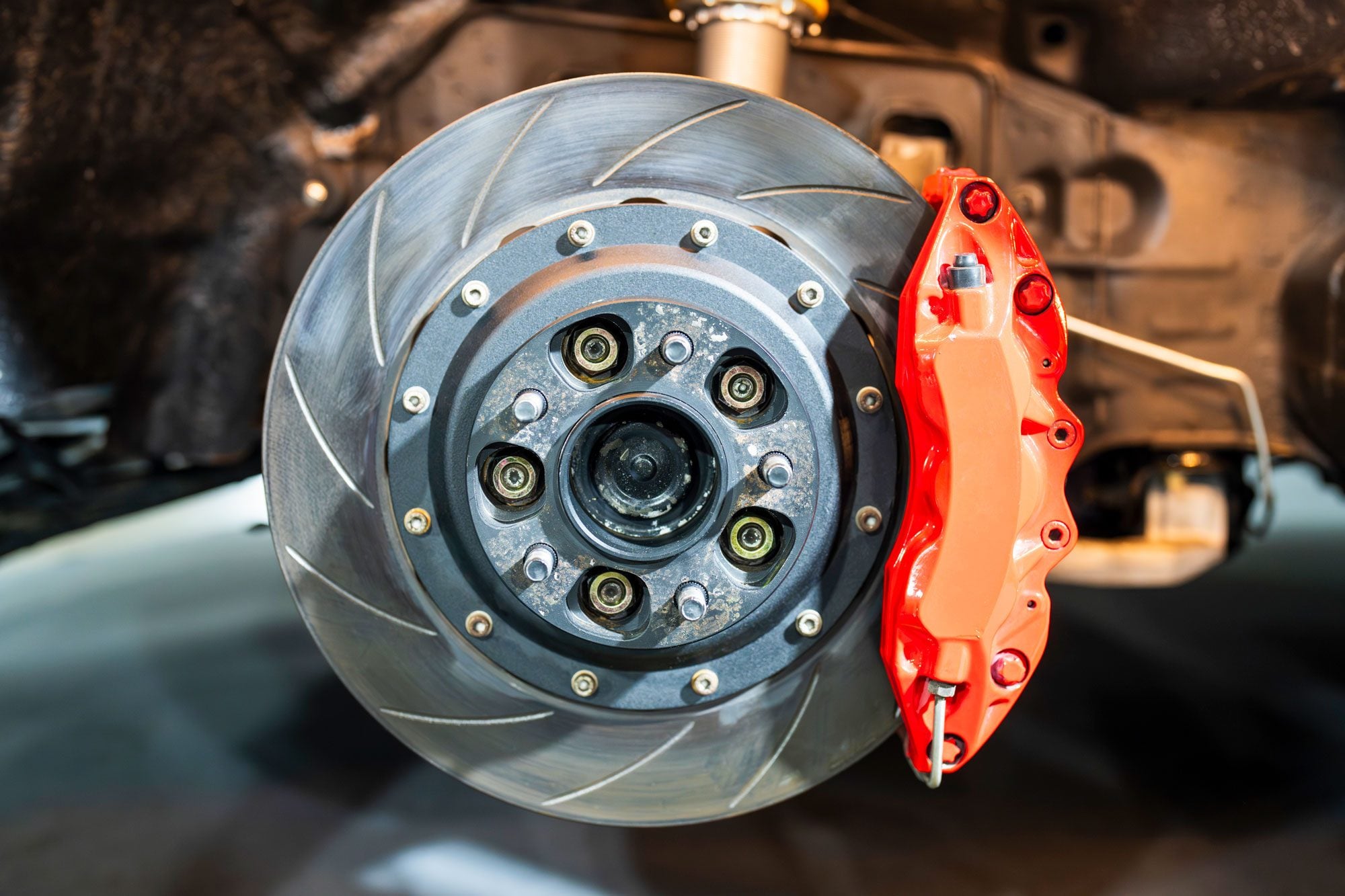
A brake caliper is the component that fits around the brake rotor, which is the round metal disc attached to the wheel hub. Inside the caliper are brake pads, pistons, rubber seals, guide pins or slide pins, and passages for brake fluid. When you press the brake pedal, the master cylinder sends pressurized brake fluid through the brake lines. That hydraulic pressure reaches the caliper and pushes the piston outward. The piston then forces the brake pad against the rotor.
The rotor is spinning with the wheel, so when the pads squeeze it, friction slows the rotor and the wheel. This is why your car stops. It is also why brakes get hot. Brakes do not magically delete speed; they transform moving energy into heat. That is normal. What is not normal is one wheel becoming much hotter than the others after regular driving, because that can signal a sticking brake caliper.
Brake Caliper vs. Brake Pad vs. Rotor
Many drivers use “brakes” as one big word, but the system has several parts doing different jobs:
- Brake caliper: The clamp-like assembly that squeezes the brake pads.
- Brake pads: The friction material that presses against the rotor.
- Brake rotor: The spinning disc that the pads clamp onto.
- Brake fluid: The hydraulic fluid that transfers pedal force to the caliper.
- Brake lines and hoses: The pathways that carry brake fluid pressure.
If pads are the shoes, rotors are the dance floor, and brake fluid is the choreographer, the caliper is the bouncer making sure everyone actually moves when the pedal says so.
How Does a Brake Caliper Work?
When you press the brake pedal, you are not directly pulling a cable to stop the wheel. Modern hydraulic braking systems use fluid pressure. Your pedal force moves a piston in the master cylinder, which pressurizes brake fluid. Because fluid does not compress easily, that pressure travels through the brake lines to the calipers.
Once pressure reaches the caliper, it pushes the caliper piston. The piston pushes the inner brake pad into the rotor. Depending on the caliper design, the caliper body may slide so the outer pad also presses against the rotor, or pistons on both sides may squeeze the pads from both directions. When you release the pedal, pressure drops, the piston retracts slightly, and the pads back away just enough to let the rotor spin freely.
That tiny release matters. A healthy brake caliper does not keep clamping after your foot leaves the pedal. A bad caliper may drag, meaning the pad stays in contact with the rotor. That creates heat, wear, reduced fuel economy, and sometimes a smell so suspicious it makes you check whether you accidentally parked on a campfire.
Types of Brake Calipers
Floating Brake Calipers
Floating calipers, also called sliding calipers, are common on many passenger vehicles. They usually have one or two pistons on the inner side of the rotor. When the piston pushes the inner pad against the rotor, the caliper slides on guide pins so the outer pad also clamps down. Floating calipers are compact, cost-effective, and reliable when maintained properly.
The weak spot is movement. If the slide pins corrode, dry out, or seize, the caliper may not move freely. That can cause uneven brake pad wear, brake drag, pulling, or reduced braking performance.
Fixed Brake Calipers
Fixed calipers do not slide. Instead, they remain mounted in place and use pistons on both sides of the rotor to squeeze the pads. These are often found on performance cars, luxury vehicles, trucks, and sports models. Fixed calipers can provide strong, even braking and a firm pedal feel. They may also look excellent behind open-spoke wheels, which is why some people wash them with the emotional intensity of caring for a rare jewel.
Fixed calipers can still fail, leak, or develop piston problems, but they do not rely on slide pins in the same way floating calipers do.
How To Tell if Your Brake Caliper Is Bad
A bad brake caliper can feel like a small annoyance at first, but brake problems deserve immediate attention. Your brake system is not the place to “wait and see.” Below are the most common signs of a bad brake caliper.
1. Your Car Pulls to One Side
If your vehicle pulls left or right when braking, one caliper may be applying more force than the other. A stuck caliper can keep one brake engaged, while a weak or leaking caliper may fail to clamp strongly enough. Pulling can also come from tire pressure, alignment, suspension issues, or uneven brake pads, so the symptom does not automatically prove the caliper is bad. Still, it is a major clue.
For example, if your car drifts right every time you brake at a stoplight, the right-side caliper could be grabbing harder, or the left-side caliper may not be doing enough. Either way, your vehicle should stop straight. If it starts choosing its own lane, get it inspected.
2. One Wheel Feels Hotter Than the Others
A sticking brake caliper can keep the pad pressed against the rotor even when you are not braking. This constant friction generates heat. After a short normal drive, one wheel may feel noticeably hotter than the others, or you may smell hot brakes near one corner of the vehicle.
Do not touch brake parts to check temperature. Rotors, calipers, and wheels can become hot enough to burn skin. Instead, pay attention to heat radiating from the wheel area, a burning odor, or smoke. If smoke appears from a wheel, stop driving as soon as it is safe and call for help.
3. Burning Smell After Driving
A sharp, hot, chemical-like odor near one wheel can indicate overheated brake pads, a dragging caliper, or leaking brake fluid. Brakes naturally get warm, especially after hills or stop-and-go traffic, but a strong burning smell during ordinary driving is not normal.
If the smell is paired with reduced power, pulling, smoke, or a soft pedal, treat it as urgent. A caliper that drags long enough can damage pads, rotors, wheel bearings, brake hoses, and nearby components.
4. Uneven Brake Pad Wear
Uneven brake pad wear is one of the classic bad brake caliper symptoms. If one pad is much thinner than the other on the same wheel, the caliper may not be sliding correctly. If the pads on one side of the vehicle wear far faster than the other side, one caliper may be sticking or applying uneven pressure.
This is why a brake inspection should include more than a quick glance through the wheel. The outer pad may look fine while the inner pad is nearly gone. That is like checking one side of a pancake and declaring breakfast a success.
5. Squealing, Grinding, or Clunking Noises
Brake noise can come from worn pads, damaged rotors, missing hardware, rust, or caliper problems. A stuck caliper can overheat pads and create squealing. A loose caliper bracket or damaged hardware may create clunking. If pads wear down completely, the backing plate can grind into the rotor, creating a harsh metal-on-metal sound.
Grinding should never be ignored. It often means damage is already happening, and continuing to drive can turn a moderate repair into a more expensive one.
6. Brake Fluid Leak Near the Wheel
Brake fluid near a wheel is a serious warning sign. A caliper contains rubber seals around the piston and connections where the brake hose attaches. If a seal fails or a fitting leaks, fluid may appear on the inside of the wheel, tire, caliper, or pavement.
Brake fluid leaks can reduce hydraulic pressure and increase stopping distance. If the brake pedal sinks, feels spongy, or the brake warning light comes on, do not keep driving normally. Low brake fluid or hydraulic failure can become dangerous quickly.
7. Soft or Spongy Brake Pedal
A soft brake pedal can come from air in the brake lines, old brake fluid, a failing master cylinder, a brake hose issue, or a leaking caliper. If the pedal feels mushy, travels farther than usual, or slowly sinks while you hold pressure, the system needs inspection.
Brake pedals should feel consistent. A sudden change in pedal feel is your car’s way of saying, “Please do not make me responsible for physics today.”
8. Reduced Stopping Power
A failed caliper may not clamp with enough force. A sticking caliper may overheat the pads and rotors, reducing braking performance. In either case, the vehicle may take longer to stop, especially at highway speeds or during repeated braking.
Longer stopping distance is not just inconvenient. It changes how much space you need in emergencies. If you notice that you must press harder than usual or stop earlier than before, schedule brake service immediately.
9. Car Feels Sluggish or Fuel Economy Drops
A dragging caliper creates resistance. Your engine has to work harder to move the car, which can make acceleration feel dull and reduce fuel economy. Sometimes drivers describe it as the car feeling “held back.” If one brake is partly applied all the time, that is exactly what is happening.
10. Brake Warning Light or ABS Light
A brake warning light can indicate low brake fluid, parking brake engagement, hydraulic problems, or other system faults. An ABS light usually points to an anti-lock braking system issue, but modern brake systems are connected enough that dashboard warnings should be taken seriously. A warning light does not specifically diagnose a bad brake caliper, but it does mean the braking system deserves attention.
What Causes a Brake Caliper To Go Bad?
Brake calipers live in a rough neighborhood. They face heat, water, road salt, brake dust, potholes, and years of stop-and-go driving. Over time, several problems can develop.
Corrosion and Rust
Rust can form on caliper pistons, slide pins, brackets, and hardware. In areas with winter road salt or coastal humidity, corrosion can speed up. Rusty slide pins can stop a floating caliper from moving freely. A corroded piston may not retract properly.
Worn Rubber Seals
Caliper piston seals help contain brake fluid and allow the piston to retract slightly after braking. When seals age, crack, or harden, fluid can leak or the piston can stick. Dust boots also protect the piston from dirt and moisture; if they tear, contamination can enter.
Old or Contaminated Brake Fluid
Brake fluid absorbs moisture over time. Moisture can lower the fluid’s boiling point and contribute to corrosion inside the brake system. This is one reason manufacturers recommend periodic brake fluid service. Ignoring fluid maintenance can shorten the life of calipers, lines, and other hydraulic parts.
Damaged Brake Hoses
Sometimes a problem that looks like a sticking caliper is actually a brake hose issue. An internally collapsed hose can allow pressure to reach the caliper but prevent fluid from returning properly. The result is brake drag, heat, and pullingsymptoms that mimic a seized caliper.
Poor Installation or Missing Hardware
Brake systems rely on clips, shims, pins, boots, and correct lubrication at specific contact points. Missing hardware or improper installation can cause pads to bind, rattle, wear unevenly, or overheat. This is why brake repair should be done carefully, not as a speedrun with a wrench and optimism.
Can You Drive With a Bad Brake Caliper?
You should not knowingly drive with a bad brake caliper except to move the vehicle to a safe location or reach professional help if the symptoms are mild and the shop is nearby. If you notice smoke, a strong burning smell, brake fluid leaking, a sinking pedal, severe pulling, or grinding, stop driving as soon as it is safe.
A bad caliper can damage the rotor and pads, overheat the wheel area, reduce braking power, and make the vehicle unpredictable. Brakes are a safety system, not a “maybe next weekend” system.
How Mechanics Diagnose a Bad Brake Caliper
A professional brake inspection may include checking pad thickness, rotor condition, caliper movement, piston operation, brake hose condition, fluid level, leaks, hardware, and wheel temperature differences. A technician may compare pad wear from side to side, inspect slide pins, look for torn boots, and test whether the piston retracts properly.
The key is diagnosis. Replacing pads alone will not fix a seized caliper. Installing a new rotor will not help if a stuck piston immediately overheats it again. Good brake repair solves the cause, not just the most visible victim.
Brake Caliper Repair vs. Replacement
Some calipers can be rebuilt with new seals, boots, and hardware, but many repair shops replace the caliper assembly because it is faster, more predictable, and often more cost-effective once labor is considered. Replacement is common when the caliper is leaking, badly corroded, seized, or physically damaged.
Brake calipers are often replaced in pairs on the same axle, especially if one has failed from age or corrosion. This helps maintain balanced braking. Depending on the vehicle, a brake job involving a caliper may also include new pads, rotor resurfacing or replacement, brake fluid bleeding, hoses, or hardware.
How To Help Brake Calipers Last Longer
You cannot make brake calipers immortal, but you can help them live a long, drama-free life.
- Have brakes inspected regularly, especially if you drive in traffic, mountains, rain, snow, or salty conditions.
- Replace brake fluid according to your vehicle manufacturer’s service schedule.
- Do not ignore squealing, pulling, grinding, or burning smells.
- Wash road salt and grime from wheels and underbody areas when practical.
- Use quality brake parts and proper hardware during repairs.
- Address uneven pad wear before it damages rotors and calipers.
The best brake repair is the one you do before your car starts auditioning for a horror movie soundtrack.
Common Myths About Brake Calipers
Myth 1: Calipers Last Forever
Brake calipers can last many years, but they do not last forever. Heat, corrosion, seal wear, and contaminated fluid can eventually cause failure.
Myth 2: If the Car Stops, the Calipers Are Fine
A car may still stop with a dragging or weak caliper, but stopping performance may be reduced or uneven. Early symptoms matter.
Myth 3: Brake Noise Always Means Bad Pads
Brake pads are common noise-makers, but calipers, rotors, hardware, dust shields, and installation issues can also cause noise.
Myth 4: A Burning Smell Is Normal After Any Drive
Heavy braking can create heat, but a strong burning smell during normal driving is not something to dismiss. It can signal a dragging caliper or overheated brake components.
Real-World Examples of Bad Brake Caliper Symptoms
Imagine you drive ten minutes to the grocery store. You barely use the brakes, but when you park, the front passenger wheel smells hot. The car also feels like it needs more throttle than usual. That could be a sticking front caliper.
Or picture a sedan that pulls left only while braking. The tires are properly inflated, and alignment feels fine while cruising. A mechanic finds that the right front caliper piston is not applying enough pressure, causing uneven braking. That is another caliper-related problem.
Now consider a pickup truck with one rear brake pad worn almost to metal while the opposite pad still has plenty of material. The slide pins are seized, preventing the floating caliper from centering correctly. New pads alone would wear unevenly again unless the caliper movement is restored or the caliper is replaced.
My Experience-Based Advice: What Drivers Usually Notice First
In everyday driving, a bad brake caliper rarely announces itself with one polite message. It usually drops hints. The first hint might be a faint pull during braking. The second might be a smell after a short drive. The third might be a wheel that seems dustier than the others because one pad is wearing faster. By the time grinding starts, the problem has often been around for a while, quietly eating money in the background.
One of the most useful habits is paying attention to what is normal for your own car. Every vehicle has a personality. Some brake pedals feel firm, some feel slightly softer, and some cars naturally create more brake dust. The warning sign is change. If your brake pedal suddenly feels lower, your car begins pulling, or your usual commute ends with a burnt smell near one wheel, do not treat it like random car moodiness.
Another experience-based tip: compare symptoms, not guesses. Many drivers hear squealing and immediately assume they need pads. That may be true, but if the new pads wear out quickly on one wheel, the real issue may be a caliper that is not releasing. Likewise, a vibration may point to rotor issues, but overheated rotors can be caused by a dragging caliper. Brake problems often travel as a group, like a tiny mechanical gang.
It is also smart to avoid the “I’ll just drive slower” strategy. Driving slower does not fix a caliper that is stuck. It may reduce heat a little, but the brake can still drag, wear, and overheat. If a caliper is leaking, slower driving does not restore hydraulic pressure. If the pedal is sinking, that is not a negotiation; it is a warning.
For people buying a used car, brake caliper clues are worth checking during a pre-purchase inspection. Uneven brake pad wear, one rotor that looks bluer or more heat-spotted than the others, a vehicle that pulls under braking, or a wheel with excessive brake dust can all suggest brake imbalance. A used car can look shiny, smell like new air freshener, and still have a caliper plotting against your repair budget.
For DIY-minded drivers, visual awareness is helpful, but brake repairs should be approached with respect. Looking for leaks, noting brake smells, checking whether the car pulls, and scheduling a brake inspection are reasonable steps. But replacing calipers, bleeding brakes, and handling hydraulic brake components require the right tools, procedures, and safety precautions. A small mistake in the brake system can have big consequences on the road.
The best personal rule is simple: if a brake symptom affects stopping, steering, smell, smoke, fluid, or pedal feel, take it seriously. A bad brake caliper can start as an inconvenience and turn into damaged pads, ruined rotors, overheated bearings, or unsafe braking. Catching it early is cheaper, safer, and far less stressful than discovering the problem during a sudden stop.
Brake calipers are not glamorous, but they are deeply important. When they work, you barely think about them. When they fail, they can make the entire vehicle feel wrong. Listen to the car, notice the patterns, and do not let brake symptoms become background noise. Your future selfand probably your front bumperwill appreciate it.
Conclusion
A brake caliper is the part of a disc brake system that uses hydraulic pressure to squeeze brake pads against the rotor. When it works properly, your car stops smoothly, predictably, and safely. When it fails, you may notice pulling, uneven pad wear, burning smells, fluid leaks, strange noises, reduced stopping power, a soft pedal, or one wheel running hotter than the others.
The important takeaway is this: brake caliper symptoms should not be ignored. A stuck or leaking caliper can damage other parts and reduce your ability to stop safely. If you suspect a bad brake caliper, have your braking system inspected by a qualified mechanic as soon as possible. Brakes are one area where being cautious is not overreactingit is just good driving sense.














