
Ask ten people what a developing country is, and you may get eleven answers. One person will say it means a country with lower income. Another will talk about roads, schools, hospitals, and internet access. Someone else will mention exports, factories, and whether the economy mainly sells raw materials or higher-value products. All of them are circling the same idea, but none of them fully captures it.
That is the first big thing to understand: a developing country is not a neat little box with a single official label slapped on the front. It is a broad term used to describe countries that are still building higher average incomes, stronger institutions, better infrastructure, wider access to education and health care, and a more diversified economy. In plain English, it usually refers to a country that has made progress, but still faces major development gaps compared with wealthier nations.
Simple enough? Yes. Simple in practice? Not even a little.
What does “developing country” actually mean?
A developing country is generally understood as a nation with a lower average standard of living, lower income per person, and fewer economic and social resources than a developed country. That often includes weaker infrastructure, less industrial diversification, and bigger challenges in areas like health, education, sanitation, job quality, and public services.
But the term is more useful as a shortcut than as a precise scientific formula. It helps people speak broadly about development, yet it can also blur huge differences between countries. Putting Vietnam, India, Brazil, and Malawi under one giant umbrella may be convenient for conversation, but it can also hide the fact that these countries have very different strengths, weaknesses, and policy needs.
So if you are looking for the cleanest possible answer, here it is: a developing country is usually a country that has not yet reached the income, infrastructure, industrial complexity, and human development levels associated with richer, more advanced economies.
Why there is no single global definition
Here is where things get interesting. Major global institutions do not all define development in the same way.
1. The World Bank focuses on income
The World Bank does not officially sort countries into “developed” and “developing” as its main classification system. Instead, it groups economies by gross national income per capita. For the current fiscal year, those categories are low income, lower-middle income, upper-middle income, and high income. This approach is practical because income data is measurable and updated regularly. It is also imperfect, because income alone cannot tell you whether a country has strong schools, clean water systems, or a healthy life expectancy.
In other words, money matters, but it is not the whole movie. It is just one camera angle.
2. The IMF uses “advanced” versus “emerging and developing”
The International Monetary Fund divides the world into advanced economies and emerging market and developing economies. Even the IMF admits this system is not based on strict rules and has evolved over time. That is economist-speak for: “Yes, we classify countries, but please do not treat the categories like sacred mountain tablets.”
3. The UNDP looks beyond income
The United Nations Development Programme takes a broader view through the Human Development Index, which emphasizes people and their capabilities rather than economic output alone. That means life expectancy, years of schooling, and income all matter. A country can grow fast on paper and still struggle if large parts of its population do not benefit from that growth.
4. The WTO handles the issue differently
At the World Trade Organization, things get even messier. There is no formal WTO definition of “developed” or “developing” country. Members largely identify themselves that way in trade discussions. That matters because developing-country status can affect negotiation flexibility and special treatment in some trade rules.
5. The UN also recognizes “least developed countries”
Inside the broad conversation about development, there is another category: least developed countries, often called LDCs. This group refers to countries facing particularly severe structural barriers to sustainable development. So not every developing country is an LDC, and not every country facing challenges fits neatly into the same development tier.
That is why the term developing country is common, but never perfectly exact. It is a working label, not a magic stamp.
Common characteristics of developing countries
While there is no universal checklist, many developing countries tend to share several broad characteristics.
Lower average income
Income per person is usually lower than in richer economies. This can limit consumer spending, household savings, tax revenue, and public investment. When governments have fewer resources, it becomes harder to fund roads, schools, hospitals, power grids, and social protection systems.
Infrastructure gaps
Reliable electricity, clean water, modern transport, fast internet, and waste systems are not equally available everywhere. In many developing countries, infrastructure works fine in some cities and badly in others. One neighborhood may have digital payments, delivery apps, and fiber internet, while another still fights with potholes, outages, and patchy service. Development is often uneven, not absent.
Greater reliance on agriculture or raw materials
Many developing economies rely more heavily on agriculture, mining, or commodity exports. That can bring in revenue, but it can also make countries more vulnerable to swings in world prices. If a country sells mostly coffee, copper, oil, or timber, one bad price cycle can turn the national budget into a stress ball.
Lower human development outcomes
Average schooling levels, literacy, nutrition, and life expectancy may lag behind richer countries. That does not mean progress is absent. In fact, many developing countries have made major gains in education and health over the past few decades. It simply means the gaps can still be significant.
Larger informal sectors
A large share of work may happen outside the formal economy. People may run street businesses, small workshops, transport services, or home enterprises without formal contracts or full legal protections. Informal work can be flexible and entrepreneurial, but it can also leave workers with unstable income and limited access to benefits.
Higher vulnerability to shocks
Developing countries are often more exposed to external shocks such as debt pressure, commodity crashes, food inflation, pandemics, and climate-related disasters. When buffers are thin, one crisis can undo years of progress. Economic development is rarely a straight staircase. Sometimes it feels more like climbing a hill while someone throws weather at you.
Examples help, but labels still have limits
People often want a country list, because lists feel satisfyingly organized. But development is more of a spectrum than a clean split.
Some countries are lower-middle income and still working to expand industrial capacity, health systems, and household incomes. Others are upper-middle income with modern cities, strong manufacturing, and growing technology sectors, yet still have deep inequality, regional poverty, or infrastructure gaps. A country may be rich in one region and underserved in another. It may be globally competitive in exports and still struggle with housing, sanitation, or education quality in parts of the country.
That is why two countries can both be called developing and still look completely different on the ground. One may be a manufacturing powerhouse with crowded industrial zones and fast export growth. Another may depend mainly on farming and foreign aid. One may have world-class airports and weak rural clinics. Another may have rising school attendance but limited job creation. Same label, very different story.
What is the difference between a developing country and an emerging market?
These terms are often used as if they are twins, but they are more like cousins who borrow each other’s hoodies.
A developing country is a broad development term. It can include economic, social, institutional, and human development conditions. An emerging market usually focuses more on investment and economic growth potential. A country may be called an emerging market because investors see expanding industry, consumption, and financial markets, even if the country still faces serious development challenges.
So “emerging market” often sounds more like a Wall Street phrase, while “developing country” sounds more like an economics, policy, or social-development phrase.
Why the term “developing country” is debated
Many experts now prefer more specific labels such as low-income countries, lower-middle-income countries, upper-middle-income countries, or low- and middle-income countries. Why? Because “developing country” can imply that all countries are traveling on the same road, at the same speed, toward the same destination. Real life is far messier than that.
The term can also sound vague or even patronizing, especially when used carelessly. A fast-growing country with major industrial capacity may not want to be described in the same way as a fragile low-income country facing extreme structural barriers. That is like describing both a bicycle and a spaceship as “transportation.” Technically true. Wildly unhelpful.
Using more precise language improves analysis. If the issue is health, talk about health indicators. If the issue is income, use income groups. If the issue is trade treatment, use the relevant trade classification. Precision beats buzzwords every time.
Can a developing country become developed?
Yes, and some countries have done exactly that over time. Economic history is full of countries that moved from low-income or middle-income status to high-income status through long periods of industrialization, education expansion, institution building, export growth, technological adoption, and infrastructure investment.
But it is not automatic. Growth alone is not enough. A country can post strong GDP numbers and still struggle with inequality, corruption, weak state capacity, low productivity, or environmental stress. Lasting development usually requires a mix of macroeconomic stability, investment in people, functioning institutions, and the ability to adapt when the global economy changes its mood.
And yes, the global economy changes its mood a lot. It is basically a caffeinated squirrel with spreadsheets.
So, what is the best way to understand the term?
The best way to understand a developing country is to see it as a country still working through major economic and human development gaps. It is not simply “poor.” It is not simply “not rich yet.” It is a country in a process of structural change, trying to raise living standards, diversify its economy, improve public services, and expand opportunity.
Some are moving quickly. Some are stuck. Some are doing both at the same time, depending on which sector, city, or household you look at. Development is uneven, political, and deeply human. It is about roads and ports, yes, but also classrooms, nutrition, institutions, resilience, and whether people feel their lives are genuinely improving.
Experiences connected to the idea of a developing country
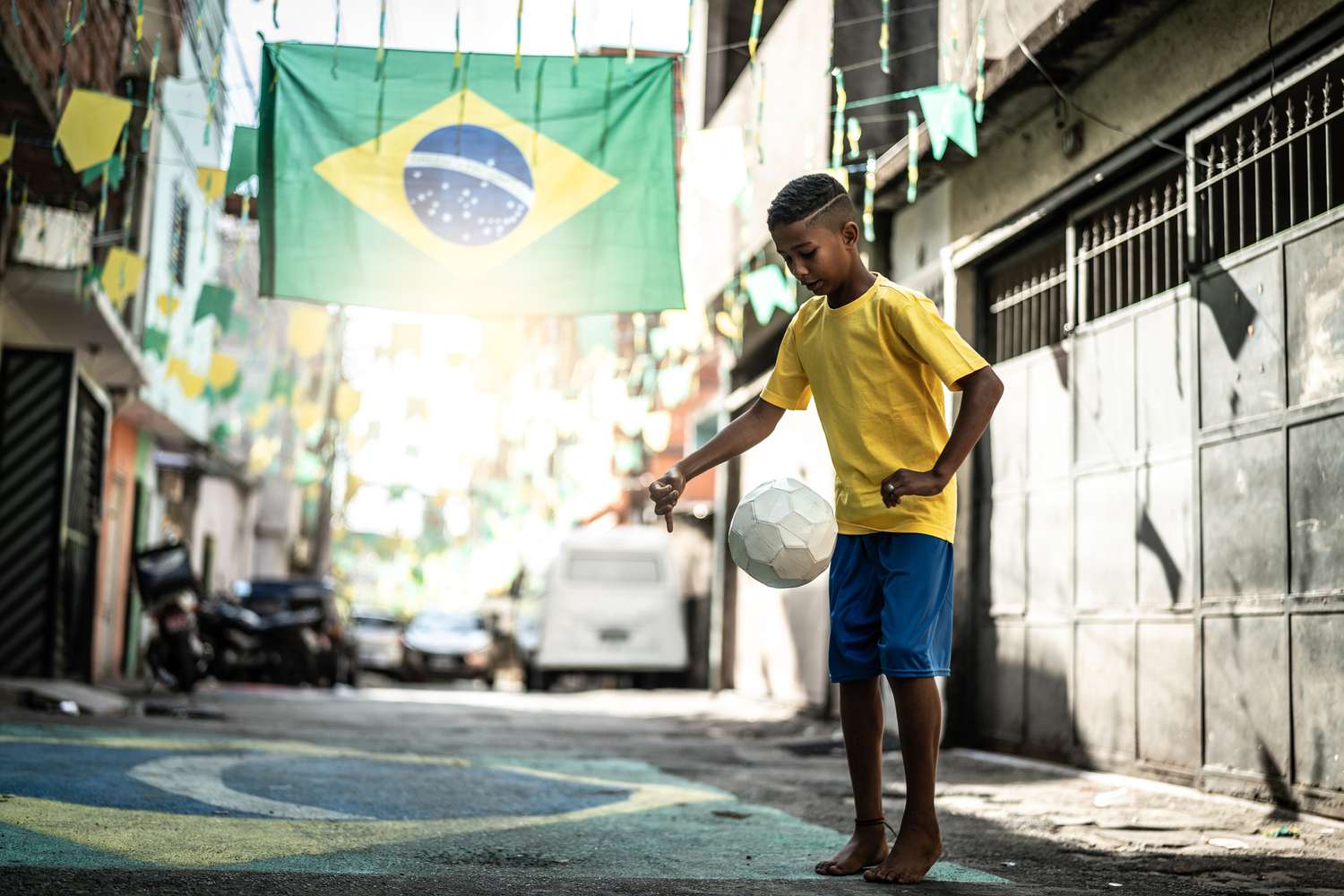
To make the term feel less abstract, it helps to think about the kinds of everyday experiences often associated with countries still in the development process. In many places, the most striking feature is not failure, but contrast. A modern shopping mall stands next to a crowded street market. A city has ride-hailing apps, luxury apartments, and digital banking, while nearby communities still deal with unreliable water service or overcrowded schools. Development often arrives in layers, not in one dramatic movie montage where everybody suddenly gets sidewalks and flawless Wi-Fi.
Another common experience is adaptation. People in developing countries often become experts at working around gaps in the system. Small business owners may keep backup generators because power outages are normal. Families may use multiple jobs and informal networks to manage medical bills or school costs. Farmers may shift crops based on weather changes and market prices. Workers may move between formal and informal jobs depending on what is available. None of this means people lack ambition or skill. In fact, it often shows the opposite. It shows resilience, flexibility, and a strong ability to solve problems in imperfect conditions.
There is also a powerful sense of movement. In many developing countries, change can be visible within a single decade. New highways appear. Phone access explodes. Digital payments become routine. More girls stay in school. Factory zones expand. Tourism grows. Local startups begin doing things that once seemed out of reach. You can almost feel a society stretching forward. At the same time, progress may be uneven. A family in one city might experience a better job market and better health care, while a rural area still struggles with transport, teacher shortages, or low farm income. That unevenness is one of the most important lived realities behind the label.
There is also the emotional side of development, which statistics rarely capture well. People may feel proud of visible national progress while also frustrated by how slow improvements can be in their own daily lives. A country can post strong growth numbers, yet young people may still worry about affordable housing, job quality, or the cost of higher education. Citizens may celebrate a new airport but still want cleaner streets, better local clinics, and more trustworthy institutions. Development is not only about national averages. It is also about whether ordinary people feel the future is opening up for them.
That is why the phrase developing country should be handled with care. Behind it are real communities, real trade-offs, real ambition, and real progress that does not always move in a straight line. The term is useful when it helps us understand structural challenges. It becomes less useful when it turns complex societies into stereotypes. The most accurate experience-based view is this: a developing country is usually a place where growth, struggle, innovation, and inequality are all happening at once, often on the same street, sometimes in the same family, and almost always at the same time.
Conclusion
A developing country is best understood as a country still closing major gaps in income, infrastructure, productivity, health, education, and institutional strength. It is a broad and useful term, but not a precise one. Different organizations classify countries differently, and the label can hide as much as it reveals.
That is why smarter discussions go beyond the shortcut. Instead of asking only whether a country is developing, it is usually better to ask how it is developing, where progress is strongest, and which barriers remain. That approach gives a more honest picture of the world and a much more useful one.














