
Few things capture the modern homeowner experience quite like this: a shiny new appliance arrives, the cardboard gets flattened like a champ, and then the molded foam packaging sits there in the garage like a guilty white cloud asking, “So… what now?” It is bulky, awkward, weirdly squeaky, and stubbornly hard to recycle. That is exactly why the idea behind “Whirling Sawblades Turn Foam Packaging Into Wall Insulation” feels so irresistible. It takes a material most people treat as trash and asks a delightfully rebellious question: what if this stuff is not garbage at all, but raw material?
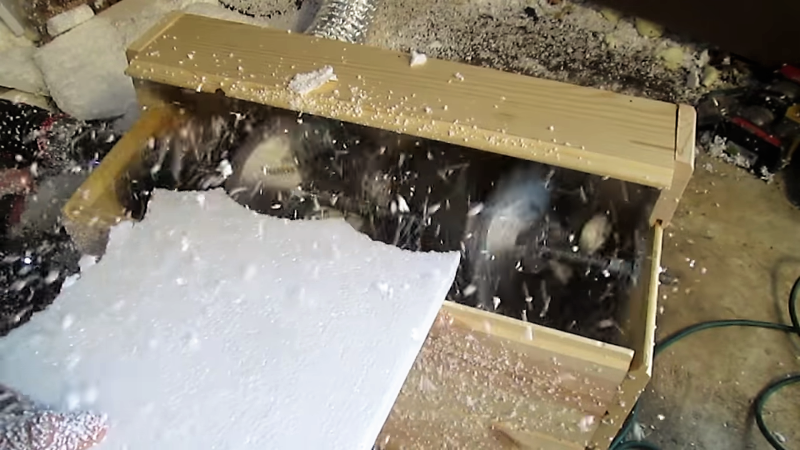
The now-famous DIY concept is wonderfully scrappy. Instead of sending expanded polystyrene foam packaging to the landfill, a maker rigged a drill-powered shredder with spinning circular sawblades to chew foam into small bits and blow them into wall cavities. It is part home hack, part recycling experiment, part “please keep your eyebrows away from the machine.” And beneath the spectacle, there is a serious idea worth exploring: can foam packaging really become useful wall insulation?
The answer is a cautious but fascinating sometimes. As a piece of creative reuse, the project is clever. As a full-on replacement for tested, code-approved insulation systems, it is much more complicated. To understand why, you have to look at the material itself, how insulation actually works, and where building science politely clears its throat and says, “Fun project, but let’s discuss a few things.”
Why This Wild DIY Idea Caught So Much Attention
The original appeal is obvious. Foam packaging is everywhere. TVs, computers, furniture, exercise equipment, and kitchen appliances arrive cocooned in the stuff. Meanwhile, insulation is not exactly free, and the rising cost of materials makes any upcycling trick feel like a tiny act of financial self-defense. So when somebody combines scrap foam, a homemade grinder, and a wall cavity, the internet understandably leans in.
What makes the project more than a novelty is that it addresses two real frustrations at once. First, foam packaging is hard to handle in municipal recycling because it is lightweight, bulky, and expensive to transport. Second, home insulation is one of the most important parts of energy efficiency, comfort, and lower utility bills. Put those together, and the idea sounds almost magical: solve a waste problem and an energy problem with one gloriously noisy machine.
Of course, magic in home improvement usually turns out to be “physics wearing a tool belt.” Still, the concept deserves credit. It is imaginative, practical in spirit, and refreshingly local. Instead of trucking bulky foam around the region, the material gets processed where it is needed. That is not just thrifty; it is a glimpse of what distributed recycling could look like when people stop waiting for perfect systems and start experimenting.
Why Foam Packaging Seems Like Insulation in Disguise
The reason this idea is not completely bonkers is simple: the same family of materials used for protective packaging is also used in building insulation. Expanded polystyrene, or EPS, shows up in packaging because it is lightweight, shock-absorbing, and thermally resistant. In other words, it protects your blender during shipping and can also help slow heat transfer in a building assembly. Not bad for something that looks like a snowman had a bad day.
That overlap matters. If a material already has insulating properties, then turning clean foam packaging into some form of wall fill is not pure fantasy. It is not the same as stuffing old socks into your walls and declaring victory. EPS already lives in the building world. That is why the DIY story feels plausible enough to spark serious interest rather than instant eye-rolls.
There is also the waste angle. Foam packaging is notorious because it takes up lots of space while weighing very little. That makes curbside collection inefficient and expensive. A garage full of appliance foam can look dramatic, but from a hauler’s point of view it is a truckload of mostly air. Reusing it on-site, at least in theory, attacks the biggest practical problem: volume.
And yes, there is a certain emotional satisfaction here too. Turning annoying trash into something useful scratches a deep human itch. It feels resourceful. It feels old-school. It feels like telling the landfill, “Not today, buddy.”
How the Sawblade Setup Actually Works
The original DIY approach is both simple and slightly terrifying, which is usually how memorable garage inventions are born. The setup uses several circular sawblades mounted on threaded rod and spun by a cordless drill. The blades are set at slight angles so they do not just spin uselessly; they grab, tear, and reduce the EPS into smaller pieces. A screen or prefilter helps keep oversized chunks from jamming the system, while a fan or blower moves the shredded foam into wall cavities.
Mechanically, it is a clever answer to a real problem. EPS is bulky. Before it can be used as cavity fill, it has to be reduced to a manageable size. Cutting, tearing, or grinding it into smaller nuggets makes it easier to move and pack. The homemade machine is essentially a mini processing line built from common shop parts and a healthy disregard for boring weekends.
And this is where the idea earns genuine respect. It does not merely “reuse” foam in a decorative craft-project sense. It changes the form of the material to fit a new function. That is the sort of leap that makes waste diversion more meaningful. Instead of becoming fake snow in a holiday diorama, the foam becomes part of a building envelope. That is a much bigger job description.
Where DIY Ingenuity Meets Building-Science Reality
This is the point where every insulation story has to leave the workshop and enter the realm of R-values, air leakage, moisture control, and code compliance. Because insulation is not judged by vibes. A wall does not care how clever the recycling story is. It only cares whether heat moves through it, whether moisture gets trapped, and whether the assembly is safe.
R-Value Is Not Just About Having “Some Fluffy Stuff” in the Wall
Insulation performance is measured by R-value, which tells you how well a material resists heat flow. But here is the catch: R-value depends on thickness, density, product type, and installation quality. A manufactured insulation product comes with tested performance data. A homemade wall fill made from shredded packaging foam does not. That means you may get some insulating value, but you do not get a predictable, published, code-recognized number you can confidently design around.
That uncertainty matters. A wall cavity loosely filled with irregular EPS pieces may perform better than an empty cavity, but “better than nothing” is not the same as “equivalent to a listed insulation product.” In home construction, that difference is not nitpicking. It is the whole ballgame.
Wall Performance Is Bigger Than the Insulation Itself
Even if shredded foam fills the cavity nicely, it does not erase thermal bridging. Heat still moves through the studs, plates, headers, and framing members. In fact, one of the biggest lessons from modern building science is that whole-wall performance is often lower than the rating of the cavity insulation alone. So a DIY foam fill may help, but it does not automatically turn a conventional wall into a high-performance wall.
That is why professional energy upgrades often pair cavity insulation with better framing practices, continuous exterior insulation, or both. The best-performing walls are not just stuffed with more material; they are designed to reduce the weak points where heat slips through the structure itself.
Air Sealing Matters More Than Many DIYers Expect
Another reality check: insulation and air sealing are not the same thing. People often talk about them like a single package deal, but they solve different problems. Insulation slows heat flow. Air sealing stops drafts and uncontrolled air movement. A wall full of recycled foam pieces may still underperform if air is sneaking through cracks, penetrations, and framing joints. That is why serious efficiency work starts by treating the house as a system rather than a collection of random stuffed cavities.
In practical terms, that means the whirling-sawblades trick can only be part of the conversation. It is not the whole conversation. Not even close.
The Biggest Limitations of Turning Packaging Foam Into Wall Insulation
1. Not All Foam Is the Same
One of the easiest mistakes in this space is assuming all packaging foam is EPS. It is not. Some packaging is polyurethane. Some is polyethylene. Some is multi-material foam designed for cushioning rather than thermal performance. If you shred the wrong material and treat it like standard EPS, you can end up with a mess that behaves differently in terms of density, flammability, off-gassing, or recyclability.
This is especially important with commercial packaging systems such as foam-in-place products. Some of those are specifically excluded from typical EPS recycling pathways. So before anyone gets inspired to feed every piece of white-ish packaging into a homemade shredder, identification matters. A lot.
2. Fire Safety Is Not Optional
This is the big one, and it is where the charming garage-hack narrative has to grow up fast. Foam plastics are combustible, and building codes treat them accordingly. Depending on the application, foam insulation may need to be protected by gypsum board or another approved thermal barrier. Loose, homemade foam fill in a wall cavity is not automatically blessed just because foam board exists on the market. Tested assemblies and field improvisations are not the same thing.
That does not mean every idea involving foam is reckless. It means the wall assembly must be evaluated as an assembly, not just as a pile of chopped-up material. Fire safety, smoke development, and code compliance are the moments when “I saw it online” stops being persuasive.
3. Moisture and Settling Can Undermine Performance
Insulation performs best when it is installed correctly and remains stable over time. A homemade fill made from irregular chunks may settle, leave voids, or distribute unevenly in a wall. That can reduce effective performance and create cold spots. Moisture management is another concern. The wall still needs to dry properly, control condensation, and maintain a sound drainage and air barrier strategy. Shredded foam does not magically solve any of that.
In short, the material may help with thermal resistance, but the wall still has to behave like a wall. That includes durability, drying potential, and long-term consistency.
4. Supply Is Harder Than It Looks
There is also a brutally practical problem: collecting enough clean packaging foam to insulate a meaningful amount of wall area is harder than internet videos make it look. A few appliance boxes create a satisfying pile, sure, but whole-house quantities are another story. The original DIY concept works best for small projects, patch jobs, shop walls, sheds, or experimental partitions. Once you start talking about full-scale residential walls, you quickly run into the “wow, this is a lot of toaster packaging” phase.
What This DIY Project Gets Absolutely Right
Despite the warnings, the core idea still deserves applause. It gets several important things right.
First, it recognizes that the waste problem with foam is as much logistical as it is material-based. Bulky foam is difficult to collect economically, so reducing it on-site or near the source is smart. Second, it treats used packaging as feedstock rather than as moral failure. That mindset is exactly what a circular economy needs. Third, it makes people think differently about building materials. Too often, innovation in housing is framed as something only factories or venture-backed startups can do. This project reminds us that useful insights also come from garages, basements, and people who are mildly tired of throwing useful stuff away.
Even if the original setup never becomes a mainstream insulation method, it still performs a valuable service: it pushes the conversation forward. Once people see waste foam entering the building conversation, they start asking better questions. Could local collection hubs densify clean EPS? Could manufacturers incorporate more recovered material into tested insulation products? Could small contractors benefit from neighborhood-scale reuse streams? Those are real questions with real value.
What a Smarter, Safer Version of the Idea Looks Like
If you zoom out, the most promising version of this concept is probably not “every homeowner builds a blade monster.” It is a more organized pathway for clean, source-separated foam to move into legitimate recycled products. That could mean densifying foam at retail collection points, processing it regionally, and turning it into tested boards, molded building components, or other code-compliant materials with known performance.
For homeowners, the wiser takeaway is this: let the project inspire your thinking, but do not skip the boring grown-up steps. Identify the foam. Understand the wall assembly. Prioritize air sealing. Respect fire barriers. Check local code requirements. And if the project involves a permitted space, inspections, resale value, or anything remotely official, stick with tested insulation systems unless a qualified professional signs off on the assembly.
That may sound less romantic than “trash becomes treasure with whirling sawblades,” but responsible construction usually is. The goal is not to kill the fun. The goal is to make sure the fun does not become a cold, drafty, noncompliant wall with a dramatic backstory.
Experiences From the Real World: What People Learn When They Try Ideas Like This
One of the most relatable experiences around foam packaging insulation is the moment people realize just how much packaging they have been silently tolerating for years. It usually starts with one big delivery. Then another. Then a refrigerator, a desk chair, maybe a TV. Before long, the garage looks like a blizzard hit an electronics store. That is often the emotional spark behind projects like this. People are not just trying to save money on insulation; they are trying to solve a visible, annoying, everyday waste problem that nobody around them seems eager to handle.
Another common experience is discovering that foam is both easier and harder to work with than expected. Easier, because it is light and cuts or tears without much force. Harder, because it creates static-charged crumbs that cling to everything like tiny ghosts with attachment issues. DIYers who experiment with shredding or grinding EPS often talk about the mess factor before they talk about thermal performance. You can almost hear the lesson in real time: yes, the material is reusable, but it is not polite.
People also learn quickly that volume is deceptive. A huge pile of foam can shrink dramatically once it is chopped or compacted, which is satisfying from a waste perspective. But the reverse is true too: a small wall can eat an impressive amount of processed material. What looks like “plenty” in the driveway starts looking like “maybe enough for half a partition wall” once you are actually filling cavities. That gap between visual abundance and practical coverage is one of the most eye-opening parts of the experience.
Then there is the building-science awakening. Many first-time tinkerers begin with the simple assumption that putting insulation-like material into a wall equals an insulated wall. After a little research, they discover air leakage, thermal bridging, vapor management, fire barriers, and code language. It is a humbling but useful experience. In fact, that may be the hidden gift of projects like this: they turn casual DIY curiosity into a deeper understanding of how houses really work.
Some homeowners come away from the idea more committed to reuse. Others come away more committed to certified materials. Both reactions can be valid. A person insulating a backyard shed or workshop might decide the experiment is worth trying in a limited, low-stakes application. Someone renovating a primary residence may decide that the real lesson is to recycle the foam properly when possible and invest in tested insulation for the walls. Either way, the project changes how they think.
There is also a recurring experience of satisfaction that should not be dismissed. Even when people do not adopt the exact sawblade method, the project often inspires them to salvage materials more intentionally, ask local stores about foam take-back options, or look for building upgrades that reduce waste and energy use together. That shift in mindset matters. It turns passive consumers into active problem-solvers. And honestly, that is probably the most valuable insulation this whole story produces: a thicker layer of resourcefulness.
Final Takeaway
“Whirling Sawblades Turn Foam Packaging Into Wall Insulation” is the kind of headline that sounds like internet chaos, but underneath it is a genuinely smart question about waste, housing, and material reuse. The DIY project works as a provocative proof of concept: foam packaging is not always useless trash, and with the right processing it can play a role in thermal performance. That much is true.
But the deeper truth is even more interesting. Good insulation is not just about stuffing material into a cavity. It is about tested performance, air sealing, moisture control, thermal bridging, fire safety, and code-compliant wall design. So the sawblade idea is best understood not as a universal blueprint, but as a conversation starter with real value. It shows that circular thinking in construction can begin with a pile of shipping waste and a mildly alarming homemade machine. It also reminds us that the best building solutions are the ones that pair creativity with physics, thrift with safety, and curiosity with a healthy respect for the wall assembly.
In other words: the hack is fun, the question is serious, and the future probably belongs to the people who can do both.














