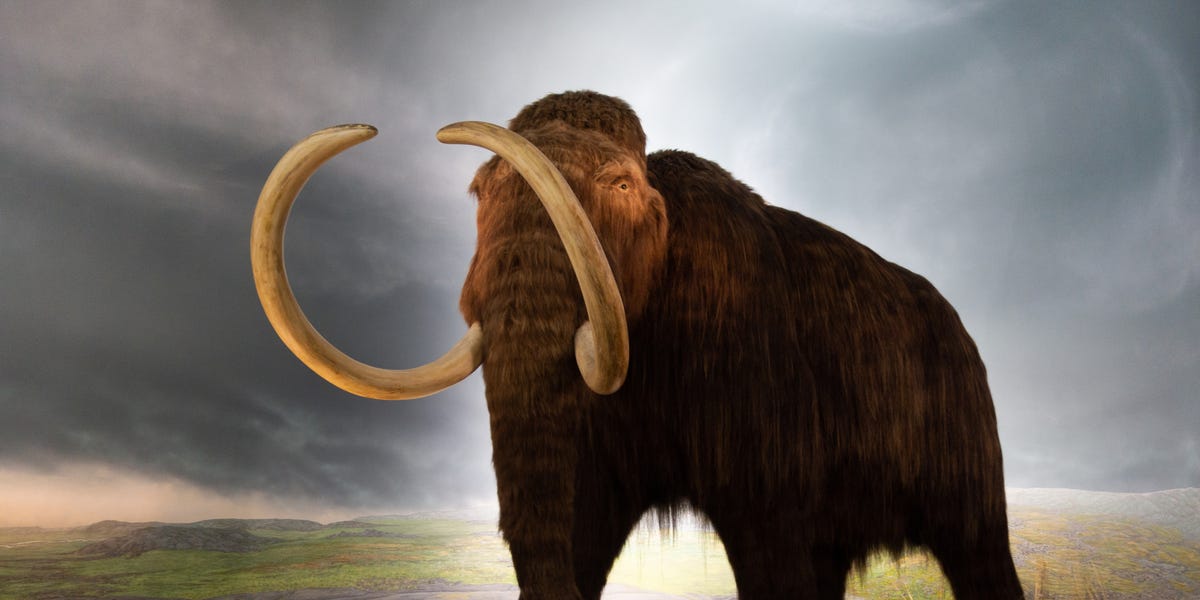
On paper, resurrecting the woolly mammoth sounds like the greatest crossover episode of
Jurassic Park, climate tech, and crowdfunding nerd culture. A giant fuzzy elephant-thing
marching across the Arctic tundra, cooling the planet and saving biodiversity? Incredible. Also:
extremely misleading.
A U.S.-based startup called Colossal Biosciences is trying to do exactly this by using CRISPR to
edit Asian elephant DNA and create a cold-adapted “mammoth-like” hybrid. They’ve already
engineered “woolly mice” with altered fur and metabolism, and they talk openly about a
mammoth-style calf by the late 2020s.
It’s flashy, headline-friendly science. But if you care about smart conservation, this is not
where you want your money, political attention, or moral energy to go.
De-extinction research can teach us interesting things about genetics and evolution. The
problem is when it’s sold as climate action or a bold new path for saving nature, instead of a
risky, speculative side project that could siphon resources away from species we can still
save. When you zoom out and look at conservation realities, resurrecting the woolly mammoth is
a bad bet.
The Dream of De-Extinction, in Real Life
From sci-fi fantasy to venture-backed project
The basic pitch goes like this: scientists sequence ancient mammoth DNA from preserved tusks
and bones, compare it with the genome of the Asian elephant (which shares more than 99% of its
DNA with mammoths), and use CRISPR to insert cold-adapted traitslike thick fur, fat metabolism,
and small earsinto elephant cells. Those edited cells become embryos, which would then be
carried by surrogate elephants (or, in some distant future, artificial wombs).
The result would not be a “real” woolly mammoth. It would be a mammoth-inspired elephant:
genetically modified, created in a lab, and introduced into ecosystems that haven’t seen a
mammoth in thousands of years. Even proponents call this “functional de-extinction” or
“ecological proxies” rather than a literal resurrection.
To prove they can engineer complex traits, Colossal’s team recently created “woolly mice”
rodents edited with mammoth-linked genes for hair and fat metabolism that now sport thicker,
curlier fur.
It’s clever science, no question. But it doesn’t tell us whether mammoth-like elephants will
actually survive in harsh Arctic conditions, build complex social cultures like wild elephants,
or play nicely with existing ecosystems.
Meanwhile, extinction in the real world is on fast-forward
While we’re imagining Ice Age elephants, more than 41,000 currently living species are
threatened with extinction, including over 16,000 officially listed as endangered.
Amphibians are collapsing. Coral reefs are bleaching. Forest elephants are being poached faster
than they can reproduce. Conservationists constantly warn that funding is already stretched
impossibly thin.
In that context, throwing hundreds of millions of dollars at speculative de-extinction projects
is like remodeling your basement for a home theater while the roof is literally on fire.
Conservation Has a Budget Problem, Not a Mammoth Problem
One of the most serious criticisms of de-extinction is simple: money and attention are finite.
Conservation scientists have repeatedly argued that resurrecting long-gone species is not “the
smartest investment for limited conservation dollars.”
We already struggle to fund the basicsprotecting habitat, enforcing anti-poaching laws, working
with local communities, and adapting to climate change. These are proven strategies that keep
species alive. They just don’t usually come with sleek pitch decks and CGI mammoths.
Funding decisions are also skewed by charisma: big, fluffy, spectacular animals get attention,
while “boring” but ecologically critical species (like freshwater mussels or obscure frogs) are
ignored. Studies show that conservation priorities often follow public fascination more than
actual ecological need.
De-extinction turbocharges that bias: why fund a moss restoration project when you could fund a
mammoth?
The result is a dangerous narrative drift. Instead of facing up to hard political choiceslike
ending fossil fuel subsidies or changing land use policieswe get the comforting story that
high-tech biology will swoop in and fix things. That’s not conservation; that’s escapism with a
lab coat.
Ecosystems Aren’t Waiting for a Mammoth Reboot
The Arctic today is not the mammoth’s home
Mammoths roamed a world of vast “mammoth steppe” ecosystems: cold, dry grasslands full of
grazers. That system disappeared thousands of years ago. Climate, vegetation, and species
assemblages have changed dramatically since then. Introducing a large, cold-adapted megaherbivore
into today’s Arctic isn’t “restoration”it’s a giant ecological experiment with no control group.
Ecologists warn that reintroducing a species that has been gone for millennia could cause
unpredictable ripple effects, including impacts on soil, vegetation, predators, and pathogens.
Past reintroductions of endangered specieswhere habitats and communities were far more similar
than in the mammoth casehave still produced nasty surprises and unintended consequences.
The International Union for Conservation of Nature (IUCN) has issued cautious guidelines on
creating proxies for extinct species, emphasizing that any such project must be justified by
clear, evidence-based conservation benefits and governed with strong precautionary policies.
At this stage, mammoth de-extinction fails that test spectacularly. The ecological upside is
speculative; the risks are unknown but potentially large.
The invasive species nightmare
De-extinction critics also flag a very 21st-century nightmare: what if your resurrected
megafauna doesn’t just die, but thrives a little too well? Analyses of de-extinction scenarios
point out that released proxies could become invasive, compete with existing species, spread
new diseases, or destabilize food webs.
Invasive species are already one of the top drivers of biodiversity loss worldwide. The idea
that we would willingly add a genetically experimental megaherbivore into that messwith a
corporate logo attachedshould make any conservation planner very nervous.
The Climate “Solution” That Isn’t
A major part of the mammoth sales pitch is climate: let’s use mammoth-like elephants to stomp
down shrubs, knock over trees, and create bright, reflective grasslands that keep Arctic soils
colder and lock in carbon. It’s a slick story, but climate scientists and ecologists call it
deeply overhyped.
First, we don’t have robust evidence that herds of mammoth proxies would scale up fast enough,
in big enough numbers, to make meaningful climate impacts within the next few decades. Second,
even if they did, it wouldn’t replace the hard work of cutting greenhouse gas emissions,
decarbonizing energy systems, and protecting existing forests and peatlands.
Climate change is a near-term emergency with a known solution: stop burning fossil fuels. Using
hypothetical mammoths as a climate talking point risks muddying that message and giving
politicians one more excuse to delay real action.
Animal Welfare: Behind the Cute Concept Art
There’s also the uncomfortable question of what life looks like for the animals themselves.
De-extinction isn’t a single dramatic moment; it’s years of trial and error with embryos,
surrogates, and lab animals. Welfare experts point out that cloning and advanced reproductive
technologies often involve high rates of miscarriages, stillbirths, and developmental
abnormalities.
In the mammoth case, those “errors” are likely to fall heavily on endangered Asian elephants
serving as surrogates. That means real risk and suffering for a species we already know is in
troubleironically, in the name of “conservation.” Ethical analyses of mammoth de-extinction
have concluded that it’s very hard to justify these harms given the uncertain ecological
benefits.
Even if you get a healthy calf, you then have the problem of how and where it lives. Does it
spend its life in fenced reserves? In experimental parks? In zoos? These are intelligent,
social animals that learn behaviors from elders and peers. We don’t have mammoth elders. We
barely have secure, ethical, spacious habitats for the elephants that exist today.
Governance, Equity, and the Jurassic Park Vibe
Another awkward reality: de-extinction is being driven primarily by private companies and
high-profile investors, not multilateral conservation bodies or local communities. The business
model involves intellectual property, data control, and exclusive rights over highly charismatic
engineered animals.
Commentators have warned that mammoth de-extinction is “bad conservation” because it draws
attention away from boring-but-essential work and places enormous power in the hands of a few
tech entrepreneurs.
At the same time, other speculative “functional de-extinction” effortslike genetically
tweaking wolves to resemble dire wolveshave raised questions about scientific transparency and
marketing hype.
There are also serious justice questions. Who decides where these animals go? Who bears the
risks if something goes wrong? Arctic landscapes are home to Indigenous communities who have
their own knowledge systems, land rights, and conservation priorities. A techno-utopian mammoth
narrative that doesn’t center those voices isn’t just incompleteit’s colonial, dressed up in
lab gear.
What Smart Conservation Actually Looks Like
If resurrecting the woolly mammoth is not smart conservation, what is? Conservation experts
keep giving us the same unsexy but powerful answers:
- Protecting and restoring habitat that still exists.
- Backing Indigenous-led land stewardship and local conservation initiatives.
- Cutting greenhouse gas emissions aggressively and quickly.
- Funding on-the-ground work for species already at risk.
- Using genetics for targeted helplike disease resistance or assisted gene flowwithin
existing species and ecosystems.
These strategies might not generate viral concept art of towering Ice Age elephants, but they
genuinely move the needle for biodiversity and climate. They also align with how conservation
is actually evaluated and prioritized in the real world: by risk, feasibility, cost, and
tangible benefit to ecosystems and people.
Genetic tools can still play a rolejust not as a distraction. They can help us understand
population structure, track illegal wildlife trade, and even bolster vulnerable species by
introducing carefully chosen genetic diversity. None of that requires resurrecting a prehistoric
mascot.
Just Because We Can Doesn’t Mean We Should
The woolly mammoth is an irresistible symbol. It’s big, fluffy, tragic, and safely distant in
time. It lets us talk about extinction without directly confronting the chainsaws, oil rigs,
and policy failures killing species today. That’s precisely why it’s such a dangerous focal
point for conservation.
De-extinction research may be scientifically fascinating, and some of its tools might spill over
into useful applications. But resurrecting the mammoth as a climate hero or conservation
savior is marketing, not science. When you weigh the costs, risks, opportunity costs, and
ethical problems, it’s hard to escape a simple conclusion:
resurrecting the woolly mammoth is not smart conservationit’s a very expensive
distraction.
If we want future generations to live on a planet with thriving wild places and rich
biodiversity, we don’t need lab-built Ice Age elephants. We need to stop driving modern
species toward the same fate the mammoth already met.
Experiences and Lessons That Highlight Why Mammoth Revival Misses the Point
To see why woolly mammoth de-extinction is such a poor fit for real-world conservation, it
helps to look at experiences we already have with reintroductions, tech hype, and
on-the-ground wildlife work.
Imagine you’re a conservation manager in a national park. Your staff is tiny, your budget is
smaller, and your to-do list includes everything from fixing broken fencing to negotiating with
nearby farmers about crop-raiding elephants. When a donor offers funding, it almost always
arrives with strings attached: “We want to sponsor lions,” or “We want our name on a rhino
campaign.” You almost never get, “Here’s money to pay rangers on time, maintain roads, and
support community grazing agreements.”
This is the everyday reality many practitioners describe in interviews and case studies. Now
layer a global media frenzy about de-extinction on top. Suddenly, donors are asking whether
your park might host a pilot population of resurrected megafauna. Politicians want photo ops
with biotech entrepreneurs instead of sitting through tedious meetings about land tenure reform.
Science journalists, who might have covered an underfunded amphibian rescue program, instead
write about speculative mammoth calves that don’t exist yet.
We’ve seen a version of this hype cycle before with other “silver bullet” environmental fixes:
ocean iron fertilization, large-scale biofuels, even some geoengineering proposals. In each
case, the idea arrived with a burst of optimism and investor interest, only to run into
ecological complexity, governance headaches, and ethical questions. The lesson from those
experiences is not “never innovate,” but “be honest about uncertainty and don’t treat
experiments like policy.”
On the other side of the spectrum, look at some of conservation’s quiet success stories. Black
-footed ferrets in North America, California condors, and certain rhino populations have been
pulled back from the brink through a mix of old-school techniques (breeding, habitat
protection, law enforcement) and targeted modern tools (genetic monitoring, artificial
insemination, vaccines). None of these programs needed to resurrect extinct relatives; they
needed stable funding, political will, community partnerships, and careful science.
Another experience worth considering: rewilding with existing species. Projects that
brought wolves back to parts of Europe and North America, or reintroduced herbivores like
bison, show how powerful it can be to restore lost ecological functions. But they also show how
hard it is. Even with species that still have living populations, intact cultures, and known
ecological roles, reintroductions have triggered conflict with ranchers, hunters, and local
governments. They require decades of monitoring, negotiation, and adaptation.
Now scale that up to a species that has been gone for thousands of years, in landscapes shaped
by rapid climate change and human infrastructure, using animals that are genetic experiments
with no cultural memory. That’s the woolly mammoth scenario. It’s not just technically hard; it
multiplies every social, ethical, and ecological challenge we’ve already struggled with in more
grounded reintroduction efforts.
Finally, talk to people working at the frontline of biodiversity lossrangers, Indigenous
guardians, local NGOs. Over and over, they describe the same wish list: secure land rights,
long-term funding, fair benefit-sharing, and respect for local knowledge. De-extinction barely
registers for them, except as a distant curiosity. For the people actually trying to keep
forests standing and animals alive this decade, mammoth resurrection is a distraction they
literally cannot afford.
Those lived experiences do not say, “science is bad” or “innovation is dangerous.” They say:
focus on the crises in front of us, and use powerful tools in service of clear,
realistic conservation goals. Right now, resurrecting the woolly mammoth doesn’t
meet that standard. It’s a fascinating research project, but calling it conservation does a
disservice to the urgent, messy, human work of actually saving the living world.