Some fabrics politely coordinate with the sofa. Zak+Fox textiles would rather tell you about a halfossing a desert, or a mythical creature that may have borrowed your house keys.
Founded by textile designer Zak Profera, the New York–based house has built its reputation on richly textured fabrics, expressive wallcoverings, handmade rugs, and interiors that feel collected rather than decorated. Its patterns frequently begin with historical textiles, traditional craft techniques, natural landscapes, mythology, and travel. Yet the finished designs rarely resemble straightforward reproductions. They feel familiar, but their precise origins can be difficult to identifyand that mystery is a major part of their appeal.
The result is an imaginative version of exotica: not a themed room filled with predictable souvenirs, but a layered design language that encourages curiosity. In the world of Zak+Fox, history is not trapped behind museum glass. It is printed on linen, woven into wool, wrapped around a chair, and occasionally photographed in a setting that looks as though an eccentric explorer disappeared five minutes before the camera arrived.
The Origin of Zak+Fox Textiles
Zak Profera introduced his first Zak+Fox textile collection in 2012. Born in Los Angeles and based in New York, Profera arrived in the textile business through a winding creative path that included photography, conceptual art, music-industry work, rug design, and copywriting. Rather than following a conventional textile-school route, he learned through experimentation and the practical challenges of building an independent design company.
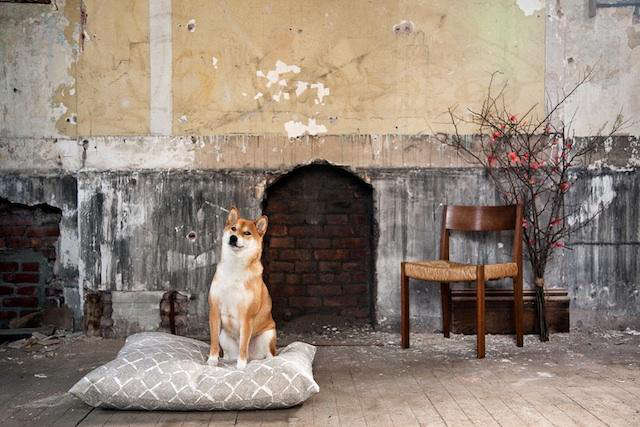
The name combines Profera’s first name with a tribute to Shinji, his foxlike Shiba Inu and longtime companion. Shinji became more than a charming studio mascot. He was woven into the emotional identity of the brand, appearing in its visual world and eventually inspiring commemorative designs. That personal element helps explain why Zak+Fox collections often feel more like chapters of an autobiography than seasonal product launches. >A Small Collection With a Large Imagination
The debut line included patterns influenced by antique Japanese textiles, Matahari trade cloth, and Moroccan carpets. Early designs were printed on linen, establishing several characteristics that would continue to define the company: natural-looking grounds, graphic motifs, softened colors, visible irregularity, and references gathered from different periods and regions.
Although the inspirations were geographically broad, the patterns did not feel like a travel catalog. They had been simplified, enlarged, distressed, recolored, or otherwise reinterpreted. A source motif might have begun with a ceremonial textile or worn fragment, but the finished fabric was designed to work in a contemporary American apartment, a coastal retreat, a traditional library, or a modern hotel. ion>
What “Inspired by Exotica” Really Means
The word exotica can suggest tropical fantasy, theatrical escapism, or the romanticized idea of somewhere far away. Zak+Fox approaches that territory with a more complex vocabulary. Its collections draw from multiple histories, but they also blur those references until a pattern becomes difficult to place.
A fabric might suggest a Japanese stencil, Central Asian embroidery, an African weaving structure, or an ancient geometric symbol without behaving as a literal copy of any one object. The eye recognizes age, craft, and cultural memory, yet the pattern remains new.
This “unplaceable” quality is particularly valuable in interior design. A room dominated by recognizable motifs can quickly turn into a theme. A room containing patterns with ambiguous origins feels more personal. It may evoke travel and history, but it leaves enough visual space for antique furniture, contemporary art, modern lighting, and objects from the homeowner’s own life. Designers have praised Zak+Fox fabrics for precisely this ability to transcend a single place or period. >Storytelling Instead of Surface Decoration
For Zak+Fox, the narrative surrounding a textile is often almost as important as its color or fiber content. Collections have been presented through cinematic photography, fictional settings, short stories, films, unusual locations, and carefully staged interiors. Past shoots have taken place in environments ranging from farms and historic New York buildings to North African landscapes.
The approach turns a fabric launch into world-building. Rather than showing a swatch against a blank background and asking viewers to admire its repeat, Zak+Fox creates a reason to wonder where the textile has been, who might have used it, and what happened immediately before the photograph was taken. It is branding, certainly, but it is also an invitation to participate in the design through imagination. ion>
A Design Vocabulary Built Through Exploration
Over time, Zak+Fox expanded beyond its original Japanese and Moroccan references. Different collections explored Anatolian art, Peruvian weaving, West African textiles, Moorish geometry, Mongolian landscapes, Madagascar folklore, botanical forms, animals, celestial imagery, and the emotional atmosphere of historical interiors.
Japan and the Beauty of Imperfection
Japanese influence has remained one of the most recognizable threads in the company’s work. The Obi pattern, for example, was inspired by a damaged vintage sash associated with traditional Japanese dress. Other patterns have referenced antique fabric fragments, stencil-like shapes, florals, and restrained geometric structures.
The attraction is not limited to recognizable Japanese imagery. It also appears in the appreciation of wear, asymmetry, restraint, and material imperfection. Rather than making every line mechanically crisp, Zak+Fox designs often preserve evidence of the hand. That slight irregularity prevents a pattern from feeling sterileeven when it is repeated across an entire wall. >From Peru to Mongolia
A collection influenced by Peruvian textiles translated traditional references into approximately 20 textured patterns. Cotton, linen, jute, embroidery, patchwork, irregular yarns, and hand-loomed constructions helped create surfaces that were as interesting to touch as they were to observe.
The Baatar collection looked toward Mongolia. Its designs referenced mountainous terrain, golden eagle feathers, horse herds, early textiles, and the difficult beauty of nomadic landscapes. The collection even introduced blankets made with felted yak wool and cashmere stitchingproof that the company is not afraid to follow an inspiration into wonderfully specific territory. Somewhere, a generic beige throw pillow just became very nervous. >Timbuktu and Cultural Convergence
The Timbuktu collection took inspiration from the historic Malian city as a center of learning, commerce, and cultural exchange. West African textiles, Moorish motifs, and contemporary design informed the patterns, while photography in Morocco strengthened the collection’s sense of place.
The important idea was convergence. Textile traditions rarely develop in complete isolation. Patterns, dyes, materials, and techniques move along trade routes, through migration, and between neighboring cultures. Zak+Fox frequently explores those visual connections, using design to suggest how a motif can travel, change, and acquire a new meaning. ion>
Materials That Reward a Closer Look
Zak+Fox is often discussed in terms of pattern, but material is equally important. The company works across printed linens, cottons, wool blends, velvets, mohairs, embroidered fabrics, handwoven constructions, wallpapers, rugs, pillows, and performance textiles.
Some designs are created with specialist artisans and hand-weavers, while others rely on commercial mills and printers capable of delivering consistent quality at a larger scale. Profera has emphasized that both production models can carry creative value. What matters is the attention given to texture, color, detail, and the intended use of the finished cloth.
This balance helps the brand avoid a common problem in globally inspired design: producing something that looks fascinating in a photograph but becomes difficult to use in a real room. Zak+Fox textiles can be visually adventurous, yet many are grounded by practical fibers, versatile palettes, and scales that work for curtains, cushions, upholstered furniture, or full walls. >Why Linen Works So Well
Linen has been central to the Zak+Fox aesthetic since the earliest collections. Its visible fibers and softly uneven surface complement patterns designed to look aged, printed by hand, or drawn from historical fragments. Linen also changes subtly with light, giving large expanses of fabric a liveliness that flatter materials may lack.
On curtains, the cloth can appear almost illuminated from within. On an upholstered chair, it feels relaxed rather than overly formal. When printed with an irregular geometric or botanical motif, the natural texture prevents the repeat from looking too perfect. It is the design equivalent of a beautifully worn leather jacket: polished enough for company, but not trying suspiciously hard.
From Boutique Textile Studio to Immersive Design House
Zak+Fox grew from a small collection of linen prints into a broader design house serving the professional interiors market. The company eventually chose to focus its sales on the trade, strengthening its relationship with interior designers and emphasizing the importance of seeing and touching materials in person.
That tactile philosophy is embodied in its New York showroom. The company opened a roughly 6,000-square-foot Park Avenue South headquarters and showroom in 2024, nearly doubling the size of its previous location. Custom oak cases, antique furniture, rugs, fabric displays, art, and atmospheric rooms transform the space into something closer to a collector’s residence than a conventional sample library.
The expansion coincided with major developments such as the Harvest collection and the company’s first rug line. Harvest included richly colored and nature-influenced textiles, while the rugs allowed the Zak+Fox visual language to move from walls and furniture onto the floor. >The Showroom as a Creative Argument
In a digital marketplace, the showroom argues for slowness. A website can display color, but it cannot fully communicate weight, softness, sheen, density, or how a cloth changes as someone walks past it. Those qualities are crucial when selecting materials that may cover a sofa, line a room, or remain in a home for decades.
The Zak+Fox showroom also demonstrates how apparently dramatic patterns can become surprisingly livable. A fabric that looks intense as a small swatch may become calm when stretched across a large banquette. A moody wallpaper can make a powder room feel intimate rather than dark. A striped linen may unify antique and contemporary furniture without demanding applause every time someone enters.
How Designers Use Zak+Fox Fabrics
Zak+Fox textiles appear in a wide variety of interiors, including historic homes, modern apartments, beach houses, mountain retreats, yachts, show houses, restaurants, and hospitality projects. Designers have used the fabrics for Roman shades, drapery, pillows, benches, sofas, dining chairs, headboards, and occasional pieces.
The versatility comes from the tension within the designs. Many patterns are bold without being loud, historical without being stiff, and decorative without becoming sugary. An Obi-covered settee can sit beside marble and contemporary art. A dense botanical wallcovering can energize a powder room. A heavy striped linen can rescue a vintage chair from looking like it escaped from a waiting room in 1987.
Published interiors show Zak+Fox fabrics paired with European antiques, midcentury furniture, rustic wood, tailored upholstery, modern architecture, and relaxed coastal materials. That range suggests the textiles are most successful when treated as part of a conversation rather than the room’s single star performer. >Three Practical Ways to Decorate With the Look
Start with one concentrated moment. Upholster a reading chair, window seat, or ottoman in a distinctive Zak+Fox pattern. A smaller application lets the textile establish character without forcing every object in the room to compete.
Balance pattern with tactile solids. Pair a graphic linen with mohair, aged leather, wool, plaster, natural wood, or a quieter woven textile. The goal is not to remove visual interest but to vary its volume.
Mix histories rather than matching them. A globally inspired fabric does not require a room filled with objects from the same region. Try it with American modern furniture, Scandinavian lighting, a contemporary painting, or an inherited chest. The slight friction makes the space feel collected and individual.
The Continuing Evolution of Zak+Fox
Recent collections show a company still interested in shifting its own boundaries. Harvest transformed personal change and loss into a large, vivid body of work encompassing textiles and emotionally charged storytelling. Later designs expanded the outdoor assortment, translating organic rhythms into durable materials suitable for exterior spaces.
The Qualia collection, introduced in 2026, moved into a more philosophical and cinematic direction. Its 14 designs drew on ideas including subjective sensation, midcentury modernism, celestial imagery, desert hotels, florals, and uncanny nostalgia. Vintage furniture upholstered in the collection was photographed in a seemingly abandoned hotel environment, producing images that felt glamorous, beautiful, and just eerie enough to make viewers check whether the hallway door had moved.
This evolution demonstrates why Zak+Fox has lasted beyond the novelty of its early global references. The company is not confined to a signature motif. Its more consistent signature is a method: research deeply, combine unexpected ideas, respect material craft, construct a narrative, and leave enough ambiguity for the viewer to complete the story. ion>
Experiencing a Zak+Fox-Inspired Interior
Encountering Zak+Fox textiles in a finished room is different from studying an isolated sample. A swatch may reveal the pattern, but a room reveals its behavior. Scale changes everything. What looks like a lively little geometric in the hand can become a steady visual rhythm when used for floor-length curtains. A strange botanical becomes a shadowy landscape when wrapped around four walls. A dense stripe stops reading as “striped fabric” and starts functioning almost like architecture.
Imagine entering a sitting room with plaster walls, dark wood flooring, and an old sofa covered in a richly woven Zak+Fox textile. The pattern is not immediately recognizable. It might suggest a fragment of Central Asian embroidery or a modernist drawing, but neither interpretation feels complete. That uncertainty encourages a second look. Instead of mentally labeling the sofa and moving on, you begin noticing the irregular yarns, softened edges, and small color changes that give the surface depth.
The most satisfying experience comes when the textile is allowed to interact with objects from different worlds. Place a graphic linen beside a sculptural contemporary lamp, a worn wooden stool, and a piece of abstract art. The room develops tension, but not disorder. Each item seems to possess its own history, and the textile becomes the translator preventing the conversation from collapsing into decorative chaos.
Light also changes the experience. During the morning, a printed linen curtain may appear pale and airy, its motif reduced to a delicate silhouette. At night, the same cloth becomes heavier and more saturated. Under warm lamplight, muted reds, mossy greens, ochers, and smoky blues gain depth. The fabric is no longer simply covering the window; it is modifying the emotional temperature of the room.
Living with a distinctive textile requires a little confidence. The first instinct may be to protect it with a crowd of neutral objects, as though pattern needs supervision. In practice, a strong design often benefits from one or two equally confident companions: an antique rug, a large painting, a striped cushion, or a chair with an unusual silhouette. The key is to vary scale. When every pattern is small and busy, the room feels anxious. When one is large, another is fine, and a third is mostly textural, the arrangement feels intentional.
A Zak+Fox-inspired bedroom offers another kind of experience. Here, the goal is less about visual drama and more about enclosure. Wallpaper with a softened botanical motif can make the walls seem deeper. Heavy linen curtains filter city lights. A woven bench or patterned headboard supplies enough detail to keep pale bedding from feeling anonymous. The room becomes restful without becoming emptya useful reminder that serenity does not require removing everything interesting.
Even a single pillow can carry some of this atmosphere. The effect comes not from owning a famous pattern, but from choosing an object that appears connected to a larger story. It should make you curious about its material, construction, or visual origin. The best textile experiences work slowly. They do not reveal every reference in five seconds, and they do not require a matching set. They simply make a room feel as though it existed before you entered and will continue telling stories after you leave.
Conclusion: Textiles for Rooms With a Memory
Zak+Fox textiles succeed because they offer more than attractive surfaces. They combine historical curiosity, global references, artisan craft, emotional storytelling, and practical interior design. The patterns may begin with antique cloth, traditional weaving, folklore, travel, personal memories, or imagined worlds, but they finish as materials intended to live alongside people and their possessions.
That is the lasting appeal of Zak+Fox’s version of exotica. It is not about copying another place or constructing a fantasy theme. It is about allowing unfamiliar ideas, old techniques, and ambiguous symbols to make contemporary rooms feel richer. These fabrics do not merely coordinate. They accumulate meaningand they look exceptionally good while doing it.